
How UHF RFID Readers Work: Tags, Antennas, and Modules in One Ecosystem
How UHF RFID Readers Work: Tags, Antennas, and Modules in One Ecosystem
A UHF RFID reader is a device that transmits radio-frequency energy to UHF RFID tags, receives the backscattered signal, decodes the tag's stored data, and sends that data to software systems such as WMS, MES, or ERP. In smart manufacturing, the reader is the data-capture anchor of a larger ecosystem that includes tags, antennas, reader modules, printers, and active RFID equipment. This article explains how readers work, the main reader form factors, and what buyers should understand before they start comparing suppliers.
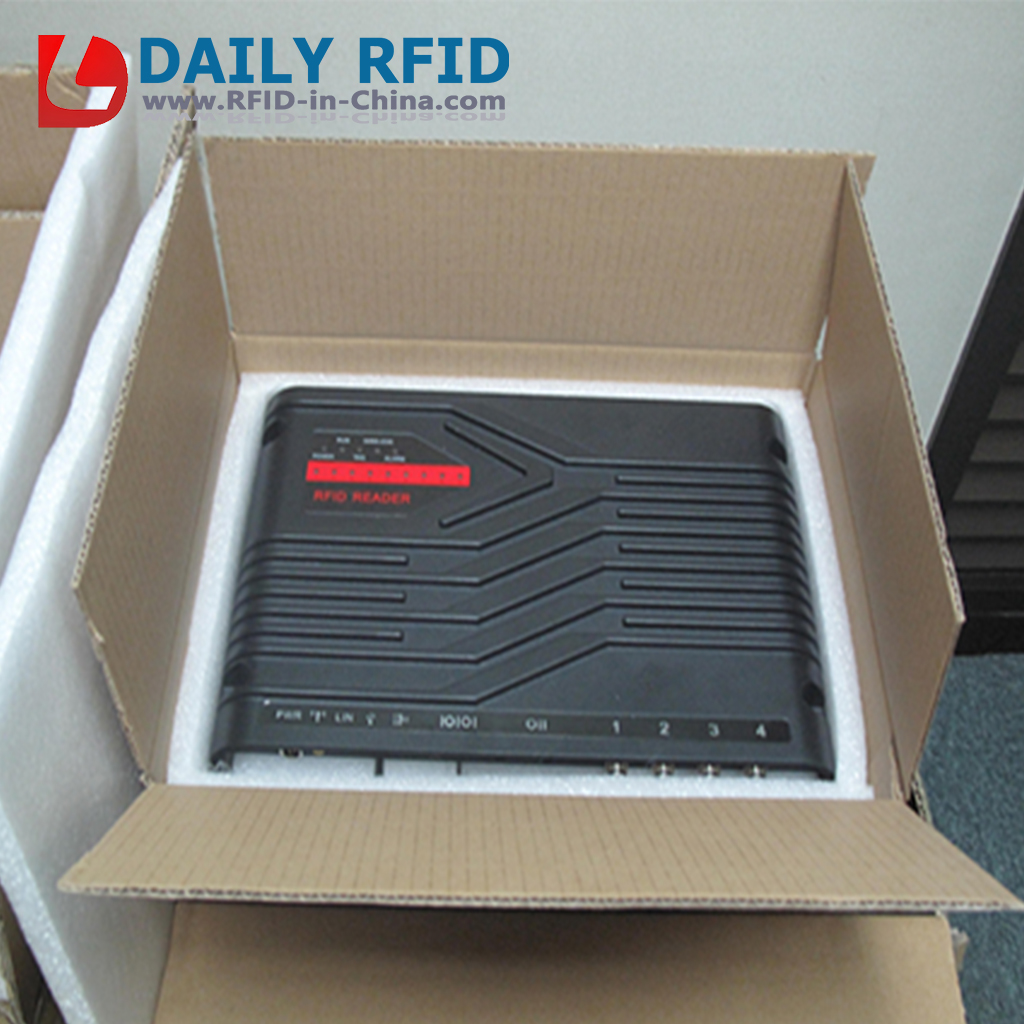
Why Understanding the RFID Hardware Ecosystem Matters
First-time buyers often search for "UHF RFID reader" and expect a single device to solve all identification problems. A reader is only one layer of a complete RFID system. The tag must match the object and its environment, the antenna must cover the actual read zone, the reader module must fit inside the host terminal, and the software must convert raw tag reads into useful business events.
The market also uses many overlapping terms: fixed reader, handheld reader, RFID scanner, reader module, integrated reader, active reader, and RFID equipment. Without a clear technical map, buyers may select the wrong form factor, pay for reading range they do not need, or underestimate integration effort. A grounded understanding of the hardware layers reduces these risks and makes supplier conversations more productive.
UHF RFID Market and Industry Background
The UHF RFID reader market is expanding rapidly. Verified market data indicates the global UHF RFID reader market was valued at approximately USD 4.8 billion in 2025 and is projected to reach USD 11.2 billion by 2034. UHF technology accounts for 40.72% of total RFID market revenue in 2025, driven largely by retail inventory cycles and the ability to read many tags at once.
Standardization supports this growth. UHF RFID readers are standardized under the EPCglobal Gen2 protocol, also known as ISO/IEC 18000-6C, which ensures interoperability between readers and tags from different manufacturers. Regionally, the Americas lead UHF tag usage with more than 60% of the global total, while Asia Pacific is the fastest-growing region for UHF RFID hardware, with expected shipment growth of 11.8% CAGR through 2031.
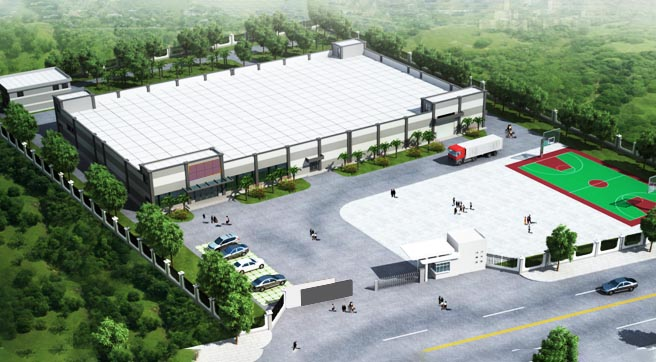
Manufacturers have built production ecosystems around these global standards. DAILY RFID CO., LIMITED, established in 2008 and based in Guangzhou, China, operates a 28,000 m² manufacturing facility with 180 to 200 employees and an R&D team of 38 engineers. The company has more than 15 years of industry experience and produces RFID tags, readers, antennas, cards, chips, and labels, with annual output of 50 million RFID tags, 30 million RFID cards, and 100,000 RFID readers.
What a UHF RFID Reader Actually Does
A UHF RFID reader performs four core functions:
- Transmit RF energy to power passive UHF tags.
- Receive the backscattered signal reflected by the tag antenna.
- Decode the tag ID and user memory using anti-collision algorithms so many tags can be read simultaneously.
- Forward the decoded data to a host system through interfaces such as RS232, RJ45, USB, GPIO, Wi-Fi, Bluetooth, or cellular modules.
For example, the DL921 UHF Long Range RFID Reader with GSM integrates a 2G/4G cellular module, allowing tag data to be transmitted from remote outdoor installations without Ethernet wiring. It supports ISO18000-6C, EPC Class 1 Gen 2, and ISO18000-6B protocols, has a reading range of 0.1 to 15 meters, and can read up to 50 tags simultaneously. A circular polarized built-in antenna reads moving tags regardless of orientation.
The Main UHF RFID Reader Form Factors
Buyers at the discovery stage should understand the dominant reader form factors available in the market today.
1. Fixed Integrated Readers
Fixed integrated readers combine the reader engine and antenna in one enclosure, simplifying installation. The DL921 UHF Long Range RFID Reader with GSM is an example: it has a built-in circular polarized antenna, an IP65-rated housing, and a reading range up to 15 meters. It is used in electronic toll collection, commercial parking, logistics yards, and intelligent waste management.
2. Power-over-Ethernet Fixed Readers
PoE readers receive both power and network connectivity from a single Ethernet cable, reducing wiring complexity. The DL921 Power on Ethernet UHF Long Range RFID Reader supports PoE or DC 9V to 24V supply, reads tags from 0.1 to 15 meters, and is designed for smart warehousing, automated vehicle access control, and manufacturing checkpoints.
3. AI Multi-Antenna Readers
AI-powered multi-antenna readers handle high-density, large-area identification. The DL6940/6960 AI Multi-Antenna 4-Port UHF Reader supports up to four external antenna ports, a reading range of 25 to 30 meters, and simultaneous reading of up to 1000 tags. Its data processing speed is described in the product specification as 16 times faster than ordinary mainstream readers, and it consumes only 5W, making it suitable for distribution centers and automated production lines.
4. Industrial Handheld Readers
Handheld readers are used for mobile inventory, inspections, and field data collection. The DL1280 Industrial PDA UHF/HF/LF Handheld Reader supports UHF (0.1 to 20 m), HF (0.1 to 32 cm), and LF (0.1 to 10 cm) in a single device. It runs Android 12 with an 8-core 2.0 GHz processor, 4GB RAM, and 64GB ROM, and has an IP65 rating. Its dual-battery design, with a 4500mAh host battery and a 6700mAh handle battery, supports long shifts.
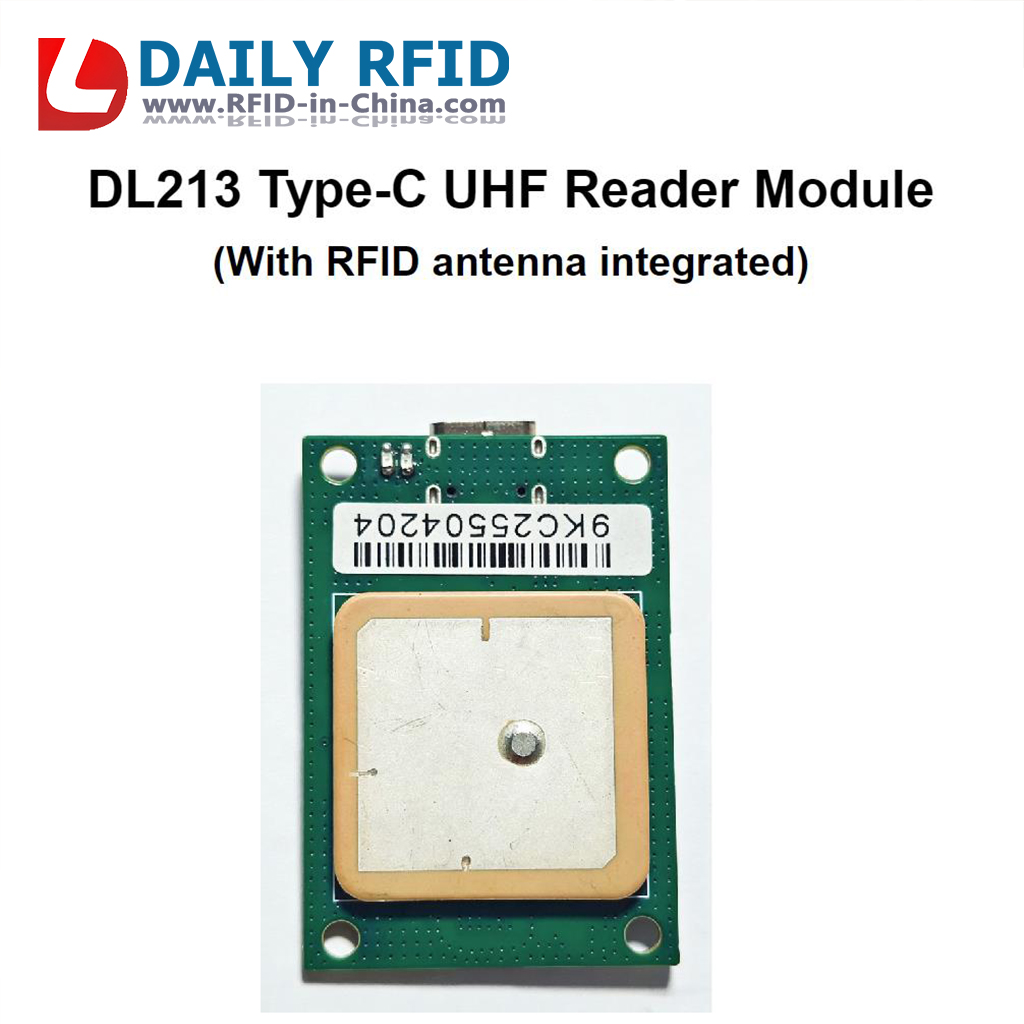
5. Reader Modules
Reader modules are compact boards designed for embedding into kiosks, smart cabinets, medical devices, and self-service terminals. The DL213 Type-C UHF Reader Module measures 45mm × 30mm × 6mm, has a built-in antenna, a reading range of 0.1 to 10 cm, and supports USB keyboard simulation for plug-and-play data entry. It reads up to 5 tags simultaneously, making it suitable for desktop encoding and embedded identification in automated production lines.
6. Active RFID Readers
Active RFID systems use battery-powered tags for long-range real-time tracking. The DL9230 RFID TCP/IP Active Reader operates at 2.4 GHz ISM, has an adjustable reading distance from 0 to 100 meters, and identifies up to 200 active tags simultaneously. It is used for personnel safety management, underground mining, parking lot management, and high-value asset tracking.
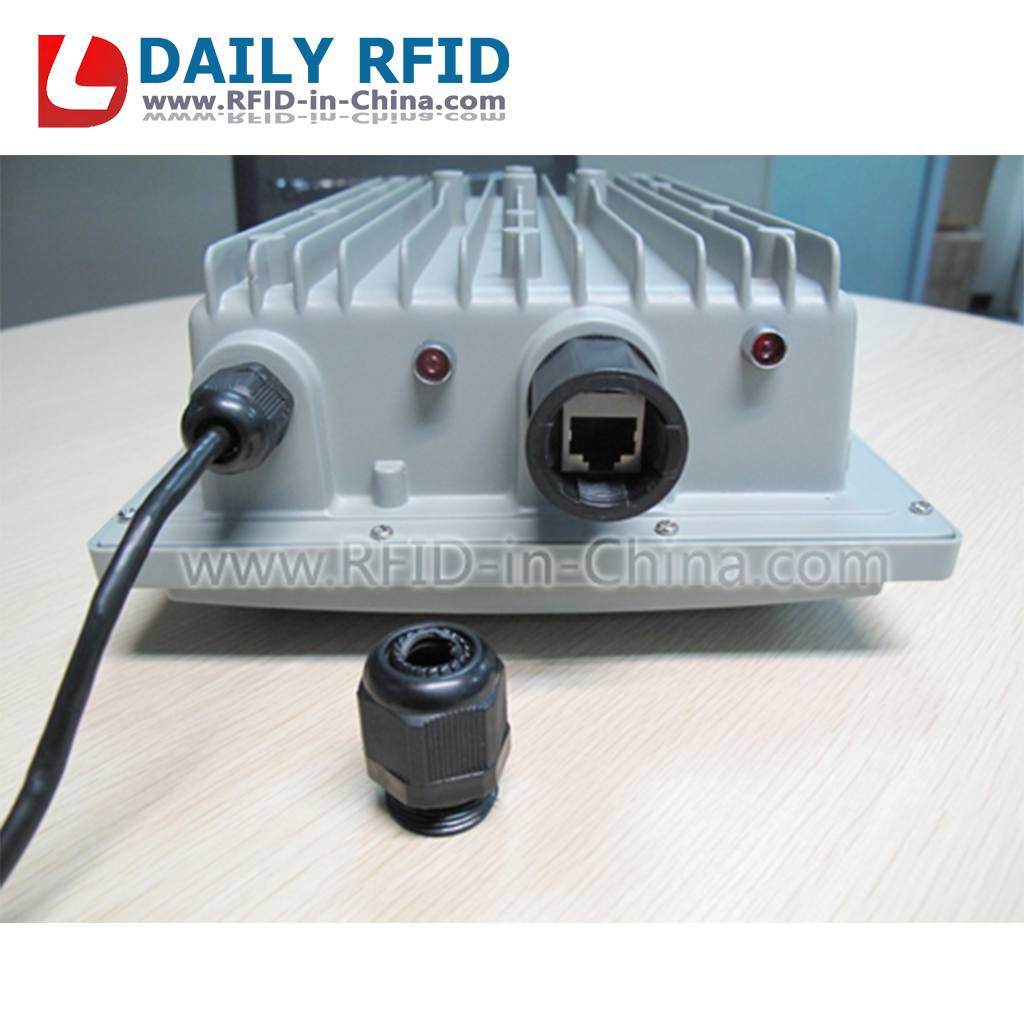
The Ecosystem Around the Reader: Tags, Antennas, and Printers
Readers deliver value only when paired with the right tags and antennas.
Tags determine whether the system can survive the operating environment. Examples from DAILY RFID's product lineup include:
- Passive LED UHF RFID Label — a battery-free tag that harvests RF energy to light an LED for visual picking. It offers a bulk read distance of 2 to 5 meters and an LED trigger illumination distance of 1.5 to 3.5 meters.
- RFID Tire Tag — made of vulcanized rubber with a copper antenna and customized epoxy. It operates at 860 to 960 MHz with a reading distance of 1 to 3.5 meters and an operating temperature range of -25°C to +85°C.
- UHF Jewelry Tag — an ultra-thin PET tag measuring 36 × 15 × 0.86 mm, with a reading distance up to 50 cm and IP68 protection, used in luxury retail and pawnshops.
- PPS RFID Button Laundry Tag — withstands laundry drying at 150°C for 60 minutes, ironing at 200°C for 10 seconds, and supports more than 200 washing cycles.
- RFID Tool Management Adhesive Tag — optimized for on-metal use with an integrated ferrite shield; reads from 1 to 3.5 meters on metal surfaces using a 4W EIRP handheld reader.
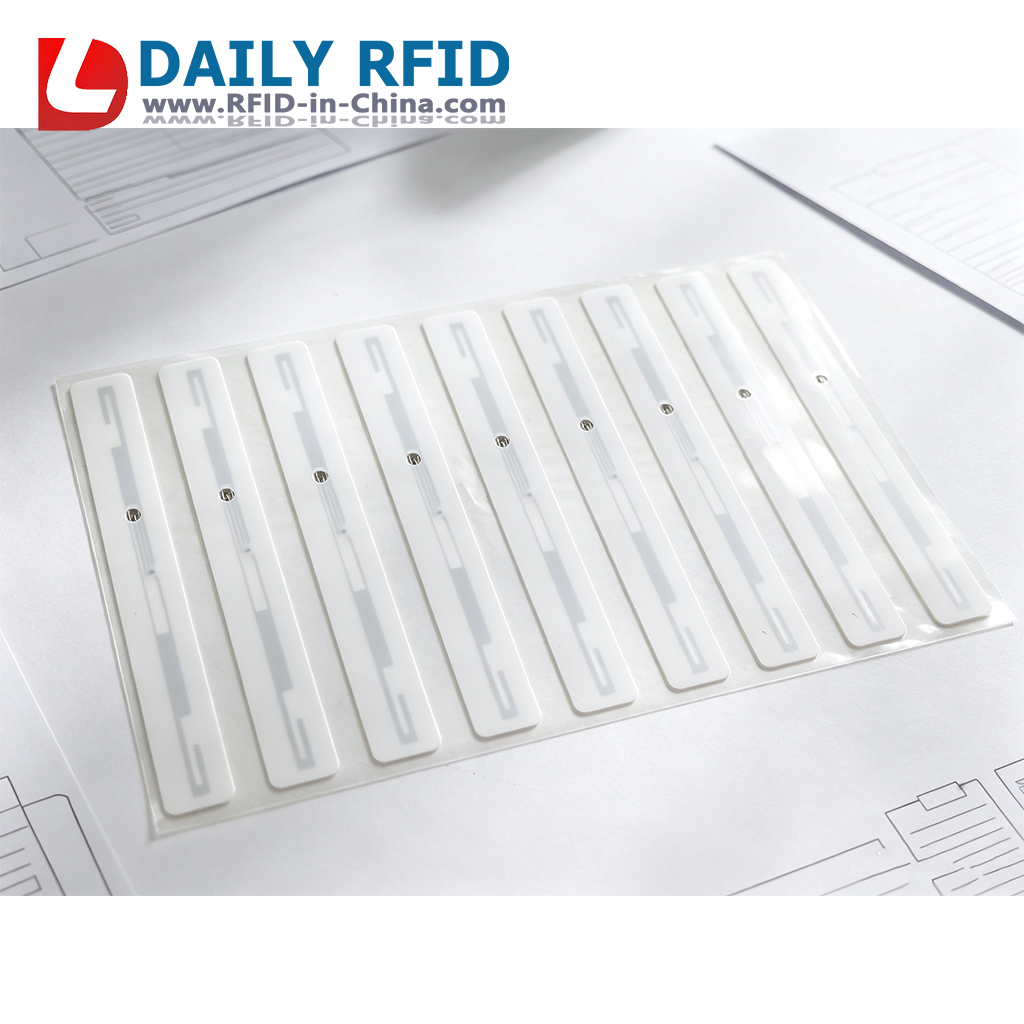
Antennas shape the read zone. Circular polarized antennas read tags in any orientation, which is critical for conveyor belts and dock doors. Multi-port readers such as the DL6940/6960 support up to four antennas, enabling zone-level coverage and 360-degree reading around a single control point.
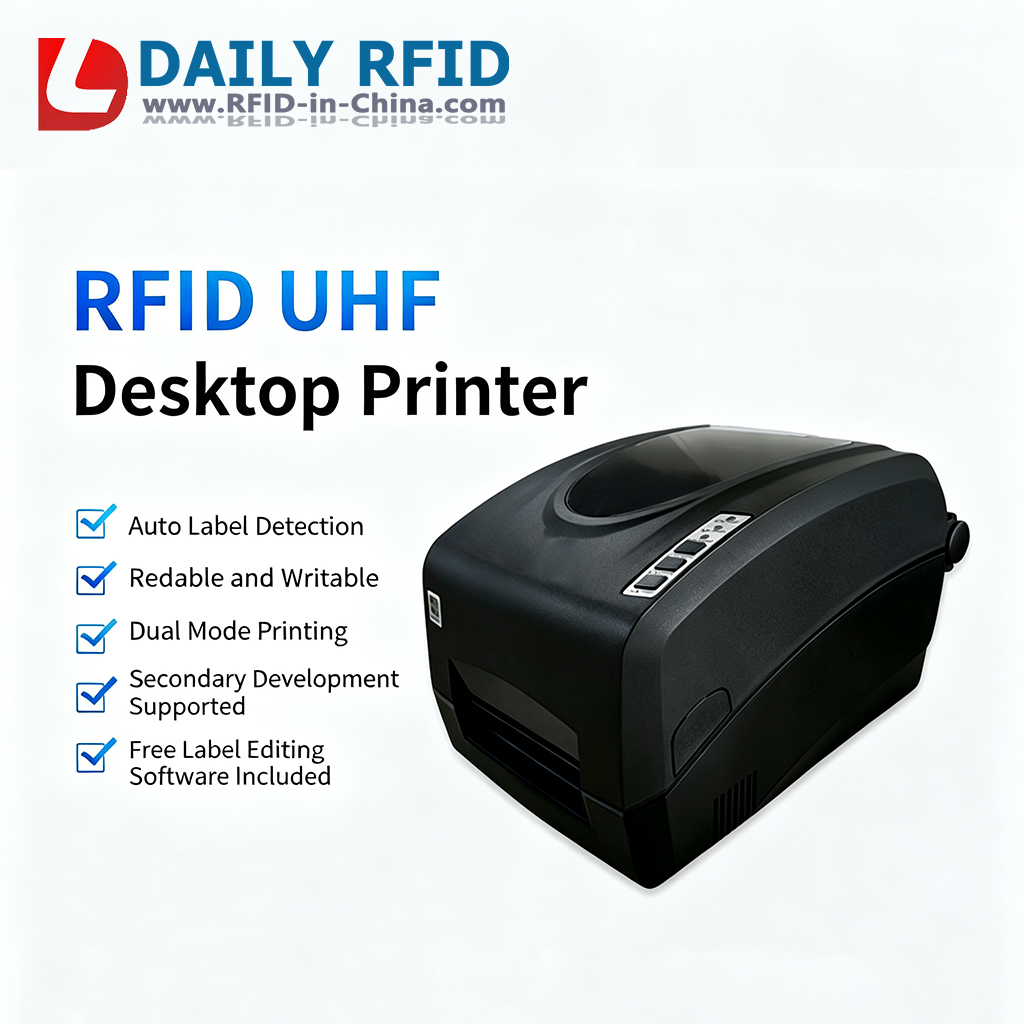
Printers and encoders link the physical and digital layers. The High-Speed RFID Label Printer prints at 300 dpi, reaches a maximum speed of 254 mm/s, and encodes UHF tags compliant with ISO 18000-6C/EPC C1G2. It connects via USB, Ethernet, serial, or Wi-Fi, making it practical for on-site label production in warehouse and asset management workflows.
How to Build a UHF RFID Reading System: Step-by-Step
- Define the read zone and distance. Determine where tags must be read: a 15-meter vehicle lane, a 20-meter warehouse aisle, a 10 cm countertop, or a 100-meter active zone. Distance drives the reader class.
- Select the tag form factor. Match the tag to the object material (metal, liquid, fabric), temperature, chemical exposure, and mounting method. Use on-metal tags for metal assets, PPS tags for laundry, and LED tags for visual picking.
- Choose the reader type. Fixed readers for automatic portals, handheld readers for mobile operations, modules for embedded products, and active readers for real-time location tracking.
- Plan the antenna layout. Count the lanes or aisles, choose circular or linear polarization, and decide how many antenna ports are needed. A 4-port reader such as the DL6940/6960 can cover multiple zones from one unit.
- Configure frequency and power. Set the regional frequency band (860–868 MHz, 902–928 MHz, or 920–925 MHz) and adjust transmit power to avoid over-read and cross-read between adjacent areas.
- Integrate the data stream. Use the vendor SDK to connect readers to WMS, MES, ERP, or custom dashboards. Industrial readers typically provide SDKs for Windows, Linux, Android, and multiple programming environments.
- Test, validate, and scale. Run a pilot with real tags and real environmental conditions, measure read rates and false reads, then expand deployment lane by lane.
Real-World Use Cases for UHF RFID Readers
- Automotive manufacturing (Germany). Fixed UHF readers deployed along assembly lines stream component data in real time to MES, supporting high-speed parts flow in dusty, shock-prone production environments.
- Warehouse dock doors (Germany). Fixed readers automate inbound and outbound pallet scanning at dock doors, syncing transport data to the TMS every two minutes and removing manual data entry.
- Cold-chain logistics (China). Fixed readers work with temperature-sensing tags to monitor cold-chain temperature and humidity every five minutes, supporting compliance for temperature-sensitive goods.
- Mining safety (Australia). Active 2.4 GHz readers track personnel wearing active tags in mining zones and trigger hazard alerts within three seconds, with edge server synchronization and hourly cloud upload.
- Construction site equipment (Brazil). UHF gate readers track machinery gate movement and usage, reducing manual logs by 70%.
- Retail POS (United States). Fixed readers at checkout counters read up to 30 tags per second, enabling automatic checkout and real-time inventory visibility.
- Healthcare (Japan). Handheld readers verify patient identity and medication matching through HF/NFC wristbands, reducing manual medication checks by 50%.
UHF RFID Reader Form Factor Comparison
| Form Factor | Representative Model | Reading Range | Tag Capacity | Typical Deployment |
|---|---|---|---|---|
| Fixed Integrated Reader | DL921 UHF Long Range RFID Reader with GSM | 0.1–15 m | Up to 50 tags | ETC, parking, logistics yards, remote outdoor sites |
| PoE Fixed Reader | DL921 Power on Ethernet | 0.1–15 m | Up to 50 tags | Smart warehousing, dock doors, assembly lines |
| AI Multi-Antenna Reader | DL6940/6960 4-Port UHF Reader | Up to 25–30 m | Up to 1000 tags | Distribution centers, high-density inventory |
| Industrial Handheld PDA | DL1280 UHF/HF/LF PDA | UHF 0.1–20 m; HF 0.1–32 cm; LF 0.1–10 cm | 100+ tags per second | Mobile inventory, inspections, field patrol |
| Type-C Reader Module | DL213 UHF Reader Module | 0.1–10 cm | Up to 5 tags | Embedded terminals, kiosks, desktop encoding |
| Active Reader | DL9230 TCP/IP Active Reader | 0–100 m adjustable | Up to 200 tags | RTLS, personnel safety, mining, parking |
FAQ: UHF RFID Reader Supplier Questions
What standards and compliance should a UHF RFID reader supplier meet?
Buyers should confirm that the reader complies with ISO/IEC 18000-6C (EPCglobal Gen2), the global UHF air-interface standard, and supports the regional frequency band used at the deployment site — typically 860–868 MHz for Europe, 902–928 MHz for the Americas, and 920–925 MHz for parts of Asia. DAILY RFID readers such as the DL921 series support these ISM bands, with frequency customization available. Industrial protection ratings such as IP65/IP66 and operating temperature ranges should also match the physical deployment environment.
What manufacturing capability should a UHF RFID reader supplier have?
Look for in-house manufacturing, R&D depth, and full ecosystem coverage. A supplier that produces readers, tags, antennas, cards, and labels can troubleshoot system-level issues more effectively than a trading company. DAILY RFID, for example, has 38 R&D engineers, a 28,000 m² facility, and annual reader output of 100,000 units, with production spanning tags, cards, readers, and related hardware.
How much should I budget for a UHF RFID reader?
There is no single price because reader cost depends on form factor, reading range, tag density, interfaces, and customization. Fixed multi-antenna readers generally represent a higher investment than compact reader modules, while industrial handheld PDAs with Android and multi-frequency support form a separate price tier. The practical approach is to define read distance, tag volume, environment, and integration needs first, then request quotations from suppliers based on those parameters.
Can I request a sample before placing a bulk order?
Yes. Reputable manufacturers support sample testing so buyers can verify read range, compatibility, and environmental performance before committing to volume production. DAILY RFID supports sample requests for readers, modules, and tags. A sample test should replicate the real deployment environment: tag type, mounting surface, distance, and interfering materials.
What lead time should I plan for UHF RFID reader orders?
Lead time depends on whether the product is standard or customized. Standard catalog readers are generally available faster, while OEM/ODM orders — custom frequency, housing, interfaces, antenna configurations, or branding — require additional engineering and production time. Buyers should confirm lead time during the quotation stage and connect it to project milestones. To plan a specific order, contact DAILY RFID at sales@rfid-in-china.com and the sales team will provide scheduling guidance based on the selected configuration.
Conclusion: Start From the Ecosystem, Not Just the Reader
A UHF RFID reader is the data-capture core of a smart identification ecosystem, but it must be matched with the right tags, antennas, modules, and software to deliver value. Understanding reader form factors, reading ranges, anti-collision capabilities, and integration paths helps buyers ask better questions and avoid costly mismatches.
DAILY RFID designs and manufactures UHF RFID readers alongside tags, antennas, cards, and labels in a single 28,000 m² facility, supporting both standard products and OEM/ODM customization. If you are in the research stage of a UHF RFID project, the next step is to test a reader with your actual tags and environment.
Request a sample or quotation
Email: sales@rfid-in-china.com | WhatsApp/Tel: +86 15817191372
Download the DAILY RFID Company Profile (PDF)
Have Questions or Need More Details?
Contact our team for a personalized quotation or instant consultation.
Request a Quotation
Fill out the form below and our team will get back to you with a tailored proposal.
WhatsApp Direct Chat
Prefer to chat in real-time? Message us on WhatsApp for instant assistance & quick answers.
- Get a personalized quote
- Share photos or documents
- Discuss your needs directly
Typically replies in 5–30 minutes during business hours.