
UHF RFID Reader Setup for Assembly-Line Tool Tracking
Application Guide: UHF RFID Reader Setup for Smart Manufacturing Assembly Line Tool Tracking
A reliable assembly-line tool-tracking setup links four things: a tagged tool, a defined read point, a reader that can see the tag in that physical position, and a record that tells the team who has the tool and where it is. For smart manufacturing teams at the decision stage, the practical choice is not simply which UHF RFID reader is fastest on paper. It is which combination of RFID Tool Tags, RFID Smart Cabinets, RFID Fixed Readers, RFID Gates, RFID Handheld Readers, and system integration closes the tool check-out, check-in, station-level read, and exception-handling loop with the least friction.
DAILY RFID CO., LIMITED is a Guangzhou, China-based RFID manufacturer founded in 2008. The company produces RFID tags, RFID readers, RFID antennas, RFID cards, RFID chips, and RFID labels, and its website is www.rfid-in-china.com. This guide uses verified DAILY RFID product and deployment facts to show how an assembly-line tool-tracking project can be structured, tested, and scaled.

Problem Definition: Why Assembly-Line Tool Tracking Breaks Down
Tool tracking usually fails for operational reasons rather than because UHF RFID is inherently unsuitable. A tool is picked up from a cabinet, used at a station, placed in a tray, returned to the wrong position, or left inside a fixture. The physical movement is simple; the record is not. If the read point does not match the movement, the system produces either a missing-tool alert that is ignored or a clean record that is wrong.
Four constraints appear repeatedly in smart manufacturing tool projects. First, metal tools block or detune tag signals, so on-metal tag selection and tag placement matter. Second, tools are handled by people, which means grip areas, wear areas, and curved surfaces cannot be used blindly for tag mounting. Third, a cabinet, gate, or station reader can read beyond its intended zone if power and antenna coverage are not controlled. Fourth, tool data must connect to user permissions, time, tool ID, and exception status; otherwise the team gets a list of reads, not an accountable tool record.
Industry Background: Why UHF RFID Is Being Used for Tool and Asset Visibility
UHF RFID is a mature industrial identification layer, not an experimental add-on. UHF frequency captured 40.72% of total RFID market revenue in 2025, according to Mordor Intelligence. The same source projects the UHF RFID market to surpass USD 14.9 billion by 2031 with a CAGR of 12.45%. These figures describe the broader market; they do not guarantee a specific factory’s return, but they explain why UHF readers, tags, and antennas are widely available for manufacturing projects.
Adoption is also visible on the factory floor. Mordor Intelligence reports that over 60% of factories adopting Industry 4.0 deploy RFID readers for asset traceability. MarketsandMarkets expects Asia Pacific to account for the largest RFID market share from 2025 to 2034. For assembly-line tool tracking, the implication is practical: UHF RFID equipment is common enough to be evaluated through normal procurement, but the deployment still has to be engineered around metal tools, read zones, and integration.
Protocol compatibility is the baseline. UHF RFID readers operate under the EPCglobal Gen2 (ISO/IEC 18000-6C/63) standard. DAILY RFID UHF equipment operates at UHF 860MHz to 960MHz, and the maximum transmit power is 33dBm for the relevant product specification. Regional frequency settings still need to be locked before shipment because UHF frequency bands differ by country.
Detailed Solution: Match Each Tool-Tracking Job to the Right UHF RFID Setup
The workable architecture is a mix of read points, not a single device. Use the cabinet for controlled storage and accountability, fixed readers for station-level presence, gates for controlled room entry and exit, handheld readers for exception checks, and system integration to turn reads into tool records. AI-powered readers can be considered as an added analysis layer only after the physical read problem is solved.
RFID Tool Tags: Make the Tool Identifiable Before Choosing a Reader
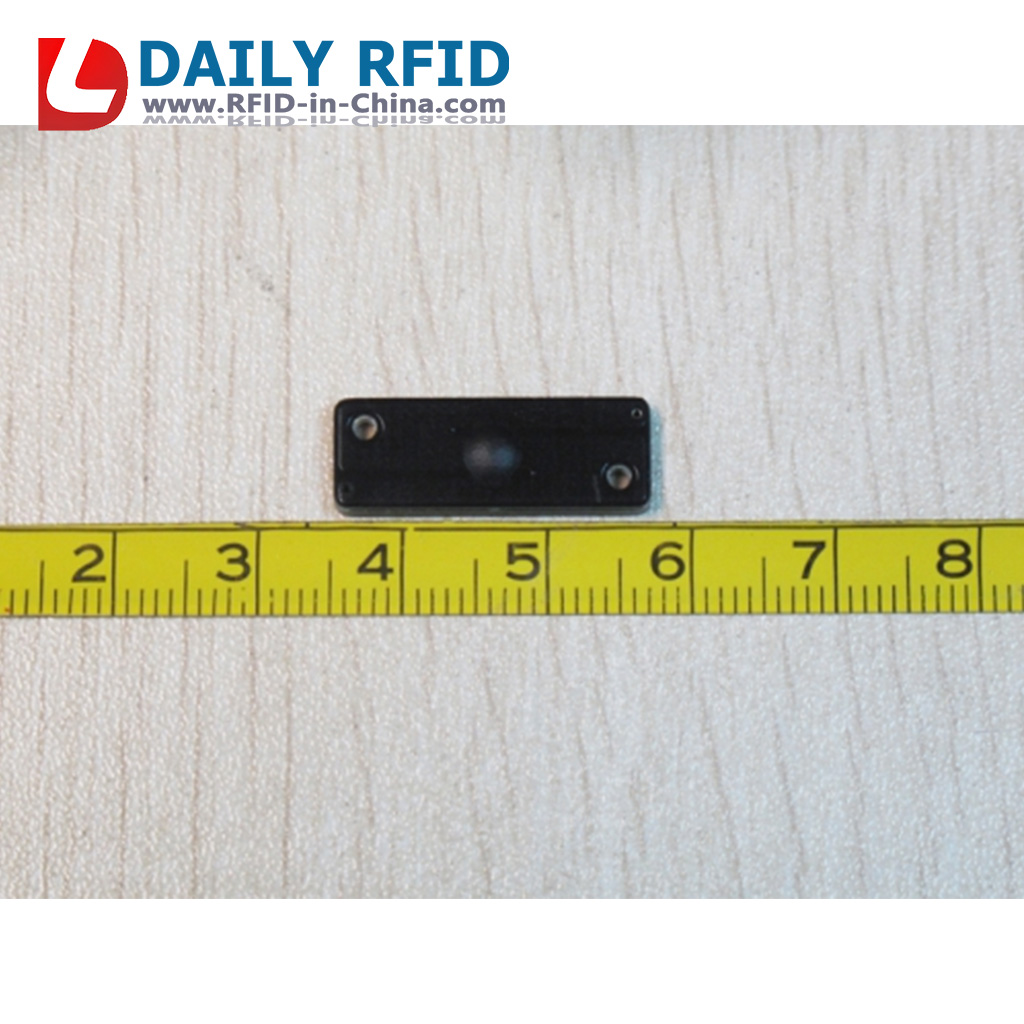
Tool tags are the first decision because a reader cannot recover a tag that is poorly placed or detuned by metal. DAILY RFID provides UHF on-metal tags, flexible on-metal labels, and isolation materials for metal racks, cabinets, and equipment. For metal tools, add foam or ferrite spacing where needed, then retune the reader and antenna after installation. Place tags on non-grip and non-wear areas. For rough handling, DAILY RFID rugged tags use ABS, PPS, TPU, rubber, textile, or other encapsulation options; define installation position, minimum bending radius, and no-press zones in the operating SOP.
Attachment is part of the tag decision. DAILY RFID helps select industrial adhesive, 3M adhesive, rivets, screws, or cable ties according to the asset surface and operating environment. Clean and degrease the surface before installation, and use encapsulated hard tags for outdoor, rough, or high-wear surfaces. If a tool has both a visual code and an RFID chip, DAILY RFID can supply printable RFID asset labels with QR codes, barcodes, visual asset numbers, and encoded chip IDs. Use RFID for fast bulk reading and QR or barcode as a manual fallback.
RFID Smart Cabinets: Controlled Check-Out and Check-In
A smart cabinet is the strongest fit when the tool must be stored in a controlled location and every borrow and return must be logged. DAILY RFID ToolSense Smart Cabinet provides automatic tool accountability, borrowing, and return logs. DAILY RFID reports that tool search time can drop 70% to 90% with this cabinet compared with manual tool tracking. The same comparison states that system CAPEX is typically 20% to 70% higher than manual or legacy processes, but labor, error, and loss cost can fall 30% to 75%, with typical payback of 6 to 24 months. The cabinet requires tool tags, cabinets or handheld readers, and user permissions.
The anti-loss cabinet variant adds a different control emphasis. DAILY RFID Anti-Loss Smart Tool Management Cabinet automatically identifies and traces items inside the cabinet. Asset loss rate can drop by about 30% to 70% depending on cabinet control rules. Cabinet hardware is about 2 to 5 times the cost of a standard cabinet, but loss and replacement cost can fall 30% to 70% and admin labor 50% to 80%, with payback commonly 12 to 30 months. It requires user permissions and item tags.
For reliable cabinet inventory, bind each tool position to a unique RFID tag and trigger inventory when the door opens or closes. Record user, time, tool ID, and exception status so borrowing, return, and missing-item reviews are traceable. This door-event linkage is what turns a cabinet from a storage box into an accountable check-out point.
RFID Fixed Readers: Station-Level Reads and Work-in-Process Visibility
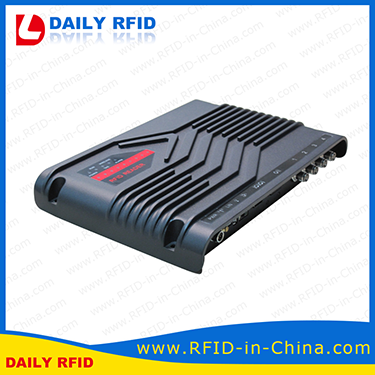
Fixed readers are the right tool when the read event happens at a station, cell, or work-in-process point rather than inside a cabinet. DAILY RFID fixed readers can be deployed with PoE, wired Ethernet, WiFi, or GPRS according to site conditions. Use wired or PoE links for critical read points, and configure remote points with local buffering and resumable upload to protect data continuity. Power options vary: the DL9702 is USB powered from a host PC; the DL6940, DL6960, and DL920Plus require DC power; the DL921 series supports Power over Ethernet or DC +9V to +24V. Power consumption ranges from 0.25W for the DL9702 to 12W for the DL921 with GSM.
Antenna layout determines whether the station read is useful. DAILY RFID multi-antenna UHF reader layouts support stable bulk reading from multiple tag angles. Tune antenna position and reader power, then standardize tag orientation and tray SOP to improve repeatability. For high-speed or triggered stations, DAILY RFID high-speed UHF readers, antenna arrays, and trigger inputs can be synchronized with photoelectric sensors or PLC signals. Tune antenna quantity, polarization, power, and read window according to the movement and tag orientation. If a station uses an embedded RFID module instead of a cased reader, DAILY RFID reader modules support embedded integration with attention to power filtering, grounding, antenna spacing, and enclosure layout. Run EMC pre-scan and read-distance retesting before mass production.
RFID Gates: Controlled Tool-Room Entry and Exit
A gate is useful when tools move between a controlled tool room and the assembly floor, and the business needs an entry or exit event rather than continuous station presence. DAILY RFID fixed gate readers and tuned UHF antennas can be configured as independent read zones to prevent adjacent-zone capture. Lower reader power for close-range reads and scan by rack or zone where the layout allows. The gate should not be expected to identify a tool that is shielded by metal, placed in a closed metal container, or oriented so the tag cannot be seen by the antenna field.
RFID Handheld Readers: Exception Handling and Zone Audits
A handheld RFID scanner is not the primary read point for every station, but it is valuable for exceptions, audits, and zone inventory. DAILY RFID supports rack-level inventory with adjustable-power handheld readers, fixed gate readers, and tuned UHF antennas. Scan by rack or zone, lower reader power for close-range reads, and use the handheld to investigate a tool that the cabinet or station reader did not see. In a tool-tracking workflow, the handheld closes the gap between an automated exception alert and a human confirmation.
AI-Powered RFID Readers: Add Intelligence After the Read Is Stable
AI-powered RFID readers can be evaluated for filtering, exception prioritization, or analytics, but the AI label should not be accepted as evidence that the physical read problem is solved. Ask the supplier to demonstrate the specific AI function on your tools, your tags, your cabinet or gate, and your exception rules. A stable read zone, a verified tag, and a traceable event record come before any AI layer. If the AI function cannot be tied to a measurable tool-tracking decision, keep it out of the acceptance criteria.
RFID System Integration: Turn Reads into Accountable Tool Records
Integration is where tool tracking becomes auditable. DAILY RFID readers and encoding tools support EPC and user-memory write verification, password protection, and batch encoding records. Define the coding rule, read back and compare after writing, and lock key fields where needed to reduce data errors. For production tracking, DAILY RFID Production Tracking System provides end-to-end work-in-process and station-level traceability. The comparison states that issue response can be 50% to 70% faster with fewer paper records, with system CAPEX typically 20% to 70% higher but labor, error, and loss cost 30% to 75% lower and payback of 6 to 24 months. It requires tag binding, workstation readers, and MES or ERP integration.
The integration rule is simple: every tool event should carry a tool ID, a user or station ID, a timestamp, a read-point ID, and an exception status. Without those fields, a read is only a signal. With them, the team can answer who borrowed the tool, when it returned, which station last saw it, and why the record is incomplete.
Step-by-Step Breakdown: Deploying UHF RFID for Assembly-Line Tool Tracking
- Define the tool-tracking decision rules. List the tools to be tagged, the check-out and check-in rules, the station-level presence rule, the return-to-cabinet rule, and the exception rule. Decide which events require an automated read and which can be handled by a handheld audit.
- Select and mount the RFID Tool Tags. Use on-metal tags or isolation spacing for metal tools. Place tags on non-grip and non-wear areas. Clean and degrease the surface before using industrial adhesive, 3M adhesive, rivets, screws, or cable ties. For rough handling, use encapsulated rugged tags and define no-press zones.
- Choose the read-point architecture. Use a smart cabinet for controlled storage and accountability, fixed readers for station-level reads, gates for tool-room entry and exit, and handheld readers for exception checks. Do not use a gate where a cabinet door event is the real control point, and do not use a handheld as a substitute for an automated station read.
- Engineer the read zone. For cabinets, bind each tool position to a unique tag and trigger inventory on door open or close. For fixed readers, tune antenna position, polarization, and power; use multi-directional coverage for trays and fixtures. For gates, configure independent read zones and lower power for close-range reads to prevent adjacent-zone capture.
- Protect the data layer. Write EPC and user-memory data with read-back verification. Use password protection and batch encoding records where needed. Lock key fields. Connect readers to MES or ERP through the approved interface, and use PoE or wired Ethernet for critical points, with local buffering and resumable upload for remote points.
- Set exception handling before go-live. Define what happens when a tool is missing, a cabinet inventory does not match, a tag is damaged, a metal tool is not read, or a gate captures an adjacent zone. Use the handheld to confirm the physical tool, re-check tag placement, adjust reader power, and re-scan. Record the exception status so the review is traceable.
- Run a pilot with samples and ROI testing. DAILY RFID supports a tiered tag strategy with standard labels, on-metal tags, encapsulated hard tags, and harsh-environment tags. Segment tools by value, material, and operating environment, then use sample kits and ROI testing to choose the most cost-effective rollout plan. Test the actual tools, actual tag positions, actual read points, and actual network conditions.
- Scale with permissions and governance. Set user permissions, cabinet or gate access rules, and audit logs. Record user, time, tool ID, and exception status. Train operators on tag handling and exception reporting. Keep spare tags and a documented re-tag procedure so a damaged tag does not become a permanent blind spot.
Use Cases: Where the Setup Fits on a Smart Manufacturing Line
Assembly-Line Tool Crib
A tool crib with a smart cabinet or gate can log check-out and check-in by user and time. The cabinet is stronger for controlled storage and accountability; the gate is stronger for a room-level entry and exit event. In both cases, tool tags and user permissions are required, and the exception process must be defined before the first shift.
Station-Level Tool Presence
A fixed reader at an assembly cell can confirm that a tool or fixture is present at the station. Multi-antenna layouts help with tools presented in trays or at different angles. The station read should be tuned to the physical zone, not to the whole aisle, so adjacent tools and nearby tags do not create false presence records.
Work-in-Process Stations
Work-in-process stations often combine tools, fixtures, and trays. DAILY RFID tray readers, mat antennas, and multi-antenna UHF reader layouts support stable bulk reading from multiple tag angles. Tune antenna position and reader power, then standardize tag orientation and tray SOP. If the station is triggered by a PLC or photoelectric sensor, synchronize the read window with the movement so the reader captures the tool at the right moment.
Maintenance and High-Value Tool Control
For high-value tools, the anti-loss cabinet can automatically identify and trace items inside the cabinet and record user, time, tool ID, and exception status. The verified comparison indicates an asset loss rate reduction of about 30% to 70% depending on cabinet control rules, with higher cabinet hardware cost but lower loss, replacement, and admin labor cost. This is a control decision, not a default choice for every tool.
Comparison Table: Choosing the Right UHF RFID Setup for Tool Tracking
| Setup option | Best-fit tool-tracking task | Verified capability or fact | Constraint or decision note |
|---|---|---|---|
| RFID Smart Cabinet | Controlled check-out and check-in; high-value tool accountability | DAILY RFID ToolSense Smart Cabinet provides automatic tool accountability, borrowing, and return logs; tool search time can drop 70% to 90%. Anti-Loss cabinet can reduce asset loss rate by about 30% to 70% depending on control rules. | Requires tool tags and user permissions. ToolSense payback is typically 6 to 24 months; Anti-Loss cabinet hardware is about 2 to 5 times a standard cabinet and payback is commonly 12 to 30 months. |
| RFID Fixed Reader at Station | Station-level tool presence and work-in-process reads | UHF 860MHz to 960MHz; maximum transmit power 33dBm. Multi-antenna layouts support stable bulk reading from multiple tag angles. PoE, wired Ethernet, WiFi, or GPRS deployment is supported. | Antenna position, polarization, and power must be tuned. Critical points should use wired or PoE links; remote points need local buffering and resumable upload. |
| RFID Gate | Tool-room entry and exit events | Fixed gate readers and tuned UHF antennas can be configured as independent read zones to prevent adjacent-zone capture. Lower power supports close-range reads. | Zone separation and power control are required. A gate is not a substitute for a cabinet if the real control point is the storage position. |
| Handheld RFID Reader | Exception checks, rack or zone audits, missing-tool investigation | Adjustable-power handheld readers support rack-level inventory; scan by rack or zone and lower power for close-range reads. | Operator-dependent and not a continuous automated read point. Use it to close exceptions, not to replace station or cabinet reads. |

FAQ: UHF RFID Reader Decisions for Assembly-Line Tool Tracking
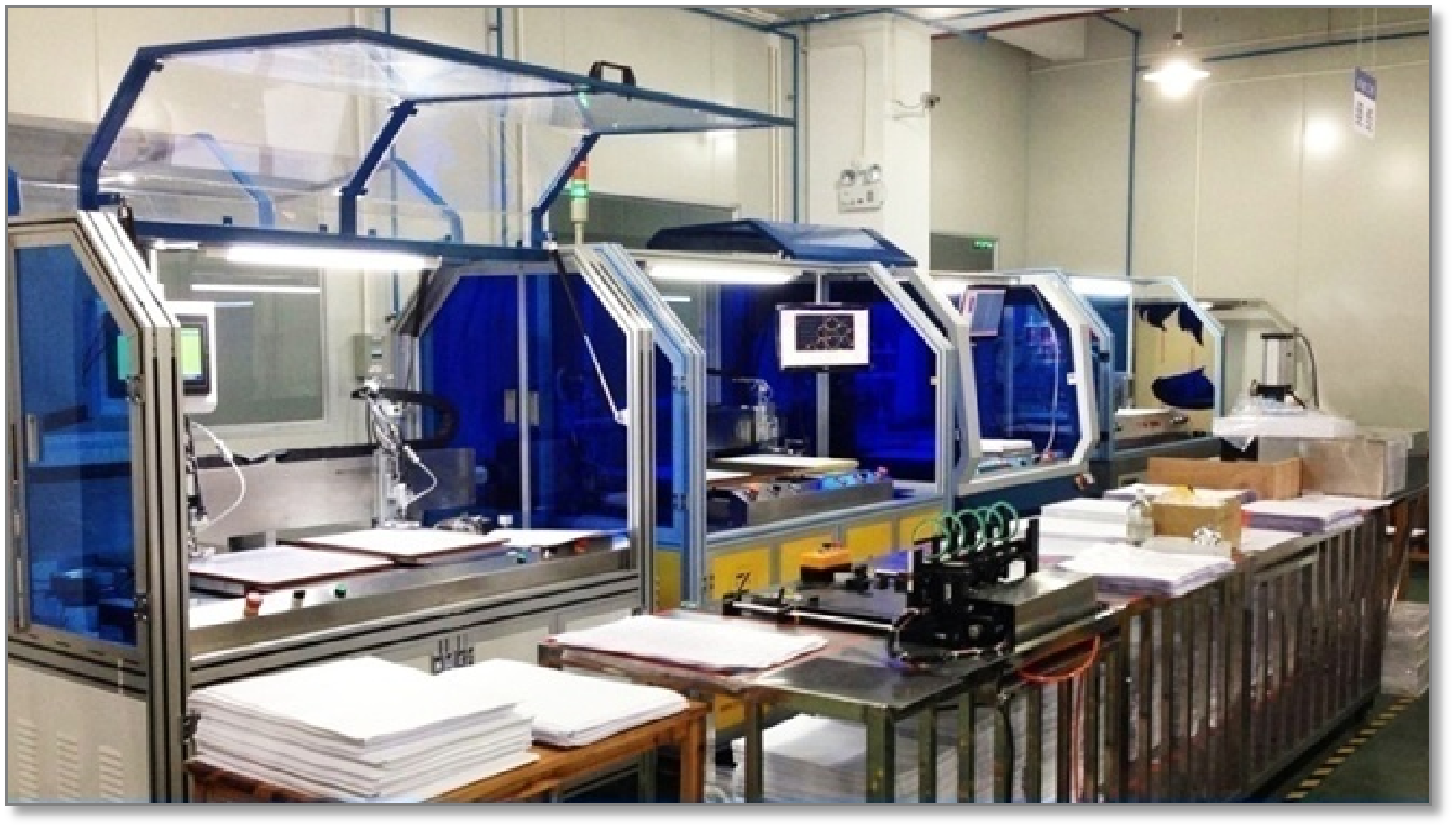
There is no universally better Chinese UHF RFID reader manufacturer; the better choice is the one that can prove the required read point, tag compatibility, integration, and support for your tool-tracking project. DAILY RFID is one Chinese manufacturer to evaluate. It was founded in 2008, operates a 28,000 m² factory with 180 to 200 employees and 38 engineers, and reports an 80% export ratio with main markets in the EU and USA. Its annual output includes 100,000 RFID reader units. Compare manufacturers on the same checklist: sample testing with your metal tools, on-metal tag options, reader power and frequency configuration, MES or ERP integration, exception logging, and spare-parts support.
Use a smart cabinet when the control point is controlled storage and check-out or check-in. Use a fixed reader when the control point is station-level tool presence or a work-in-process station. Use a gate when the control point is tool-room entry or exit. Use a handheld reader for exception checks, rack or zone audits, and missing-tool investigation. Many projects use a cabinet or gate plus a fixed reader and a handheld, rather than one device for every event.
Use UHF on-metal tags, flexible on-metal labels, and isolation materials for metal racks, cabinets, and equipment. Add foam or ferrite spacing where needed, and retune the reader and antenna after installation. Place tags on non-grip and non-wear areas. Tune cabinet antenna polling and shielding to reduce missed or cross-layer reads. If a tool still cannot be read reliably, change the tag position or tag structure before increasing reader power across the whole zone.
Define the coding rule, write EPC and user-memory data, read back and compare after writing, and lock key fields where needed. Bind each tool position to a unique RFID tag in a smart cabinet and trigger inventory when the door opens or closes. Record user, time, tool ID, and exception status. For station reads, record the read-point ID and timestamp so the event can be reconciled with the tool’s physical movement.
Test the actual tools, actual tag positions, actual read points, and actual network conditions. Use sample kits and ROI testing to compare standard labels, on-metal tags, encapsulated hard tags, and harsh-environment tags. Verify cabinet door events, gate zone separation, fixed-reader antenna coverage, handheld exception checks, EPC write verification, and local buffering or resumable upload. Request a sample kit and a site checklist from DAILY RFID before committing to a full line rollout.
Next step: Share your tool list, metal content, station layout, and check-out rules with DAILY RFID to request a sample kit, reader configuration, and deployment checklist. Contact: sales@rfid-in-china.com or WhatsApp +86 15817191372.
Download the company profile and product catalog: DAILY RFID company profile (PDF).
Conclusion: Build the Tool-Tracking Loop, Then Choose the Reader
Assembly-line tool tracking works when the physical tool, the read point, and the record are designed together. Start with the tool and its tag, define the check-out, check-in, station, and exception events, then select the cabinet, fixed reader, gate, or handheld reader that captures those events with a controlled read zone. Use UHF RFID readers that match the regional frequency, power, interface, and integration requirements, and verify EPC data, door events, and exception logs before scaling.
DAILY RFID provides the tags, readers, antennas, smart cabinets, and integration support needed to test this loop on a real assembly line. The verified deployment facts in this guide are a starting point for a pilot, not a substitute for site testing with your tools and read points.
Have Questions or Need More Details?
Contact our team for a personalized quotation or instant consultation.
Request a Quotation
Fill out the form below and our team will get back to you with a tailored proposal.
WhatsApp Direct Chat
Prefer to chat in real-time? Message us on WhatsApp for instant assistance & quick answers.
- Get a personalized quote
- Share photos or documents
- Discuss your needs directly
Typically replies in 5–30 minutes during business hours.