
Long-Term UHF RFID Reader Partnerships: Integration and Modular Growth FAQs
A long-term UHF RFID reader partnership is a supply and integration relationship that lets a factory start with one read point and expand into modules, tags, cabinets, and full RFID systems without rebuilding the data model. The partnership question is therefore not only what the reader can do today, but whether the supplier can support the next integration stage with documented interfaces, acceptance tests, lead times, and after-sales routes.
This FAQ-oriented guide is written for procurement and engineering teams at the Decision to Execution stage. It uses approved product-line facts from DAILY RFID CO., LIMITED and selected third-party industry data to explain how a gate-to-module-to-system roadmap can be evaluated in practice.
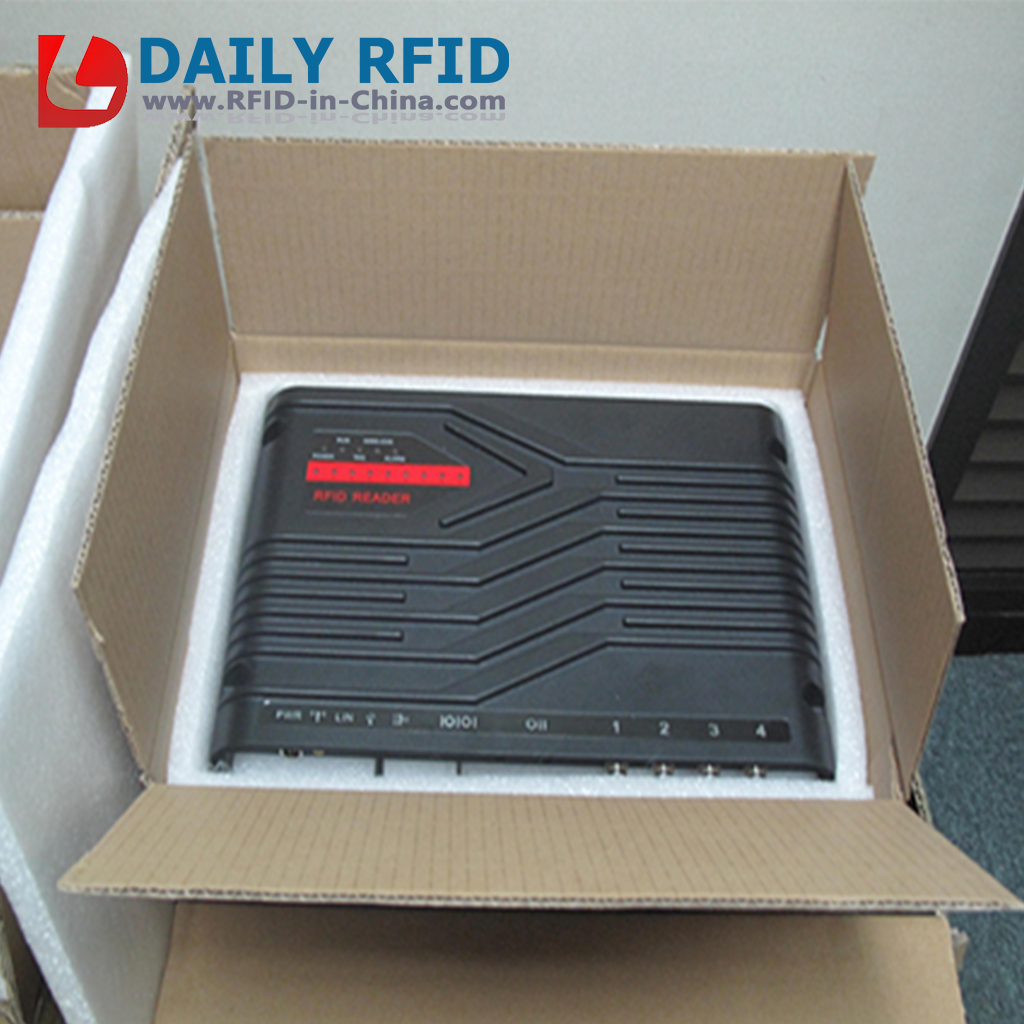
Cover: UHF RFID reader hardware as a building block for phased factory projects.
Problem Definition: why a successful pilot does not automatically become a long-term system
Most UHF RFID pilots are judged on whether one read point works. A long-term partnership is judged on whether the second, third, and tenth read points can be added without changing suppliers, software assumptions, or acceptance rules. The gap between those two tests is where many factory roadmaps lose time.
A pilot can pass and still leave the buyer with an unstable expansion path when four issues are not settled early:
- Interface continuity. The reader must expose usable integration options for ERP, WMS, MES, or custom software. Without documented protocols and development support, the pilot remains a standalone tool.
- Portfolio continuity. A factory may begin with a gate-style fixed read point, add desktop tag encoding, then introduce tool cabinets or handheld exception checks. A partner with a narrow product range can force a new integration cycle at each stage.
- Acceptance continuity. Sample approval is not the same as production acceptance. Fixed readers, handheld readers, smart cabinets, labels, and tags can require different quality gates.
- Supply continuity. MOQ, lead time, monthly capacity, and after-sales support must be visible before the buyer commits to a multi-site rollout.
The practical answer is to evaluate the supplier as a modular integration partner. That means mapping the factory roadmap first, then matching each stage to a documented product line, quality test, and commercial term.
Industry Background: UHF RFID is becoming an integration decision
UHF RFID is no longer only a retail label technology. Mordor Intelligence reports that UHF captured 40.72% of total RFID market revenue in 2025 and projects the UHF RFID market to surpass USD 14.9 billion by 2031 with a CAGR of 12.45%. MarketsandMarkets expects Asia Pacific to account for the largest RFID market share from 2025 to 2034. These figures describe the market context; they do not prove that any single reader model will fit a given factory.
The adoption signal is also visible in manufacturing. Mordor Intelligence reports that over 60% of factories adopting Industry 4.0 deploy RFID readers for asset traceability. For buyers, this shifts the selection question from whether to use UHF RFID to how to keep reader hardware, tags, antennas, and software integration coherent as the project grows.
The air-interface baseline is stable. UHF RFID readers operate under the EPCglobal Gen2 standard, also identified as ISO/IEC 18000-6C/63, as published by GS1. That standard supports protocol compatibility, but it does not replace site-level checks for regional frequency rules, metal interference, read-zone design, or system acceptance. Integration expectations are also rising: Turck states that selected UHF RFID readers support OPC UA through the AutoID Companion Specification for PLC, MES, ERP, WMS, or cloud integration. A long-term partner should therefore be able to explain both its reader interfaces and its path from a single device test to a multi-reader workflow.
Detailed Solution: a gate-to-module-to-system partnership model
DAILY RFID CO., LIMITED is an RFID manufacturer founded in 2008 in Guangzhou, China. The company operates a 28,000 m² factory with 180–200 employees and 38 engineers, and its annual output includes 100,000 RFID reader units. Its product scope covers RFID tags and RFID readers, including UHF readers, RFID modules, antennas, cards, labels, wristbands, and related systems for smart manufacturing projects.
A practical way to plan a long-term relationship is the gate-to-module-to-system roadmap: a gate-style fixed read point first, then RFID Module integration for tag encoding and initialization, then an RFID System that combines fixed readers, handheld readers, tags, cabinets, and software integration. The partner does not need to deliver every stage on day one, but it should be able to show how the stages connect.

Fixed reader hardware supports gate-style and station-level read points in a phased rollout.
Layer 1: read-point hardware that can be added without changing the data model
For fixed read points, DAILY RFID lists a UHF Fixed Reader with a minimum order quantity of 1 unit, a typical production lead time of 15–45 days, and a monthly production capacity of 1,000 units. Quality control is described as Factory Acceptance Test, customization options include antenna gain and interface, and after-sales support includes remote support. Those terms matter for a pilot gate because the buyer can validate one unit, confirm the interface, and then plan the next read point with the same acceptance logic.
For mobile work, the UHF Handheld Reader is listed with a minimum order quantity of 1 unit, a typical production lead time of 15–30 days, and a monthly production capacity of 2,000 units. Customization covers OS, software, and housing; quality control includes Full System Burn-in; after-sales support includes remote and on-site assistance. In a long-term roadmap, the handheld reader often becomes the exception-handling and commissioning tool rather than the primary read point.
For desktop encoding and tag initialization, the DL213 Type-C UHF Reader Module is a Type-C plug-in UHF RFID read-write module designed for retail, warehouse, and office scenarios. It supports ISO18000-6C and EPC Class 1 Gen 2, operates in ISM 860MHz–868MHz, 902MHz–928MHz, and 920MHz–925MHz bands, has a maximum transmit power of 23dBm, and provides a reading range of 0.1cm to 10cm. It reads up to 5 tags simultaneously with an average read time of less than 10ms per 64 bits, uses a DC +5V supply with 3W power consumption, and connects through a Type-C USB interface.
For system-level tool control, the RFID Smart Tool Cabinet is listed with a minimum order quantity of 1 unit, a typical production lead time of 20–45 days, and a monthly production capacity of 300 units. Quality control follows System Integration Test; customization includes cabinet size, reader module, and software; after-sales support includes remote and on-site assistance. This is an example of how a reader partnership can extend from hardware into a configured system.
Layer 2: integration support that shortens the path from pilot to system
Integration is not only a software task; it is a supplier capability. DAILY RFID provides SDKs, serial and TCP/IP protocol documents, demo software, and development kits for ERP, WMS, MES, and custom software integration. The recommended sequence is to complete single-device read/write tests first, then scale to multi-reader and multi-node workflows. That sequence reduces the risk of debugging reader, network, and application issues at the same time.
This is also where the modular roadmap becomes practical. A pilot gate can validate tag reads and the data payload. A desktop module can validate encoding and initialization. A smart cabinet can validate a closed-loop system with permissions and software. A handheld reader can validate exception handling. Each stage should reuse the same tag identity rules and the same integration contract where possible.
For network design, DAILY RFID fixed readers can be deployed with PoE, wired Ethernet, WiFi, or GPRS according to site conditions. Wired or PoE links are recommended for critical read points, while remote points can use local buffering and resumable upload to protect data continuity. These are deployment options, not a claim that every site needs the same architecture.
Layer 3: quality, capacity, and after-sales terms that support repeat-system trust
Quality control across the product lines includes 100% functional testing, signal testing, visual inspection, batch sampling, peel tests, and full system burn-in, depending on the product type. The buyer should match the test to the building block: Factory Acceptance Test for fixed readers, Full System Burn-in for handheld readers, System Integration Test for smart cabinets, 100% Signal Test for asset tracking tags, and Peel and Signal Test for UHF on-metal labels.
After-sales support includes remote and on-site technical support, replacement warranty, and technical assistance across global markets, including the EU, Asia, and the Middle East. Company background lists an 80% export ratio and main markets in the EU and USA; product-line data also lists Global, Asia, and Middle East markets. For a long-term partnership, the buyer should confirm the support route, spare-parts process, and escalation contact before the first site goes live.
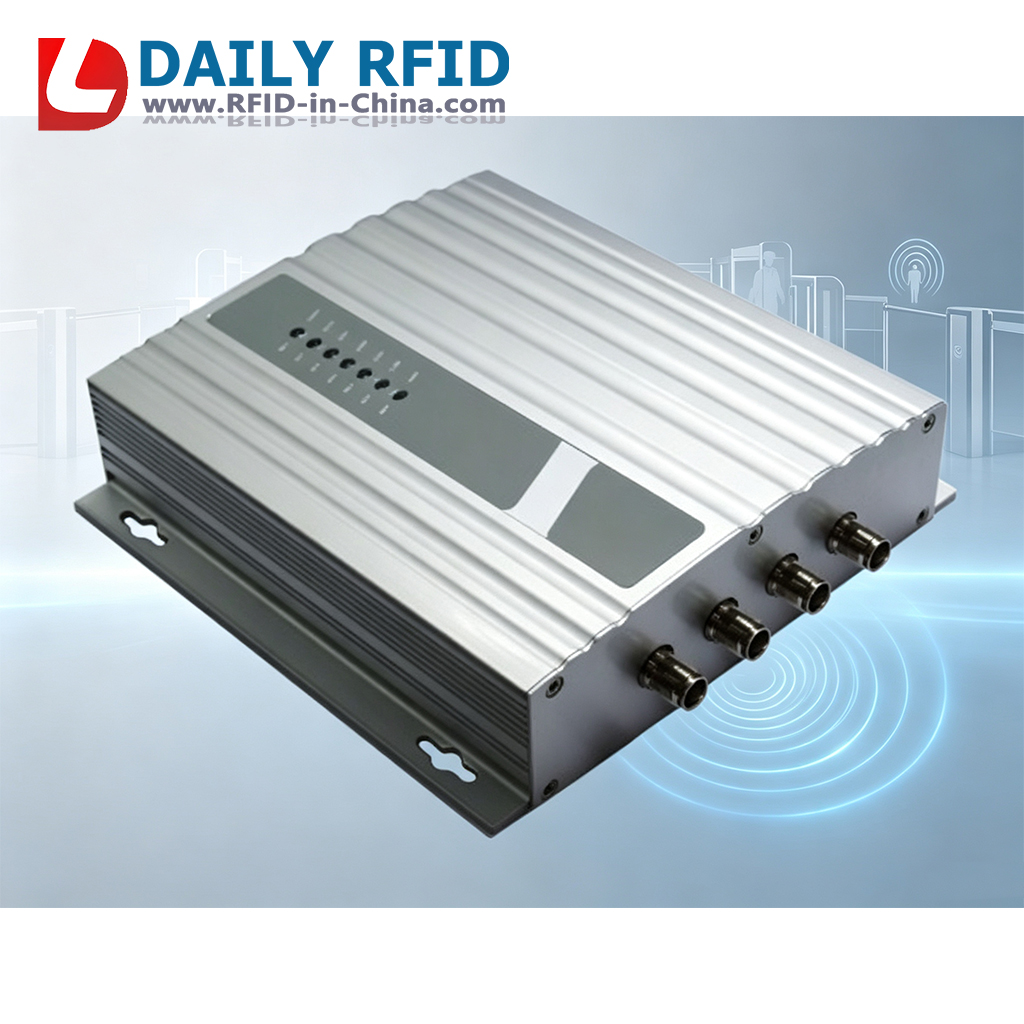
Multi-read-point expansion should be planned with interface, acceptance, and lead-time terms in view.
Comparison Table: building blocks in a phased UHF RFID partnership
The table below uses only documented product-line facts. It is not a ranking. It is a planning view of how different building blocks carry different MOQ, lead-time, quality, and customization terms.
| Building block | Role in the roadmap | Documented commercial and delivery terms | Quality / acceptance evidence | Customization and support evidence |
|---|---|---|---|---|
| UHF Fixed Reader | Gate-style read point, inbound/outbound station, or fixed workstation | MOQ 1 unit; typical production lead time 15–45 days; monthly capacity 1,000 units | Factory Acceptance Test | Antenna gain and interface options; remote support; exports to Global and EU markets |
| UHF Handheld Reader | Mobile inventory, exception checks, commissioning, and field verification | MOQ 1 unit; typical production lead time 15–30 days; monthly capacity 2,000 units | Full System Burn-in | OS, software, and housing customization; remote and on-site after-sales support |
| DL213 Type-C UHF Reader Module | Desktop UHF tag encoding and initialization | Module data: Type-C USB; DC +5V; 3W; reading range 0.1cm–10cm; up to 5 tags simultaneously; average read time less than 10ms per 64 bits | Not specified in the provided module text | ISM bands 860–868MHz, 902–928MHz, and 920–925MHz; maximum transmit power 23dBm |
| RFID Smart Tool Cabinet | Closed-loop tool and asset control as a configured system | MOQ 1 unit; typical production lead time 20–45 days; monthly capacity 300 units | System Integration Test | Cabinet size, reader module, and software customization; remote and on-site support |
| RFID Asset Tracking Tag | Asset identity across the facility, including tools and equipment | MOQ 500 units; standard delivery time 7–18 days; monthly capacity 800,000 units | 100% Signal Test | Size, adhesive, encoding, and printing customization |
| UHF On-Metal Label | Tagging metal assets, containers, and returnable items | MOQ 1,000 units; typical production lead time 7–15 days; monthly capacity 1,000,000 units | Peel and Signal Test | Label size, adhesive, and printable surface options |
The table shows why a single MOQ or lead-time number cannot describe a long-term partnership. A reader pilot may start with one unit, while the tag and label volumes that support a full facility are measured in hundreds or thousands. The buyer should therefore separate pilot hardware terms from consumable and system terms.
Step-by-Step Breakdown: how to structure the partnership before scaling
- Map the read points before choosing the reader form factor. List the gate-style read point, fixed workstation, desktop encoding point, tool cabinet, and mobile exception route. Match each point to a building block rather than forcing one reader type to cover every task.
- Define the data payload and integration interface. Confirm what the reader must send to ERP, WMS, MES, or custom software. Use the supplier SDK, serial and TCP/IP protocol documents, demo software, and development kit to run a single-device read/write test before multi-reader expansion.
- Set acceptance tests by building block. Use Factory Acceptance Test for fixed readers, Full System Burn-in for handheld readers, System Integration Test for smart cabinets, 100% Signal Test for asset tracking tags, and Peel and Signal Test for UHF on-metal labels. Sample approval should be followed by the production acceptance test that matches the product.
- Plan modular expansion with MOQ and lead time visible. The UHF Fixed Reader starts at MOQ 1 unit with a 15–45 day lead time; the UHF Handheld Reader starts at MOQ 1 unit with a 15–30 day lead time; the Smart Tool Cabinet starts at MOQ 1 unit with a 20–45 day lead time. Tag and label volumes are different: asset tracking tags start at 500 units, and UHF on-metal labels start at 1,000 units.
- Write lifecycle terms into the partnership. Confirm monthly capacity, after-sales route, replacement warranty, and technical support before the rollout. For reader hardware, monthly capacity is listed as 1,000 units for fixed readers and 2,000 units for handheld readers. For smart cabinets, it is 300 units. These numbers should be checked against the actual rollout schedule.
Use Cases: where a modular UHF RFID roadmap fits smart manufacturing
1. Factory inbound and outbound gate
A gate-style fixed read point can identify tagged containers, pallets, or returnable transport items as they move between zones. The fixed reader line is documented with Factory Acceptance Test, antenna gain and interface customization, and remote support. The buyer should validate the read zone and the data payload before adding more gates.
2. Work-in-process and tool tracking
Tool and asset control can use RFID asset tracking tags, handheld readers, and a smart tool cabinet. The asset tag line uses 100% Signal Test and offers size, adhesive, encoding, and printing customization. The smart cabinet uses System Integration Test and supports cabinet size, reader module, and software customization. This is a practical example of moving from a reader purchase to a system-level relationship.
3. Desktop tag encoding and initialization
The DL213 Type-C UHF Reader Module is designed for desktop UHF tag encoding and initialization in retail, warehouse, and office scenarios. It reads up to 5 tags simultaneously and has a 0.1cm–10cm reading range. This makes it a different building block from a long-range gate reader, and it should be tested with the actual tag and encoding workflow.
4. Aerospace and material-flow research reference
An institutional paper describes RFID-enabled trolley tracking in a large-scale aerospace manufacturing environment, linked with a business-intelligence visual-management system. The paper is useful as an application reference for material-flow visibility, but it does not establish reader performance for every factory. Buyers should still run their own acceptance test on the chosen hardware and tag combination.
5. Metal assets and returnable items
UHF on-metal labels are listed with Peel and Signal Test, MOQ 1,000 units, and a 7–15 day production lead time. They are relevant when the roadmap includes metal containers, tools, or returnable transport items. The label adhesive and printable surface should be matched to the surface and cleaning process before scale-up.
FAQ: long-term UHF RFID reader partnerships and integration
Which UHF RFID standards should a long-term reader partner support?
The baseline air-interface standard is EPCglobal Gen2, also identified as ISO/IEC 18000-6C/63, as published by GS1. For the DL213 Type-C UHF Reader Module, DAILY RFID lists support for ISO18000-6C and EPC Class 1 Gen 2, with ISM bands of 860MHz–868MHz, 902MHz–928MHz, and 920MHz–925MHz. Regional radio approval, site EMC checks, and metal-interference testing remain project-specific and should be confirmed before deployment.
Can one partner support a roadmap from a pilot gate to a full RFID system?
DAILY RFID documents a product scope that covers UHF Fixed Readers, UHF Handheld Readers, the DL213 Type-C UHF Reader Module, RFID Smart Tool Cabinets, RFID Asset Tracking Tags, and UHF On-Metal Labels. Integration support includes SDKs, serial and TCP/IP protocol documents, demo software, and development kits for ERP, WMS, MES, and custom software. The practical test is whether the partner can connect the first read point to the next building block with the same data and acceptance logic.
What commercial terms should be confirmed before scaling a modular rollout?
Confirm MOQ, lead time, monthly capacity, customization scope, and after-sales route by product line. Documented examples include MOQ 1 unit for UHF Fixed Readers, UHF Handheld Readers, and RFID Smart Tool Cabinets; MOQ 500 units for RFID Asset Tracking Tags; and MOQ 1,000 units for UHF On-Metal Labels. Lead times range from 7–15 days for UHF On-Metal Labels to 15–45 days for UHF Fixed Readers and 20–45 days for RFID Smart Tool Cabinets. Payment terms are agreed by order value and customization requirements, so they should be confirmed in the quotation rather than assumed from a catalog.
What sample or acceptance test should be agreed before full deployment?
The acceptance test should match the building block. Use Sample Confirmation or Sample Approval for the initial sample stage, then move to Factory Acceptance Test for fixed readers, Full System Burn-in for handheld readers, System Integration Test for smart cabinets, 100% Signal Test for asset tracking tags, and Peel and Signal Test for UHF on-metal labels. For integrated projects, complete a single-device read/write test first, then test multi-reader and multi-node workflows.
What lead time and capacity should a long-term UHF RFID reader partner disclose?
Ask for lead time and monthly capacity by product line, not as a single company average. Documented terms include 15–45 days and 1,000 units per month for UHF Fixed Readers; 15–30 days and 2,000 units per month for UHF Handheld Readers; 20–45 days and 300 units per month for RFID Smart Tool Cabinets; 7–18 days and 800,000 units per month for RFID Asset Tracking Tags; and 7–15 days and 1,000,000 units per month for UHF On-Metal Labels. For a sample kit, quotation, or roadmap review, contact DAILY RFID at sales@rfid-in-china.com or +86 15817191372.
Conclusion: choose a partner that can carry the second project, not only the first order
Long-term UHF RFID reader partnerships are proven at the second deployment, not at the first sample. The buyer needs a partner that can explain how a gate-style read point becomes a module workflow, how a module workflow connects to a system, and how each stage is accepted, supplied, and supported. DAILY RFID documents product-line facts for fixed readers, handheld readers, modules, smart cabinets, asset tags, and on-metal labels, together with integration support, quality tests, lead times, and after-sales routes. Those facts provide a practical basis for a modular roadmap review.
For a sample, quotation, or technical discussion, contact DAILY RFID CO., LIMITED at www.rfid-in-china.com, email sales@rfid-in-china.com, or phone +86 15817191372. The company profile brochure is available for download: DAILY RFID company profile PDF.
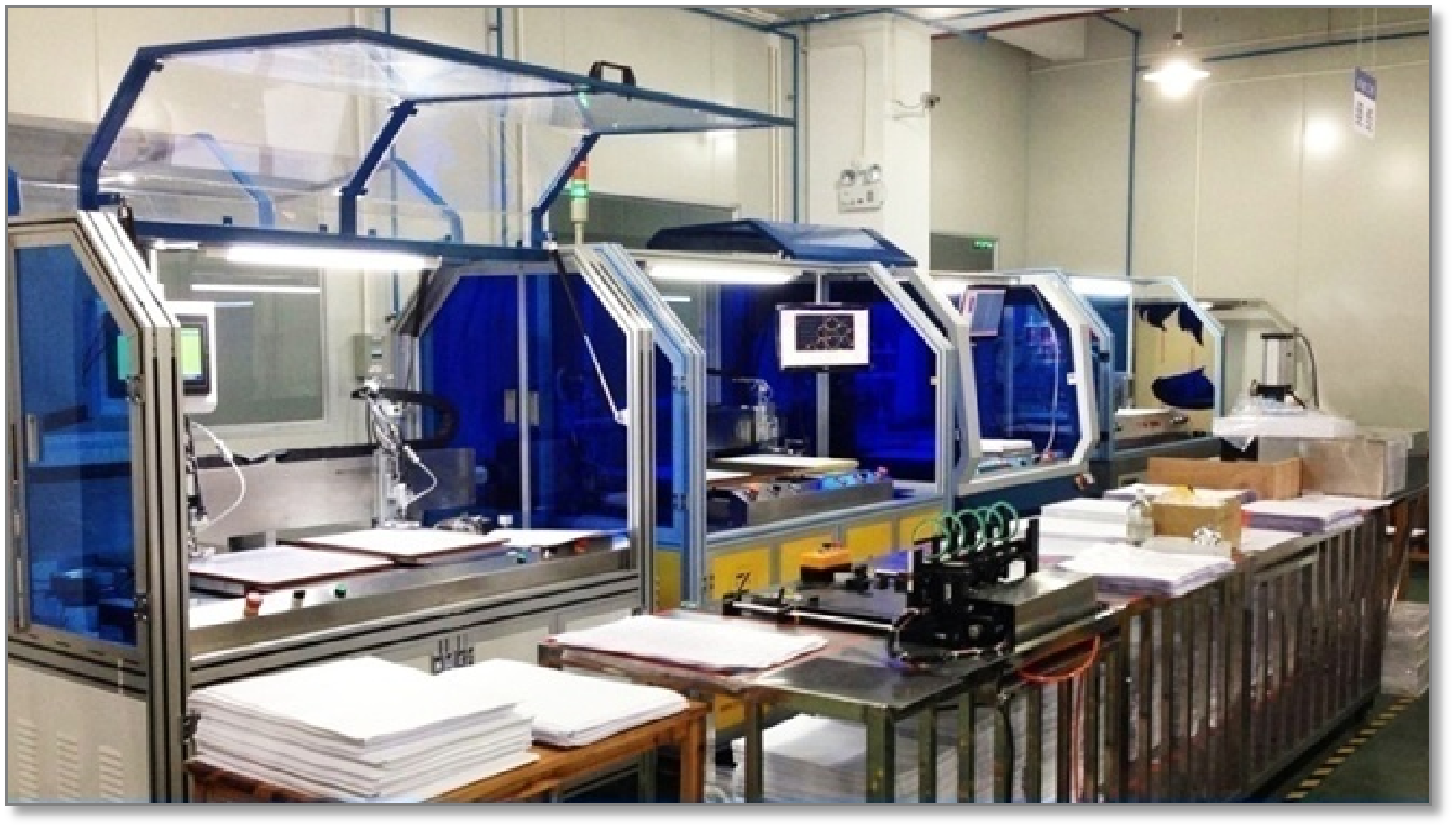
Production proof: DAILY RFID manufacturing equipment for RFID cards and related products.
Have Questions or Need More Details?
Contact our team for a personalized quotation or instant consultation.
Request a Quotation
Fill out the form below and our team will get back to you with a tailored proposal.
WhatsApp Direct Chat
Prefer to chat in real-time? Message us on WhatsApp for instant assistance & quick answers.
- Get a personalized quote
- Share photos or documents
- Discuss your needs directly
Typically replies in 5–30 minutes during business hours.