
UHF RFID Reader Compliance Roadmap for Smart Manufacturing: Regional Certifications & Standards
UHF RFID Reader Compliance Roadmap for Smart Manufacturing: Regional Certifications & Standards
A UHF RFID reader program in a smart factory is usually approved or blocked long before the first tag is read. Radio expectations, frequency allocations and documentation habits differ from market to market, and a reader configuration that is acceptable on one production line may need different paperwork before it can be installed, serviced or re-ordered in another region. The workable answer is to treat compliance as a sequence of decisions, not as a certificate that arrives in a box.
This roadmap has five checkpoints: (1) region and frequency mapping, (2) a documentation pack built per product form factor, (3) test evidence that matches the shipped configuration, (4) sample validation in the real RF environment, and (5) change control and supply continuity that hold for the life of the deployment.
Manufacturing teams that buy from DAILY RFID — an RFID manufacturer established in 2008 in Guangzhou, China — typically run this sequence across fixed readers, handheld readers, embedded reader modules and complete integrated systems before a volume order is released.
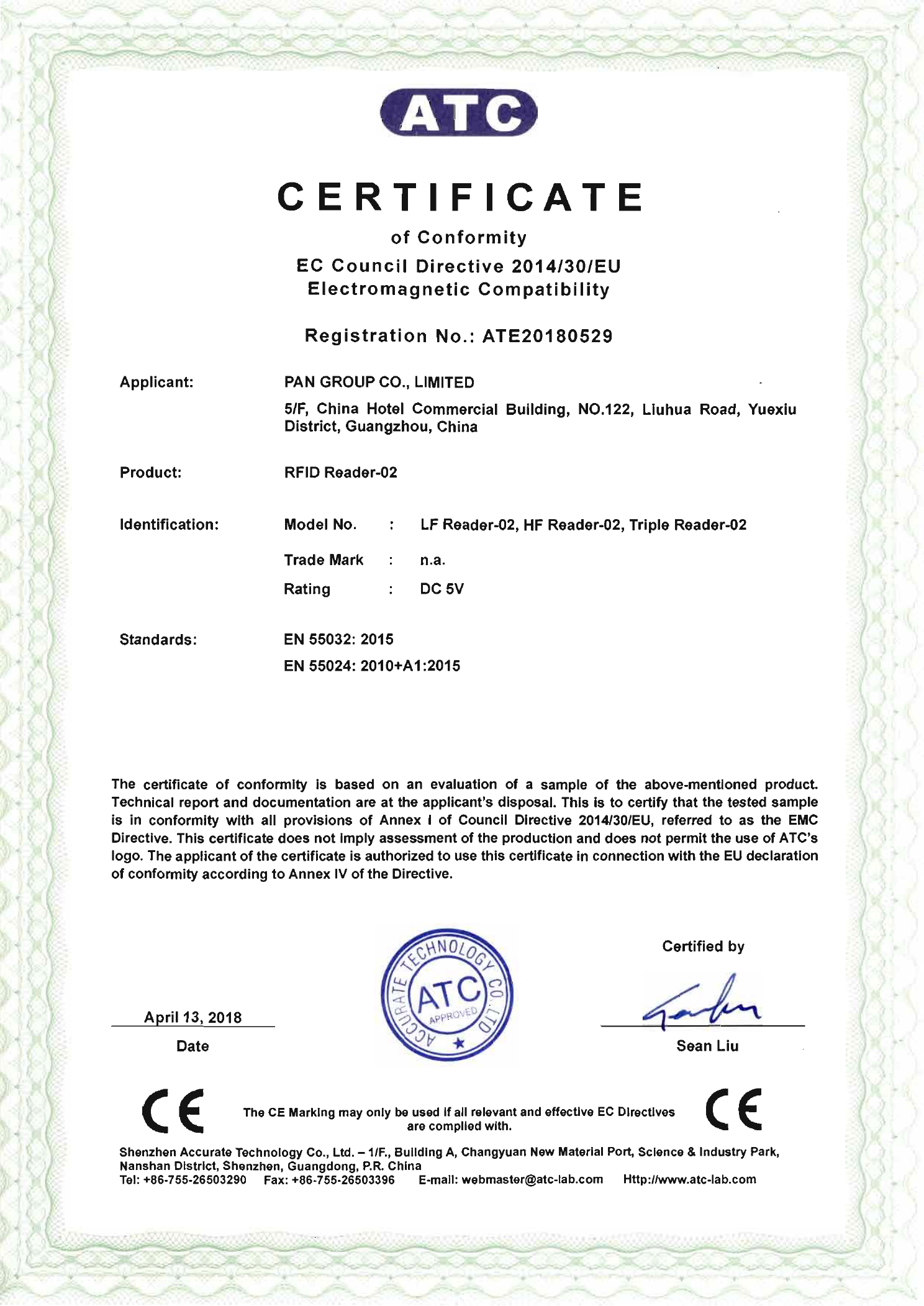
Problem Definition: Why Compliance Slips in Factory RFID Projects
Compliance rarely fails at the reader itself. It fails at the boundaries between documents, product versions and markets. Three patterns account for most of the rework.
- Form-factor generalization. A document set approved for one reader type is assumed to cover another. In practice, a UHF fixed reader with configurable antenna gain and interface options, a UHF handheld reader with customizable operating system, software and housing, and an embedded UHF reader module with a Type-C interface and a 23 dBm maximum transmit power are three separate declared products. Each needs its own technical description, configuration record and test evidence.
- Configuration drift after approval. When a supplier changes antenna gain, interface or housing, or when a factory changes power and frequency settings on site, the original record may no longer describe the device that is actually installed.
- Documentation decay across re-orders. Long-term programs re-order the same reader model for years. If test evidence, acceptance criteria and after-sales terms are not maintained, the second purchase order can be slower to release than the first.
Frequency planning sits underneath all three. Reader and module platforms operate at UHF 860 MHz–960 MHz, with HF at 13.56 MHz or LF at 125 kHz on dual-frequency products. The DL213 Type-C UHF reader module supports ISM 860 MHz–868 MHz, 902 MHz–928 MHz and 920 MHz–925 MHz as separate bands. A reader configured for one band is not automatically a drop-in replacement for a market that uses another, and that single fact drives most regional documentation requests.
Industry Background: Regional Expectations Are Now a Procurement Criterion
The commercial context explains why compliance moved from an afterthought to a line item in the purchase decision. The global UHF RFID reader market was valued at approximately USD 4.8 billion in 2025 and is projected to reach USD 11.2 billion by 2034 (Dataintelo). UHF RFID technology captured 40.72% of total RFID market revenue in 2025, driven by retail inventory cycles and multi-item read capability (Mordor Intelligence).
Regional demand is uneven. The Americas lead UHF RFID adoption with more than 60% of global UHF tag usage as of 2025, largely because of retail mandates (IDTechEx), while Asia Pacific is the fastest-growing region for UHF RFID hardware, with expected shipment growth of 11.8% CAGR through 2031 (ABI Research). A supplier that serves several of these regions at once cannot use a single, unversioned document set.
At the protocol level, the picture is simpler. UHF RFID readers are standardized globally under the EPCglobal Gen2 protocol, also published as ISO/IEC 18000-6C (GS1 / ISO). The air interface is therefore common. What still differs is frequency allocation, electromagnetic behaviour on site, and the documentation a buying organisation expects to see attached to a purchase order.
On the supply side, DAILY RFID CO., LIMITED operates a 28,000 m² facility with 180–200 employees, including 38 R&D engineers, an export ratio of approximately 80%, and main markets in the EU and USA. Annual output is 50 million RFID tags, 30 million RFID cards and 100,000 RFID readers. Reader lines are exported to Global, EU, Middle East and Asian markets depending on the product line, which means multi-region documentation is routine rather than exceptional.
The practical implication for buyers: because the air-interface protocol is shared, most compliance effort should be spent on frequency mapping, per-form-factor documentation, and evidence that follows the shipped configuration — not on re-testing a protocol that is already standard.
Building the Compliance File: Five Parts That Survive an Audit
Part 1 — Region and frequency map
Start with a two-column list: every country where a reader will be installed, and the frequency range the reader will actually be set to in that country. Because the same hardware platform can operate at 860 MHz–960 MHz, and module-level products declare separate 860–868 MHz, 902–928 MHz and 920–925 MHz bands, the frequency map is the document that prevents a technically compliant reader from being configured incorrectly on site.
Part 2 — Documentation pack per form factor
Each reader family needs its own annex. A fixed reader annex should cover antenna gain and interface configuration options. A handheld reader annex should cover operating system, software and housing customization. A module annex should cover protocol support, maximum transmit power, supply voltage, power consumption and operating temperature — the DL213 Type-C module, for example, supports ISO18000-6C and EPC Class 1 Gen 2, runs at DC +5 V with 3 W power consumption, reads 0.1 cm–10 cm, and is rated for an operating range of −10 °C to 60 °C with storage at −20 °C to 70 °C.
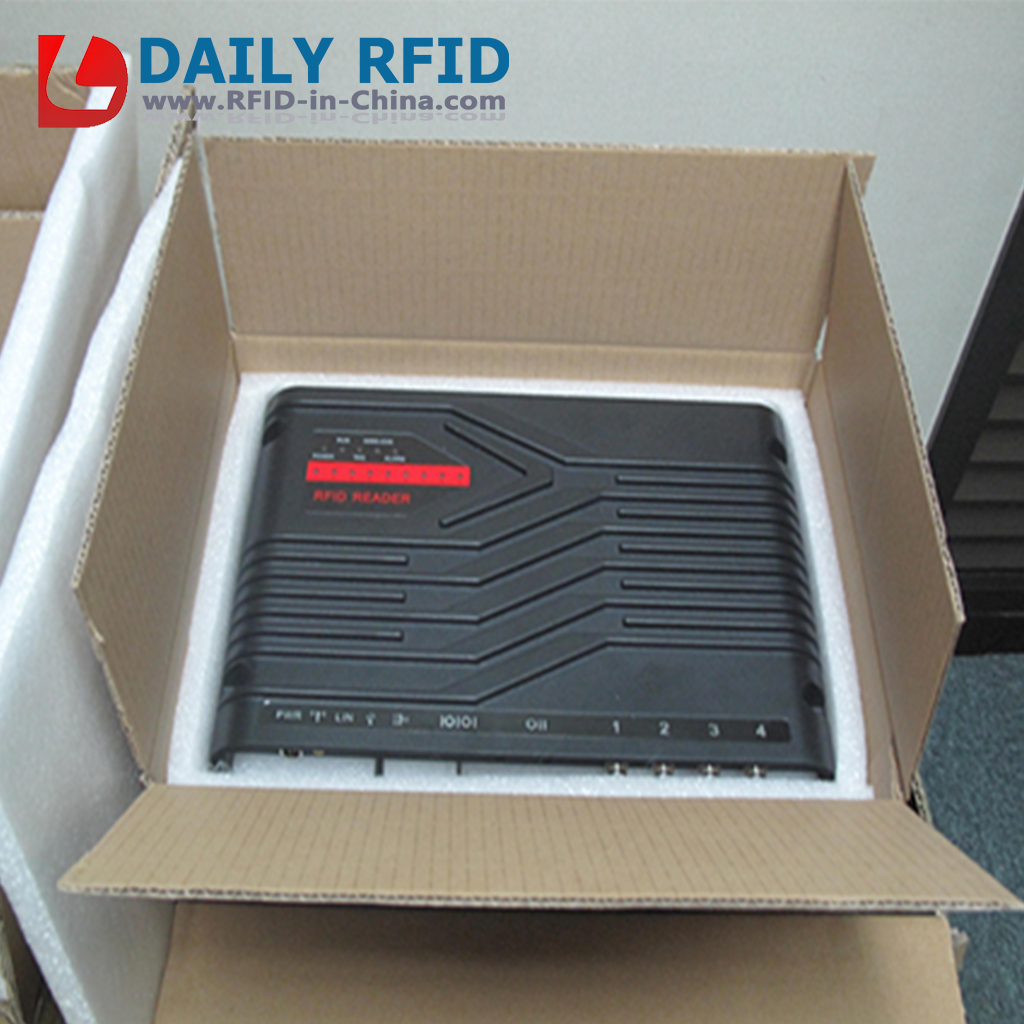
Part 3 — Test and quality evidence
Evidence should name the test that was actually performed. Depending on product type, DAILY RFID quality control includes 100% functional testing, signal testing, visual inspection, batch sampling, peel tests, and full system burn-in for readers. Fixed reader programs are supported with Factory Acceptance Test documentation, integrated systems such as RFID smart tool cabinets follow System Integration Test standards, and certain tag programs use Precision Signal Test or heat and signal testing. A compliance file is only as strong as the match between the test listed and the product shipped.

Part 4 — Integration and EMC annex
Factories rarely deploy a reader in isolation. Where a module is embedded into an existing machine or kiosk, the annex should describe power filtering, grounding, antenna spacing and enclosure layout. A sensible supplier runs an EMC pre-scan and repeats read-distance testing before mass production, so that the customer device keeps both communication stability and RFID performance. On the mechanical side, site conditions matter: reader platforms are offered at an IP54 equivalent protection level, and options such as a built-in near-field localized antenna, an integrated low-profile flat-panel near-field antenna, a buzzer read prompt, and anti-collision with AI-enhanced single-tag lock filtering all change what the deployment can claim.
Part 5 — Supply and lifecycle annex
The last part of the file is commercial but no less important: minimum order quantity, lead time, monthly capacity, acceptance criteria and after-sales terms. These determine whether the approved configuration can actually be reproduced on the next order.
Step-by-Step Breakdown: Running the Roadmap
Step 1 — Define the deployment scope. List every site, country and read point, and separate fixed read points from mobile inventory tasks. This determines which form factors enter the file.
Step 2 — Map frequency and power per region. Record the band and power setting for each country. Where a market uses a different band, note whether the same hardware platform can be re-configured or whether a different model is required.
Step 3 — Request one documentation pack per form factor. Ask for the fixed reader, handheld reader, module and any integrated system documentation separately, rather than accepting a generic product sheet.
Step 4 — Verify that test evidence matches the configuration. Confirm that the test record references the antenna gain, interface, housing and software version you intend to buy. Factory Acceptance Test documentation for fixed readers and full system burn-in records for handheld readers are typical anchors.
Step 5 — Validate with samples in the real RF environment. Fixed readers and handheld readers can be ordered from 1 unit, which makes pre-rollout validation practical. Test against the conditions that break reads in factories: metal surfaces, liquids, glass, dense tag populations and high-speed conveyor movement.
Step 6 — Freeze acceptance criteria before volume production. Common acceptance criteria include sample approval and sample confirmation, with washing test added for laundry tag programs. Freezing these early prevents disputes later.
Step 7 — Confirm production and supply parameters. Typical production lead times range from 3 to 45 days depending on complexity — 3–15 days for HF readers, 15–30 days for UHF handheld readers, 15–45 days for UHF fixed readers and 20–45 days for smart tool cabinets. Monthly capacity ranges from 300 units for integrated cabinets to 2,000 units for handheld readers and up to 1,000,000 units or more for tag and card lines.
Step 8 — Lock change control and after-sales. Agree in writing how configuration changes are notified, and confirm the support model. DAILY RFID after-sales support includes remote and on-site technical support and replacement warranty across global markets including the EU, Asia and the Middle East.
Use Cases: Where the Roadmap Changes Shape
Assembly line and high-speed conveyor read points
High-speed industrial read points typically combine high-speed UHF readers, antenna arrays and trigger inputs synchronized with photoelectric sensors or PLC signals. The compliance file here centres on the fixed reader annex, the antenna configuration, and thermal and connection behaviour during continuous operation, since industrial readers are expected to run 24/7 with RF power tuning, duty-cycle planning, ventilation space and temperature monitoring.
Tool room and smart cabinet deployments
Metal tools block tag signals, so cabinet programs combine on-metal and rugged tool tags with multi-antenna cabinet layouts. Anti-metal tags carry a minimum order quantity of 50 units with a 7–15 day lead time, while RFID smart tool cabinets start from 1 unit with a 20–45 day lead time and a monthly capacity of 300 units. Documentation here should cover tag positioning rules and cabinet antenna polling, not only the cabinet itself.
Warehouse, dock door and cycle counting
Mobile inventory work is usually served by UHF handheld readers, which start from a minimum order of 1 unit with a standard delivery time of 15–30 days and a monthly capacity of 2,000 units. The documentation annex should record the customization scope — operating system, software and housing — because those choices affect how the device is described.
Tire retreading and rental services
Tire tags and rubber patch solutions are selected according to the production, curing or retreading process. Control points include surface preparation, curing temperature, patch position and sample lifecycle testing, and the device class is intended for the tire retreading and rental services industry. This is a case where the compliance annex is process documentation as much as product documentation.
Compliance Scenario Comparison: Which Reader Form Factor Fits Which Requirement
The table below maps reader form factors to the compliance scenario they typically serve. All figures are drawn from verified product and supply facts.
| Form factor | Typical compliance scenario | Documentation focus | Quality evidence | MOQ | Lead time | Monthly capacity |
|---|---|---|---|---|---|---|
| UHF fixed reader | Dock doors, gates, conveyor read points in multi-region factories | Antenna gain and interface configuration records | Factory Acceptance Test | 1 unit | 15–45 days | 1,000 units |
| UHF handheld reader | Cycle counting, tool room audits, mobile inventory | OS, software and housing customization records | Full system burn-in | 1 unit | 15–30 days | 2,000 units |
| HF RFID reader | Close-range verification and credential workflows | Logo and software customization records | 100% test | 2 units | 3–15 days | 5,000 units |
| UHF reader module | Embedded desktop encoding, kiosk and machine integration | Protocol support (ISO18000-6C, EPC Class 1 Gen 2), power and temperature envelope | Functional and integration testing | — | — | — |
| RFID smart tool cabinet | Integrated asset-control systems inside a factory | Cabinet size, reader module and software records | System Integration Test | 1 unit | 20–45 days | 300 units |
| Anti-metal / asset tags | Metal tools, machinery and high-value assets | Form factor, adhesive and encoding records | 100% signal test | 50 units | 7–15 days | 100,000 units |
Regional Documentation Coverage: What to Request by Market
Suppliers that export into several regions usually hold documentation package by product line rather than by country. The table below summarises how DAILY RFID reader and tag lines are exported and what buyers should request alongside each market entry.
| Market | Reader and product lines involved | Documentation to request | Support model |
|---|---|---|---|
| EU | UHF fixed readers, UHF handheld readers, HF readers, tags | Antenna gain and interface configuration records; test evidence matched to the shipped configuration | Remote support; on-site support for handheld programs |
| Middle East | HF readers, UHF handheld readers, asset tracking tags | Software and logo customization records; batch or 100% test reports | Remote and on-site technical support |
| Asia | HF cards, laundry tags, RFID label and tag programs | Batch sampling, function and packing test records | Replacement warranty and technical support |
| Global | Mixed fleets combining fixed readers, handheld readers and tags | One master file with a separate annex per form factor | Remote support across regions |
FAQ: UHF RFID Reader Compliance and Long-Term Supply
What compliance documentation should be locked before a UHF RFID reader deployment?
Build a per-form-factor pack that includes declared frequency bands and transmit power, interface and antenna-gain configuration records, quality and test evidence, the protection level where relevant, and the market each configuration is intended for. Because the air interface is already standardized under the EPCglobal Gen2 protocol, also known as ISO/IEC 18000-6C, the remaining work is configuration and evidence: which band the device will run in, what was tested, and whether the test record matches the unit being shipped.
Can one supplier cover fixed readers, handheld readers and modules under one compliance file?
Yes, if the file is structured as one master document with annexes. DAILY RFID covers UHF fixed readers with antenna gain and interface customization, UHF handheld readers with OS, software and housing customization, HF readers with logo and software customization, integrated RFID smart tool cabinets, and embedded modules such as the DL213 Type-C UHF reader module, which supports ISO18000-6C and EPC Class 1 Gen 2 across ISM 860–868 MHz, 902–928 MHz and 920–925 MHz bands with a maximum transmit power of 23 dBm. Each annex still has to be reviewed separately because each device is a different declared product.
What determines order quantity and commercial terms in a compliance-ready reader order?
Minimum order quantity varies by product: 1 unit for UHF fixed readers, UHF handheld readers and smart tool cabinets; 2 units for HF reader customization; 50 units for anti-metal tags; 100 units for certain RFID cards and silicone wristbands; 500 units for fabric wristbands and other products; and up to 1,000 units for laundry tags. Payment terms are negotiated based on order quantity, chip type and customization requirements, with T/T, D/P and sight L/C available, and delivery terms of EXW, FOB or CIF.
Can samples be used to validate documentation and read performance before a full rollout?
Sampling is the most reliable way to close a compliance review. UHF fixed readers and handheld readers start from a minimum order of 1 unit, so a validation unit can be tested against the exact site conditions before volume release: metal surfaces, liquids, glass, dense tag populations and conveyor speed. Acceptance criteria commonly used are sample approval and sample confirmation, with washing test added for laundry tag programs. Where a reader module will be embedded, run an EMC pre-scan and repeat read-distance testing before mass production.
How do you keep lead times stable when selecting a long-term UHF RFID reader supply partner in China?
Choose a partner whose documentation, test evidence and capacity stay stable across product generations, so each re-order does not restart the approval process. Typical DAILY RFID production lead times run 3–15 days for HF readers, 15–30 days for UHF handheld readers, 15–45 days for UHF fixed readers and 20–45 days for smart tool cabinets, generally within a 3–45 day range depending on complexity, with monthly capacity from 300 units for integrated cabinets up to 2,000 units for handheld readers. Production, encoding and delivery run from Guangzhou, China, with after-sales technical support available remotely and on site. To validate a configuration for your own factory, request a sample or a quote by email at sales@rfid-in-china.com or by phone and WhatsApp at +86 15817191372 — and download the DAILY RFID company profile to review production capacity before you commit.
Conclusion: Compliance as an Operating Routine, Not a One-Time Event
A regional compliance roadmap for UHF RFID readers is less about finding a single approval document and more about building a repeatable routine: map frequencies by market, keep a separate annex for every form factor, match test evidence to the shipped configuration, validate with samples in the real RF environment, and lock supply and change-control terms for the deployment lifetime.
The underlying certification baseline is genuinely shared across regions, since UHF RFID readers are standardized under the EPCglobal Gen2 protocol and ISO/IEC 18000-6C. The differences that still create work are practical ones — band configuration, antenna gain and interface settings, embedded module integration, and the test records that prove a specific unit was built and checked as declared. Teams that treat those four areas as part of the purchase process rather than as after-sales paperwork are the ones that can scale a reader fleet from one line to a whole plant without re-approving it site by site.
Next Step: Build Your Compliance File Before the Purchase Order
DAILY RFID supports smart manufacturing programs with sample validation, per-form-factor documentation packs and long-term supply planning across Global, EU, Middle East and Asian markets. Fixed readers, handheld readers, embedded modules and integrated systems can all be validated from a minimum order of 1 unit or 2 units depending on product line.
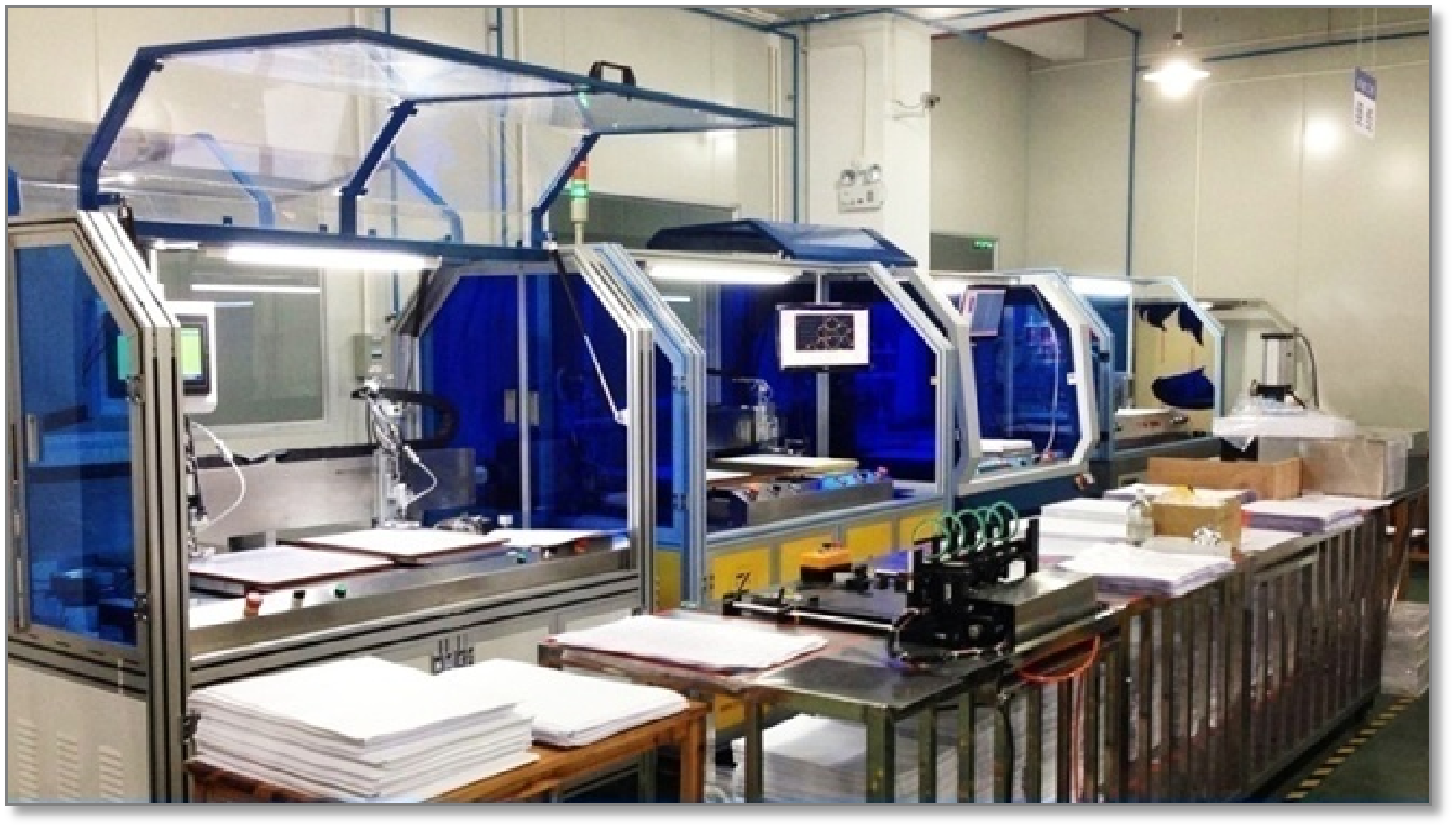
Request a sample, a quotation or a compliance-focused documentation review: email sales@rfid-in-china.com, call or message +86 15817191372, or visit www.rfid-in-china.com. The company profile documents production capacity, quality control procedures and export markets.
Have Questions or Need More Details?
Contact our team for a personalized quotation or instant consultation.
Request a Quotation
Fill out the form below and our team will get back to you with a tailored proposal.
WhatsApp Direct Chat
Prefer to chat in real-time? Message us on WhatsApp for instant assistance & quick answers.
- Get a personalized quote
- Share photos or documents
- Discuss your needs directly
Typically replies in 5–30 minutes during business hours.