
RFID Wristband Explained: Pairing Wearable Tags with UHF RFID Readers in Smart Manufacturing
An RFID wristband is a wearable RFID tag. In smart manufacturing, it works with a UHF RFID reader only when the wristband and the reader share the same UHF band and air-interface protocol, and when the reader antenna field is designed for the way people move through the zone. A wristband is not automatically a UHF tag: LF, HF, UHF, and dual-frequency wristbands exist, and each must be matched to the correct reader.
Wearable tags are useful when the identity carrier must stay with a person, remain visible, survive cleaning, and avoid the friction of a card that is put away, dropped, or shared. That does not make wristbands a universal replacement for RFID cards, hang tags, or tool tags. The right choice depends on whether the object being identified is a person, a document, a garment, a returnable container, or a metal tool.
This guide explains the tag-to-reader relationship, where wristbands fit in smart manufacturing, how they differ from other RFID form factors, and what to check before pairing a wristband with a UHF RFID reader. It uses product facts and deployment examples from the supplied content units and verified data set, and it avoids treating a wearable tag as a generic accessory.
What Is an RFID Wristband in a UHF RFID System?
An RFID wristband is a tag packaged in a wearable band. The package protects the chip and antenna, fixes the tag to a wrist, and determines comfort, cleaning resistance, and reusability. The electrical identity still comes from the RFID chip and antenna inside the band, not from the strap material.
For UHF systems, the wristband must operate in the UHF band and support the reader's air-interface protocol. The supplied product data includes a Dual-Chip RFID Wristbands - UHF H3 & HF Mifare 1K option that combines UHF 860–960 MHz and HF 13.56 MHz in one silicone wristband. Its UHF interface is ISO18000-6C EPC C1 Gen2, its reading distance is up to 5–250 cm depending on reader and IC type, and the band is listed as IP68 waterproof with 100,000 read/write cycles and an operating temperature range of -40°C to +100°C.
That dual-frequency example is useful because it shows both the opportunity and the trap. The opportunity is one wearable credential for hands-free UHF access and short-range HF or NFC actions. The trap is assuming that any wristband will work with any reader. A 125 kHz LF wristband, such as the TK4100 RFID Wristband for Access Control, is not a UHF tag. A 13.56 MHz HF or NFC wristband is also not a UHF tag. Pairing requires frequency discipline.
Why Wristband-to-Reader Pairing Fails in Smart Manufacturing
Most wristband projects fail at the boundary between the wearable tag and the reader, not at the chip itself. The common failure modes are predictable.
- Frequency mismatch. An LF or HF wristband is presented to a UHF reader, or a UHF wristband is expected to support close-range NFC payment without an HF element. The radio link never forms, even though the wristband looks correct.
- Read zone designed for a card, not a body. A wristband sits on a moving wrist, often at an angle, sometimes covered by a sleeve or glove. A reader antenna aimed at a door-card tap point may not create a stable field around the wrist.
- Too much read zone. A high-power reader can capture wristbands in adjacent rooms, corridors, or work cells. The system then records presence without proving intent or location.
- Too little read zone. Low power, poor antenna placement, or dense metal surroundings can create blind spots at the exact point where workers pass.
- Comfort and durability ignored. A band that irritates the wrist, traps moisture, or cannot survive cleaning will be removed or replaced, defeating the identity link.
- Integration treated as an afterthought. Reader interfaces, SDK support, and data filtering determine whether wristband reads become usable events in a MES, WMS, access-control, or safety workflow.
The fix is to treat the wristband and reader as one radio system. The tag sets the identity and the wearable constraints. The reader antenna, power, protocol, and interface set the read zone and the data path. Both sides must be selected together.
Industry Background: Why UHF Wearables Are Moving Into Factory Workflows
UHF RFID is no longer only a retail or logistics technology. The verified data set references Mordor Intelligence data showing that UHF captured 40.72% of total RFID market revenue in 2025, and projects the UHF RFID market to surpass USD 14.9 billion by 2031 at a 12.45% CAGR. The same verified data set states that UHF RFID readers operate under the EPCglobal Gen2 (ISO/IEC 18000-6C/63) standard.
In smart manufacturing, that matters because UHF provides hands-free, multi-tag reading at a distance. A worker wearing a UHF wristband can pass a gate, enter a controlled area, or join a training room without presenting a card. A handheld UHF RFID scanner can check wristbands in a queue or at a temporary workstation. A fixed reader can monitor a doorway or cell boundary. These are radio-frequency workflows, not label-reading workflows.
Wristbands are also a small part of a wider wearable-tag conversation. The supplied product data describes wristbands for access control, cashless payment, corporate campuses, hotels, resorts, theme parks, and events. The Brazil events deployment cited in the corpus used 150,000 RFID wristbands for ticketing, attendee access, cashless concessions, and VIP zone control, with a 40%–80% improvement in entry-lane throughput and a 30%–60% reduction in cashless payment queues. Those are not manufacturing projects, but they prove the operational pattern: a wearable tag plus a reader zone can move people faster than a manual check. Manufacturing teams should borrow the pattern carefully, not copy the event configuration.
How a UHF RFID Wristband Communicates With a UHF RFID Reader
A passive UHF RFID wristband carries an antenna and a chip. When the wristband enters the reader's electromagnetic field, the tag antenna captures RF energy, the chip powers up, and the tag backscatters a modulated signal. The reader decodes the tag identity and applies anti-collision logic so multiple wristbands can be read in the same field.
The supplied reader data shows why reader choice changes the outcome. The UHF Bluetooth RFID Reader DL930B supports ISO18000-6C EPC Gen2 and ISO18000-6B, operates from 902–928 MHz or 920–925 MHz with customization to 860–960 MHz, and offers a 4–8 m reading range. The DL6990 UHF Ceiling RFID Reader uses an integrated antenna, supports ISO18000-6C EPC Class 1 Gen 2, reads up to 50 tags simultaneously, and provides a 0.1–5 m range for room-level or gate-level coverage. The DL1280 Industrial PDA UHF/HF/LF Handheld Reader supports UHF 860–960 MHz, reads up to 100 tags simultaneously, and reaches 0.1–20 m depending on tag and environment.
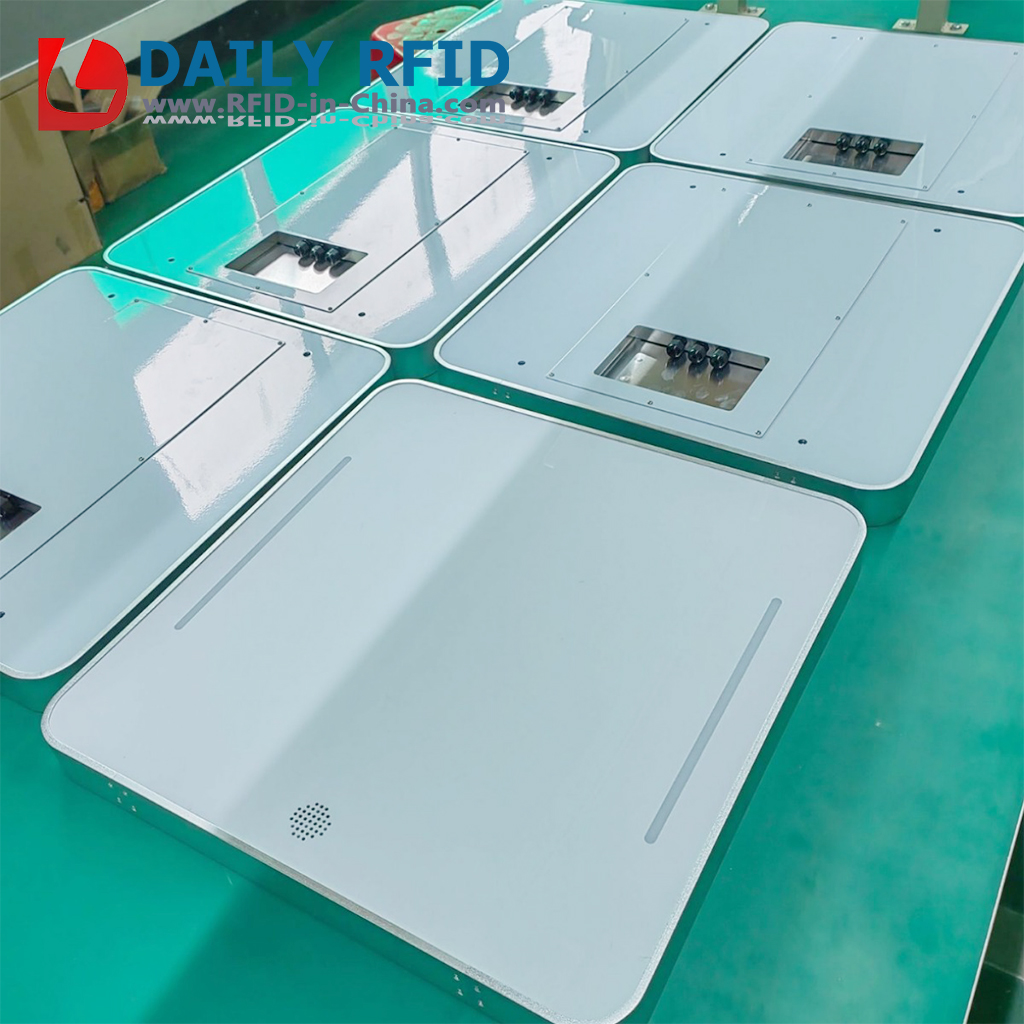
For a wristband project, the reader's headline range is only a starting point. The useful question is whether the reader creates a controlled field at the wrist height and walking path. A ceiling reader may cover a room but spill into a corridor. A gate reader may create a narrow walk-through channel but miss a wrist held close to the body. A handheld reader may be flexible but inconsistent if operators scan from different angles. The tag, antenna, power setting, and physical path must be tested together.
Protocol compatibility is equally practical. A UHF wristband built for EPC Class 1 Gen 2 should be paired with a reader that explicitly supports that protocol. The supplied reader data lists ISO18000-6C and EPC Gen2 support across multiple UHF reader models, but the buyer should still verify the exact model, regional frequency, and firmware configuration. A datasheet statement at product-family level is not a substitute for a model-level check.
RFID Wristband vs RFID Key Card vs RFID Hang Tag vs RFID Tool Tag
These four form factors solve different identification problems. They are not interchangeable simply because each contains an RFID chip.
An RFID wristband is people-centric. It keeps the tag on the person, supports hands-free reading, and can combine UHF long-range identification with HF or NFC short-range actions. It is the right conversation when the subject is a worker, contractor, visitor, trainee, or event participant, and when the credential should not be pocketed or handed over.
An RFID key card or key fob is a close-range credential. The supplied product data for the RFID Key Fob customization lists 13.56 MHz HF/NFC or 125 kHz LF operation, a 1–3 cm reading distance, and materials including PVC, recycled PET/PETG, wood, and epoxy, with IP68 protection. That profile fits doors, lockers, and short-range access points. It is not a hands-free factory-floor tag.
An RFID hang tag is an asset or presentation tag. The RFID Exhibit Hang Tag operates at UHF 860–960 MHz and HF 13.56 MHz, reads up to 5–200 cm depending on reader and IC type, uses coated paper, PVC, or laminated art paper, and supports 100,000 read/write cycles. It fits garments, exhibits, documents, and retail or museum assets where a hanging label is natural. It does not fit a moving wrist.
An RFID tool tag is engineered for metal and abusive handling. The RFID Tool Management Adhesive Tag operates at UHF 860–960 MHz, reads 1–3.5 m on metal with a 4 W EIRP handheld reader and up to 5 m off metal, and uses an anti-metal ferrite layer with 3M industrial adhesive. It fits tools, fixtures, containers, and production assets. It is not a personnel credential.
Step-by-Step: Pairing a Wristband With the Right UHF RFID Reader
- Define the identity subject and the decision. Is the wristband proving that a person is authorized to enter a zone, trained for a task, present at a station, or eligible for a service? A wristband that only produces a read event is not a business system. Start with the decision the read must support.
- Choose the frequency and protocol before the form factor. For hands-free UHF reading, select a UHF 860–960 MHz wristband with EPC Class 1 Gen 2 or ISO18000-6C support. If the same wristband must also support close-range payment, lockers, or NFC interactions, select a dual-frequency UHF/HF wristband and verify both interfaces. Do not assume a UHF reader can read an LF or HF wristband.
- Select a wristband that survives the actual environment. Check material, sealing, operating temperature, read/write endurance, and fastening. The supplied dual-frequency wristband is silicone, IP68, and rated for -40°C to +100°C with 100,000 read/write cycles. In a factory, also consider cleaning chemicals, glove interference, wrist size, and whether the band must be reusable or one-time.
- Match the reader form factor to the physical zone. Use a ceiling reader for room-level coverage, a gate reader for walk-through access, a handheld reader for mobile checks, and a fixed multi-port reader for dock, line-side, or high-density zones. The supplied DL6940/6960 AI Multi-Antenna 4-Port UHF Reader supports up to 1,000 simultaneous tags with a 25–30 m range, while the DL6990 ceiling reader is a 0.1–5 m room-level device. These are different tools for different zones.
- Set power and antenna placement to create a deliberate read zone. Avoid reading through walls, into adjacent cells, or across a corridor. Use shielding, antenna orientation, lower power, or presence logic where needed. If the reader supports RSSI, use it to distinguish near from far reads, but do not treat RSSI as a calibrated distance without validation.
- Plan the data path. A wristband read is useful only when it reaches the right system. Check reader interfaces such as RS232, RJ45, GPIO, USB, Wiegand, and SDK support. The DL6940/6960 reader lists RS232, RJ45, GPIO, USB, and a free SDK; the DL1280 handheld lists Wi-Fi, Bluetooth 5.0, 4G, USB Type-C, and Android 12 SDK support. Match those capabilities to your MES, WMS, access-control, or safety workflow.
- Run a sample or pilot with the real wristband and the real reader. Test at the actual gate, cell, or room. Include multiple people walking at normal speed, wrist angles, gloves, metal surroundings, and peak density. Validate read rate, false reads, missed reads, and data latency. A development kit or small sample order is a lower-risk way to test than a full rollout.
- Document the tag ID scheme and reader configuration. Record the wristband model, chip, frequency, protocol, reader model, antenna type, power setting, and mounting position. Without this record, a future replacement reader or wristband batch can silently change the system behavior.
Where RFID Wristbands Fit in Smart Manufacturing Use Cases
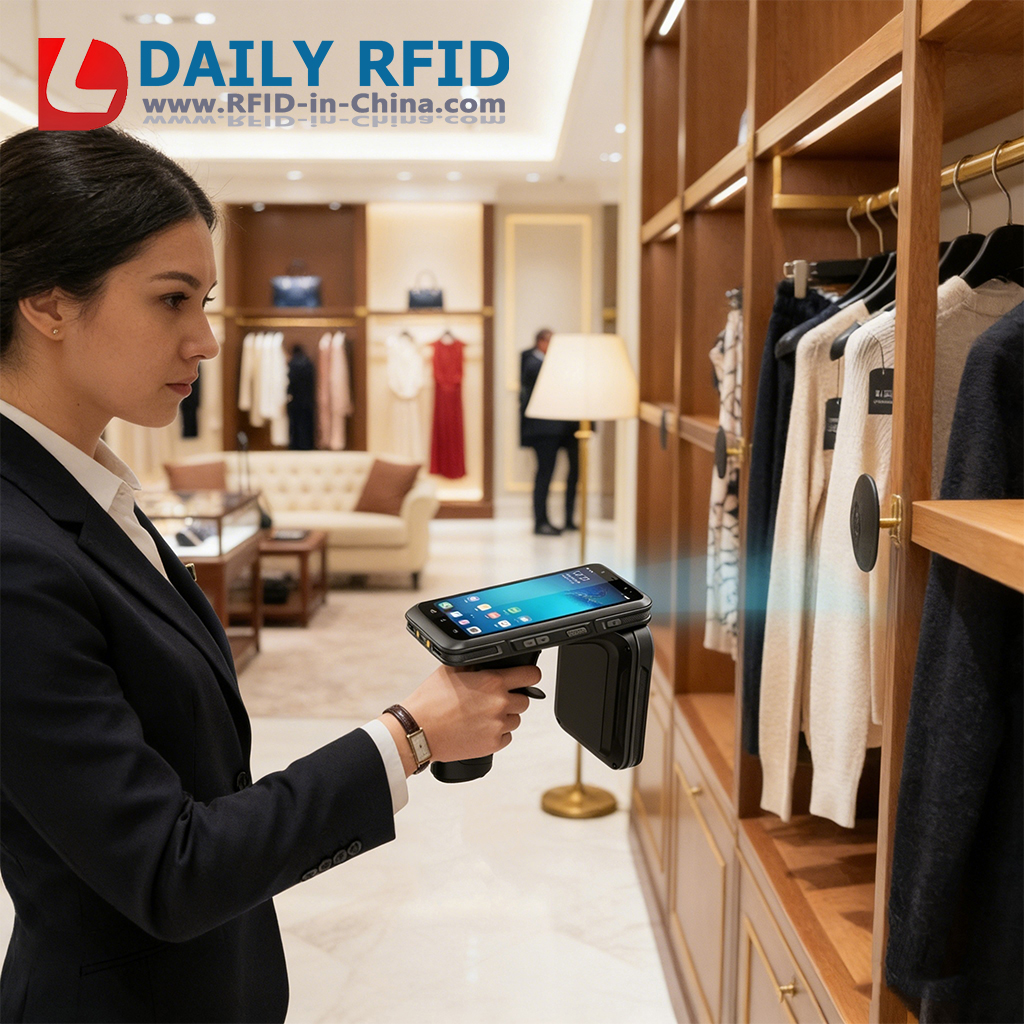
Wristbands fit best where the person is the tag carrier and the interaction should be hands-free. In smart manufacturing, that usually means controlled access, training and certification checks, visitor and contractor management, and temporary or mobile identification points.
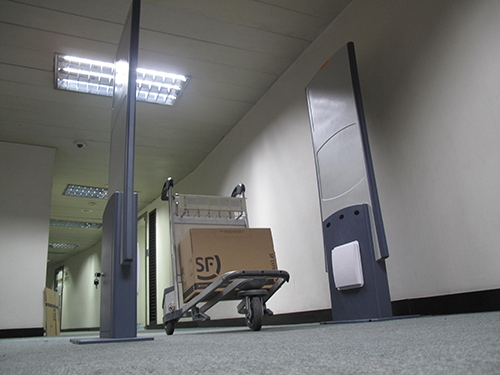
- Controlled-area access. A UHF gate reader reads a wristband as a worker walks through, while the access system checks authorization. The supplied DL8330U Advanced UHF RFID Gater supports a 4–7 m channel width with four built-in TX/RX antennas, which is a walk-through form factor rather than a card-tap form factor.
- Training and certification zones. A ceiling reader can read wristbands in a training room or assessment area, while the system checks whether the person is scheduled for that session. The DL6990 ceiling reader provides 0.1–5 m room-level coverage and reads up to 50 tags simultaneously.
- Visitor and contractor routing. A temporary wristband can identify a visitor by zone and time window, reducing manual sign-in at each door. The wristband must still be paired with a reader that covers the actual door geometry, not the reception desk.
- Mobile exception handling. A supervisor with a UHF handheld reader can check wristbands at a temporary workstation, queue, or overflow area. The DL1280 industrial PDA supports UHF, HF, and LF, reads up to 100 tags simultaneously, and provides a 6.21-inch display for on-device confirmation.
- People-centric asset checks. In some workflows, a wristband may identify a person who is temporarily responsible for a kit, cart, or returnable container. The wristband identifies the person; a hang tag or tool tag identifies the asset. Do not use a wristband as a substitute for an on-metal tool tag.
Wristbands are a poor fit for metal tools, fixtures, garments, documents, and returnable containers. Those objects need their own tag geometry. The German industrial workflow example in the corpus used 120,000 RFID tags optimized for metal surfaces to track tools, fixtures, containers, and production assets, reducing tool and fixture search time by 40%–70% and audit preparation time by 50%–80%. That is a tool-tag and asset-tag story, not a wristband story.
Comparison Table: Wearable and Non-Wearable RFID Form Factors
| Form factor | Frequency and protocol in supplied data | Typical read distance in supplied data | Best-fit manufacturing role | Example from supplied product data |
|---|---|---|---|---|
| RFID wristband | UHF 860–960 MHz and HF 13.56 MHz in dual-frequency models; UHF interface ISO18000-6C EPC C1 Gen2 | Up to 5–250 cm depending on reader and IC type | People identification, hands-free access, training and visitor workflows | Dual-Chip RFID Wristbands - UHF H3 & HF Mifare 1K; silicone, IP68, 100,000 read/write cycles |
| RFID key card | 13.56 MHz HF/NFC or 125 kHz LF | 1–3 cm | Door access, lockers, close-range credentials | RFID Key Fob customization; PVC, recycled PET/PETG, wood, or epoxy; IP68 |
| RFID hang tag | UHF 860–960 MHz and HF 13.56 MHz | Up to 5–200 cm depending on reader and IC type | Garments, documents, exhibits, and presentation assets | RFID Exhibit Hang Tag; coated paper, PVC, or laminated art paper; 100,000 read/write cycles |
| RFID tool tag | UHF 860–960 MHz | 1–3.5 m on metal with a 4 W EIRP handheld reader; up to 5 m off metal | Metal tools, fixtures, containers, and production assets | RFID Tool Management Adhesive Tag; anti-metal ferrite layer, 3M adhesive, -40°C to +85°C |
The table is a selection aid, not a ranking. A wristband is not better than a key card. It is better only when the use case requires a wearable, hands-free identity carrier. A tool tag is not better than a wristband. It is better only when the object is metal and the reader field must survive metal detuning.
Reader Selection Notes for Wristband-Based Inventory and Access Workflows
Inventory tracking with wristbands is a specific question because wristbands are usually people tags, while inventory usually refers to assets. The two can meet when the inventory is people-centric, such as checking who is present in a controlled area, who has completed a training station, or who is carrying a temporary kit. For asset inventory, a hang tag or tool tag is usually the correct tag.
When the workflow does require wristband reading, the reader selection should follow the zone. A fixed four-port reader such as the DL6940/6960 is suited to high-density zones where up to 1,000 tags may be present and antenna ports can be distributed across a dock or line-side area. A ceiling reader such as the DL6990 is suited to a room or defined zone with 50-tag anti-collision and 0.1–5 m coverage. A handheld reader such as the DL1280 is suited to mobile checks and exception handling. A gate reader such as the DL8330U is suited to walk-through access with a 4–7 m channel width.
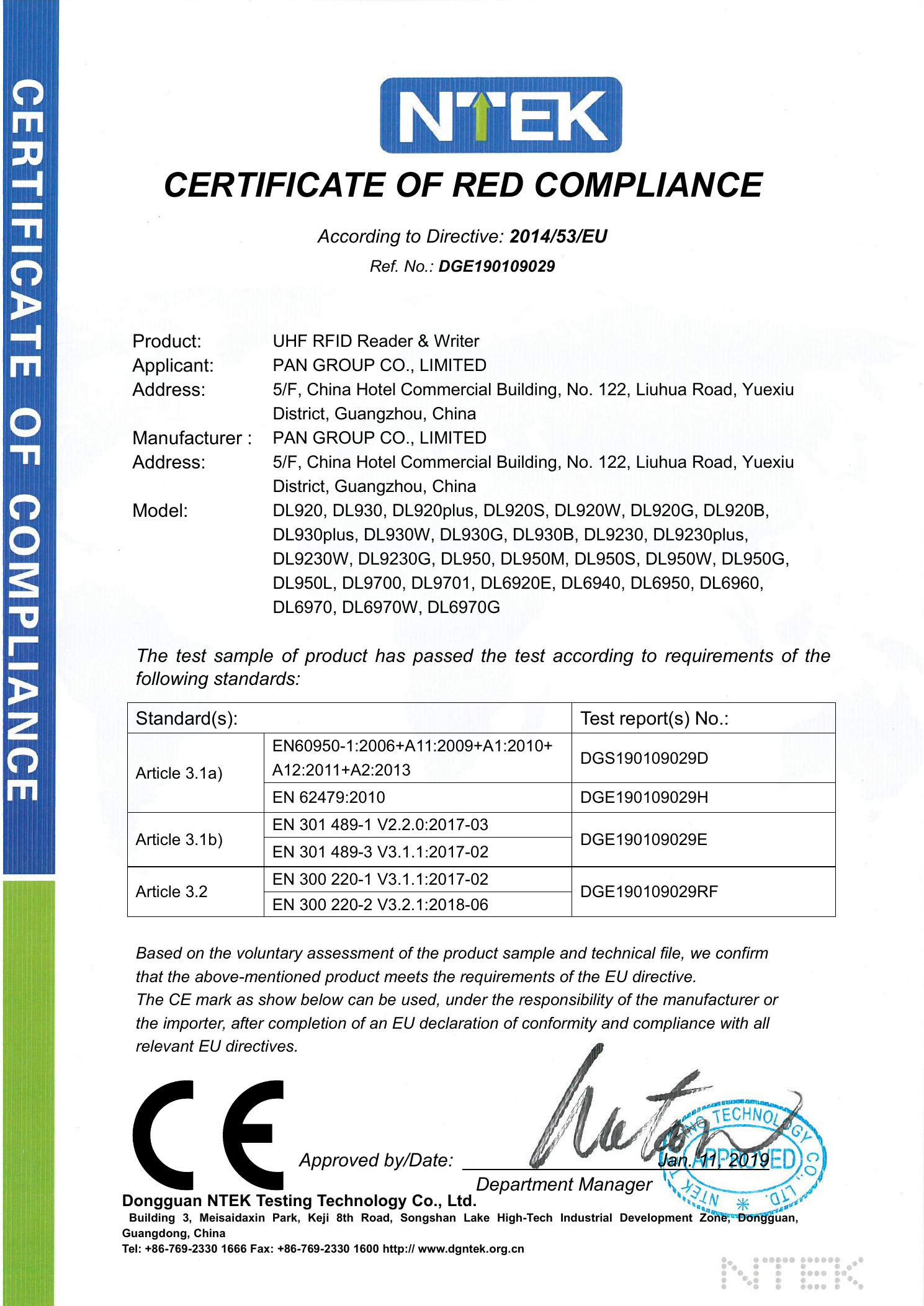
Compliance and environment also belong in the selection. The supplied CE RED certificate for UHF RFID Reader & Writer covers models including DL920, DL930, DL920plus, DL920S, DL920W, DL920G, DL920B, DL930plus, DL930W, DL930G, DL930B, DL9230, DL9230plus, DL9230W, DL9230G, DL950, DL950M, DL950S, DL950W, DL950G, DL950L, DL9700, DL9701, DL6920E, DL6940, DL6950, and DL6-series models under Directive 2014/53/EU. That is a useful starting point for EU market discussions, but the buyer should still verify the exact model, regional frequency, and current certificate status for the intended market.
DAILY RFID CO., LIMITED is an RFID manufacturer based in Guangzhou, China, founded in 2008. The supplied company data lists a 28,000 m² factory, 180–200 employees, a 38-engineer R&D team, and annual RFID reader output of 100,000 units. Those facts are relevant to a sourcing discussion, but they do not replace a wristband-reader pilot. The pilot is what proves the radio link in the actual factory geometry.
FAQ
What is an RFID wristband, and is every wristband a UHF tag?
An RFID wristband is a wearable RFID tag. It can be LF 125 kHz, HF 13.56 MHz, UHF 860–960 MHz, or dual-frequency. A UHF wristband must be paired with a UHF RFID reader; an LF or HF wristband needs a reader in that band. The Dual-Chip RFID Wristbands - UHF H3 & HF Mifare 1K listed in the supplied product data combine UHF and HF in one silicone, IP68 wristband, with reading distance up to 5–250 cm depending on reader and IC type.
How does a passive UHF wristband communicate with a UHF RFID reader?
The reader emits RF energy through its antenna. The wristband antenna captures that energy, the chip powers up, and the tag backscatters a modulated signal. The reader decodes the identity and uses anti-collision logic to separate multiple wristbands in the same field. The supplied reader data shows different zone designs: the DL930B has a 4–8 m range, the DL6990 ceiling reader has a 0.1–5 m range with up to 50 tags, and the DL1280 handheld has a 0.1–20 m range with up to 100 tags.
When should a factory use a wristband instead of a key card, hang tag, or tool tag?
Use a wristband when the identified subject is a person and the workflow needs hands-free reading, such as controlled-area access, training checks, or visitor routing. Use a key card for close-range doors and lockers, a hang tag for garments, documents, or exhibits, and a tool tag for metal tools, fixtures, and containers. The comparison table above shows the frequency, read distance, and role differences from the supplied product data.
What is the best UHF RFID reader for inventory tracking with wristbands?
There is no single best reader without a defined zone. For high-density fixed zones, the DL6940/6960 four-port reader supports up to 1,000 tags with a 25–30 m range. For room-level wristband reading, the DL6990 ceiling reader provides 0.1–5 m coverage and reads up to 50 tags. For mobile checks, the DL1280 handheld reads up to 100 tags with a 0.1–20 m range. For walk-through access, the DL8330U gate reader supports a 4–7 m channel. Match the reader to the zone, then test with the actual wristband.
Can we test wristband-reader pairing before full deployment?
Yes. A pilot should use the actual wristband, reader, antenna position, and walking path. The supplied capability data lists an RFID Development Kit with a 1-set MOQ and 7–15 day lead time, and an OEM silicone wristband option with a 100-unit MOQ and 10–25 day lead time. Validate read rate, false reads, missed reads, and data integration before scaling. For a sample discussion, contact DAILY RFID at sales@rfid-in-china.com or WhatsApp +86 15817191372.
Conclusion: Pair the Wearable Tag and the Reader as One System
An RFID wristband is a useful wearable tag category, but it is not a universal RFID solution. In smart manufacturing, the wristband earns its place when the person is the identity carrier, the interaction should be hands-free, and the reader field is designed for a wrist-height, walking-path read zone. It loses its place when it is asked to identify metal tools, replace a close-range door card, or work with a reader in the wrong frequency band.
The practical sequence is simple: define the decision, choose the frequency and protocol, select a wearable form factor that survives the environment, match the UHF RFID reader to the physical zone, plan the data path, and pilot with the real tag and reader. That sequence keeps the project anchored in radio performance and operational fit rather than in the appearance of the wristband.
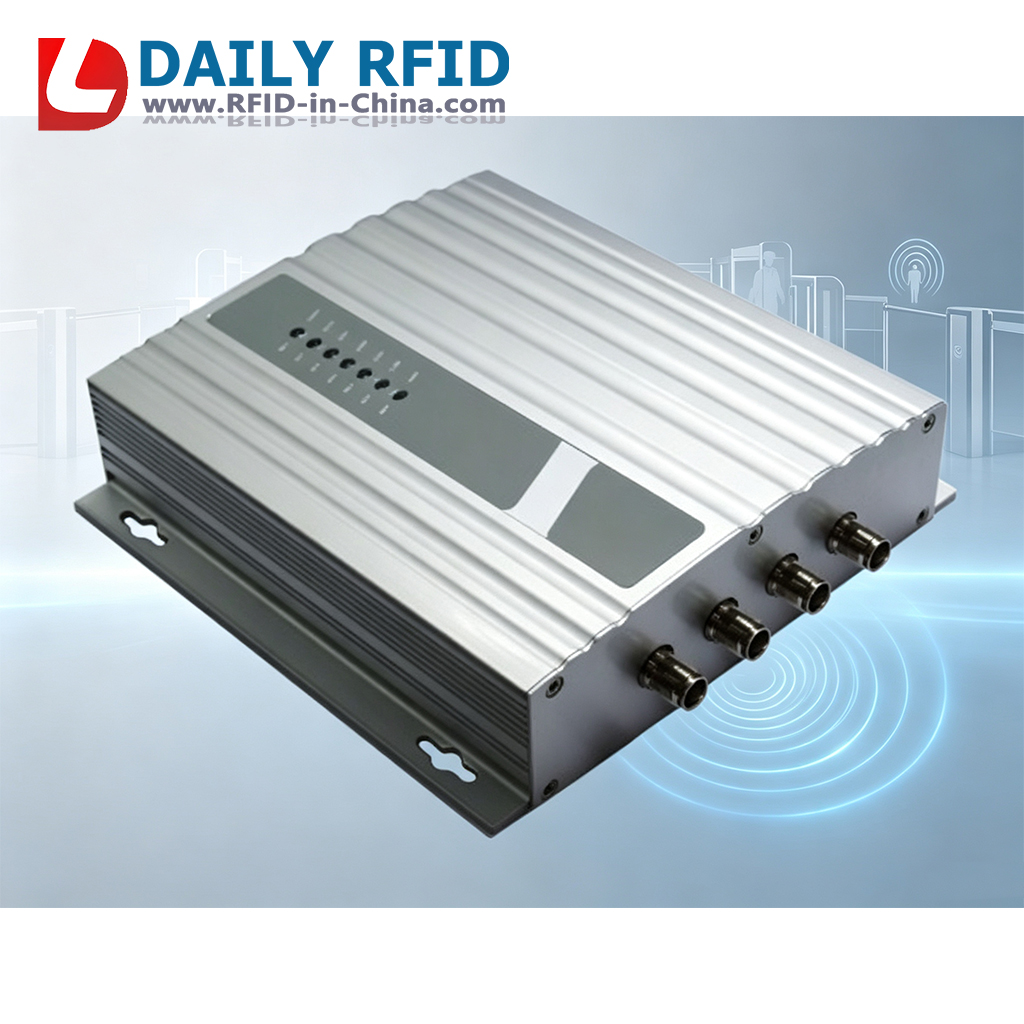
Next step: test the pairing, not just the datasheet
If you are evaluating an RFID wristband for a smart manufacturing workflow, start with a sample or development kit and the reader form factor that matches your zone. DAILY RFID can support reader selection, wristband frequency matching, and pilot discussion.
Contact: sales@rfid-in-china.com | WhatsApp: +86 15817191372 | Website: www.rfid-in-china.com
This article is educational. Product availability, model configuration, regional frequency, and certification status should be confirmed with the supplier before procurement.
Have Questions or Need More Details?
Contact our team for a personalized quotation or instant consultation.
Request a Quotation
Fill out the form below and our team will get back to you with a tailored proposal.
WhatsApp Direct Chat
Prefer to chat in real-time? Message us on WhatsApp for instant assistance & quick answers.
- Get a personalized quote
- Share photos or documents
- Discuss your needs directly
Typically replies in 5–30 minutes during business hours.