
UHF RFID Reader vs. Barcode: What Smart Manufacturing Teams Should Evaluate in 2026
UHF RFID Reader vs. Barcode: A Smart Manufacturing Comparison Guide
Smart manufacturing depends on accurate identification, but the choice between a UHF RFID reader and a barcode scanner is rarely as simple as replacing one label technology with another. For decision-makers comparing these approaches, the main differences are found in four areas: data capture speed, tolerance of harsh factory conditions, labor needed for inventory operations, and the total cost of tagging objects across the production and supply chain.
This guide is written for manufacturing engineers, operations managers, and procurement teams that already understand what RFID does and are now evaluating whether UHF RFID readers deserve a larger role in their facilities. Instead of listing generic promises, it anchors the comparison in first-party product data and measurable deployment outcomes reported by DAILY RFID, a Guangzhou-based manufacturer that has supplied RFID tags and readers since 2008.
The Problem: Barcode Scanning Reaches Its Limit in High-Throughput Manufacturing
Barcode scanning remains a dependable identification method, especially where each item can be aligned in front of a scanner and read individually. But in a busy factory, warehouse, or loading dock, this line-of-sight requirement introduces operational friction. A worker must aim the reader at each printed label, wait for the decode, and repeat the action item by item.
The practical limitations become visible during pallet receiving, conveyor-line parcel reading, tool tracking, and work-in-progress verification. These workflows usually involve multiple assets arriving at the same checkpoint at the same time. A barcode scanner, no matter how fast the decode engine, still processes labels one at a time.
UHF RFID answers this challenge with radio-frequency identification. A UHF RFID reader sends out RF energy and reads passive tags almost simultaneously within its interrogation zone, without requiring the tag to face the antenna or remain perfectly still. In a manufacturing setting, that characteristic can change whether inventory checking takes hours or minutes.
Industry Background: Why the UHF RFID Reader Market Is Growing
The adoption of UHF RFID readers is not happening inside a vacuum. The global UHF RFID reader market was valued at approximately USD 4.8 billion in 2025 and is projected to reach USD 11.2 billion by 2034. UHF RFID technology also captured 40.72% of total RFID market revenue in 2025, according to market analysis reported by Dataintelo and Mordor Intelligence. These figures indicate that procurement teams are already moving beyond pilots and into broader industrial deployment.
Retail apparel was one of the first categories to push UHF RFID into mainstream use, but smart manufacturing projects now represent one of the fastest-growing fields. Asia Pacific is expected to show the highest regional growth in UHF RFID hardware shipments through 2031, with a projected CAGR of 11.8% reported by ABI Research. For companies that compare UHF RFID readers versus barcode systems today, the decision is no longer about whether the technology works; it is about which identification approach creates the least manual work, data loss, and operational risk.
Core Comparison: UHF RFID Reader vs. Barcode Scanner for Smart Manufacturing
The comparison below uses measurable hardware behavior and deployment results reported by DAILY RFID, rather than unverified market claims. Understanding these differences matters because the wrong choice can create hours of unnecessary labor each day.
1. Reading Range and Line of Sight
A barcode scanner must see the printed code. If the label is scratched, covered by a package, or mounted at an awkward angle, the reading attempt fails. In a manufacturing environment, goods are often wrapped, stacked, and moved through metal racks, so maintaining a perfect line of sight is difficult.
A UHF RFID reader, by contrast, identifies tags by radio waves. Many DAILY RFID readers operate at UHF 860 MHz–960 MHz frequencies, following ISO18000-6C and EPC Class 1 Gen 2 standards. Models such as the WiFi RFID Reader DL920Plus deliver a stable reading range of 8 m–15 m with a built-in antenna, while the AI Multi-Antenna 4-Port UHF Reader DL6960 supports reading distances up to 25–30 m and can write to tags at 10–15 m. For fixed dock doors, portal readers, or conveyor checkpoints, this range removes the need to orient each carton toward a narrow optical beam.
2. Speed and Multi-Tag Handling
Barcode scanning is inherently serial. One label is decoded at a time, which makes it difficult to reconcile a full pallet of mixed goods at high speed.
UHF RFID readers can handle many tags at the same time through anti-collision algorithms. The DL6960 AI Multi-Antenna 4-Port UHF Reader supports simultaneous reading of up to 1000 tags and reports a read speed that is 16 times faster than ordinary mainstream readers. The Self-Checkout RFID Reader, model 5723, reads 80–100 tags at once with an average reading time of less than 10 ms per 64 bits. The DL1280 Industrial PDA UHF/HF/LF Handheld Reader reads up to 100 tags simultaneously and supports over 100 tags per second in continuous scanning mode. This multi-tag capability is the most visible operational difference next to a barcode operation.
3. Durability and Resistance to Harsh Environments
Labels in smart manufacturing can be exposed to dust, moisture, temperature swings, vibration, and frequent handling. Barcode labels are usually printed in a scannable state; once the surface is obscured by oil, scratches, or tearing, readability drops sharply.
UHF readers are designed for tougher surroundings. The WiFi RFID Reader DL920Plus, the Bluetooth RFID Reader DL930B, and the DL920 series fixed readers use weatherproof industrial housings with IP64 or IP65 ratings, and they operate across wide temperatures from -30 °C to 70 °C. The DL1280 handheld PDA is rated IP65 and withstands 1.5 m drops, making it appropriate for field maintenance and warehouse work. Tags also play a role. DAILY RFID manufactures PPS button laundry tags that can withstand 200+ washing cycles and industrial drying temperatures up to 150 °C, as well as RFID tool tags optimized for metal surfaces with rugged epoxy encapsulation. This durability directly reduces the cost of re-labeling and re-reading.
4. Level of Automation and Labor Requirements
Barcode scanning normally requires a worker to trigger each read. Some fixed scanners automate line-of-sight reading, but they still depend on label placement and orientation.
UHF RFID enables unattended identification. In fixed installations, the reader continuously listens for tags. The DL921 AI Enhanced UHF Long Range Reader integrates PoE, 4G GSM, and GPS into a single reader in outdoor vehicle yards, allowing data collection without a fixed PC and local network infrastructure. The Parking Management RFID Development Kit supports overhead antenna reading ranges from 3–15 m, enabling gate access without a driver stopping the vehicle. The DL9230 2.4GHz RFID Active Reader provides 0–100 m adjustable reading distance and supports up to 200 tags at once. These capabilities explain why smart factory teams evaluate UHF readers as a replacement or complement to manual barcode scanning lines.
5. Ecosystem: RFID Tag, Antenna, and Reader Combinations
Barcode systems need only a printer and scanner. UHF RFID is a system-level technology: the tag stores the unique ID, the antenna establishes the interrogation zone, the reader processes the response, and the host system decides what action to take.
DAILY RFID sells the full chain: readers such as the DL930 series, RFID antennas, tags, and modules, including the DL213 Type-C UHF Reader Module and the DL228 Type-C UHF Mobile Reader. This matters for smart manufacturing buyers because one supplier can reduce integration risk. The company operates a 28,000 m² factory, has 180–200 employees and 38 engineers in its R&D team, and publishes annual capacity figures of 100,000 readers, 50 million tags, and 30 million cards. Its export ratio is about 80%, mainly to the EU and USA, which gives buyers a supplier that understands compliance requirements in destination markets.
Decision Steps: How to Choose Between UHF RFID and Barcode Equipment
- Define the bottleneck location. Ask which physical checkpoint is slowest: incoming goods, production line feeding, movement between zones, outbound verification, or cycle count. If the bottleneck currently depends on one-by-one scanning, UHF RFID should be tested there.
- Measure the tagging point. If the item can be tagged at production or source with a passive UHF label, the per-tag cost is automatically lower than retrofitting every unit later. This is where a manufacturer like DAILY RFID can supply labels designed for metal surfaces, high temperatures, or laundry cycles.
- Choose a reading architecture. Fixed readers suit chokepoints and gates; handheld readers suit irregular, field, and mobile tasks. DAILY RFID offers both form factors, from ceiling-mounted DL6990 readers with integrated antennas to DL1280 all-in-one industrial PDAs.
- Test multiple tags and one reader. Reading range cannot be evaluated without the actual tag, surface, and environment. Ask the supplier for a development kit or small test set. DAILY RFID offers RFID development kits with a 1-unit MOQ and a 7–15-day lead time for reader + demo tag bundles.
- Validate output, not just readability. Confirm that the reader output can be sent to the ERP or MES. Most DAILY RFID readers come with free SDK and demo software, including support for Windows, Linux, Android, C++, C#, Java, Python, and other development environments.
- Calculate total labor cost. Compare the cost of one worker scanning each label for two hours a day with the cost of one UHF portal reading an entire pallet in three seconds. In busy depots, the labor saving appears within the first months.
Reference Table: UHF RFID Reader vs. Barcode in Smart Manufacturing
The following comparison summarizes the observable capabilities discussed above. Barcode characteristics reflect general industry knowledge, while all UHF RFID reader figures come from DAILY RFID content units cited in this article.
| Dimension | Barcode System | UHF RFID Reader (DAILY RFID Supplied) |
|---|---|---|
| Reading principle | Optical line of sight | Radio frequency; no line-of-sight requirement |
| Batch reading | One label at a time | Up to 1000 tags depending on reader, e.g., DL6960 |
| Typical read distance | From contact to a few meters with high-end optics; label orientation is critical | From 0.1 m to 30 m depending on reader model; 8–15 m common for fixed integrated readers |
| Harsh environment tolerance | Printed labels are vulnerable to dust, scratches, and water | IP64–IP66 housings and -30 °C to +70 °C operating range on many DAILY RFID models |
| Typical manufacturing checkpoint | One worker scanning each unit | Fixed portal reads pallet or conveyor; handheld covers spot checks |
| Automation potential | Low–medium | Reads automatically; interfaces include RS232, RS485, USB, RJ45, GPIO, Wi-Fi, Bluetooth, GPRS |
| Fixed reader example | Industrial scanner | DL930B: 4–8 m range, adjustable 20–30 dBm transmit power, IP65/IP66; WiFi RFID Reader DL920Plus |
| Handheld example | Handheld optical terminal | DL1280: UHF/HF/LF in one PDA, IP65, 1.5 m drop resistance, 18W fast charging |
Use Cases: UHF RFID Readers Replacing Manual and Barcode Workflows
Automotive Parts Warehouse — Spain
An automotive parts warehouse in Spain deployed 420 units of the DAILY RFID DL6980 4-port long-range reader for inbound pallet reading, dock-door verification, and returnable container tracking. The reader’s four antenna ports allowed wider area coverage than a line-of-sight scanning setup. The project reported a 40%–70% reduction in manual inbound receiving and a 30%–60% decrease in missed pallet scans. It has been operating for at least five years.
Distribution Center — Poland
A Polish distribution center installed 360 DAILY RFID DL920S long-range readers to identify parcels on a conveyor line, route cartons, and verify outbound shipments. The readers were positioned as fixed checkpoints, reading tags without requiring each parcel to be oriented toward a scanner. The result was a 30%–60% drop in parcel sorting mistakes and 40%–70% faster outbound verification.
Port & Container Yard — Saudi Arabia
A port and container yard deployed 95 DAILY RFID DL6970 UHF Super Long Range Readers. The project achieved 30%–60% faster vehicle and container identification, 80%–95% movement-record coverage, and reduced manual work in busy gate lanes. The deployment has been running for at least five years and demonstrates the durability of fixed UHF readers in an open, harsh environment.
The Supplier Factor: What to Check Before Choosing Your UHF RFID Reader
Smart manufacturing buyers evaluating UHF RFID readers versus barcode systems often start by comparing one reader specification to another. The more valuable comparison is between one RFID supplier and another. DAILY RFID is most useful to buyers that want both a hardware manufacturer and system-level experience. This is what the supplier profile indicates:
- Company: DAILY RFID CO., LIMITED, founded in 2008 and located in Guangzhou, China; website: www.rfid-in-china.com.
- Scale: 28,000 m² factory, about 180–200 employees, 38 R&D engineers.
- Annual capacity: 50 million RFID tags, 30 million RFID cards, and 100,000 RFID readers.
- Export markets: about 80% of output goes to EU and USA.
- Certifications: Multiple DAILY RFID readers carry CE certificates, including CE RED Certificate of Compliance for UHF RFID Reader & Writer models DL920, DL930, DL920plus, DL920S, DL920W, DL920G, DL920B, DL930plus, DL930W, DL930G, DL930B, DL9230, DL9230plus, DL9230W, DL9230G, DL950, DL950M, DL950S, DL950W, DL950G, DL950L, DL9700, DL9701, DL6920E, DL6940, DL6950, plus FCC compliance for selected devices.
- OEM/ODM: DAILY RFID supports custom housing, frequency bands, interface configurations, and software integration. Its UHF fixed reader ODM service offers a 15–45 day lead time and a 1-unit MOQ, which is practical for pilot testing.
Cost Considerations That Buyers Should Check Personally
Anyone who claims a universal price advantage for RFID or barcode is oversimplifying. This article deliberately does not quote system price by reader or tag because pricing depends on order volume, frequency band, housing material, and tagging media. Instead, the cost comparison should be analyzed by category:
- Consumable tagging cost: Barcode labels are cheap to print, but a printed barcode is only as readable as its surface condition. UHF labels cost more but can be read at distance. For reusable assets, DAILY RFID’s high-durability tags such as PPS laundry tags or metal-optimized labels reduce replacement frequency.
- Labor cost per read: Barcode scanning is direct labor. UHF reading can be automated through a fixed reader. This is the most important line item in a busy factory.
- System integration cost: UHF readers need antennas, cables, demo software, and connection to business systems. To keep this cost predictable, buy from a manufacturer that provides SDK, documentation, and demo source code, as DAILY RFID does with most readers.
- Scalability cost: A UHF RFID chokepoint that reads 50 tags in one second can later be scaled into a full room-level inventory system by adding antennas and readers. Barcode systems require more labor to scale throughput.
Frequently Asked Questions
What is the best UHF RFID reader for inventory tracking?
There is no single “best” model for every facility, but the strongest fit comes from choosing the reader format to the inventory flow. For high-level pallet counting and wide warehouse areas, DAILY RFID’s AI Multi-Antenna 4-Port UHF Reader DL6940/6960 supports a read distance up to 25–30 m, reads up to 1000 tags at once, and provides four external antenna ports for multi-zone coverage. For forklift-accessible rack inventory and dense floor stock, the DL1280 Industrial PDA UHF/HF/LF Handheld Reader reads over 100 tags per second and has an operating range of up to 20 m. For a dock door or conveyor gate, the DL920 series fixed readers are a common fit because of their 8–15 m reading range, IP64/IP65 housing, and multiple communication interfaces. A useful rule is: if the inventory point is fixed, install a fixed reader; if staff must walk inside racks or mobile assets, provide a handheld; if you need unattended receiving, test a multi-port reader at the dock doorway.
Is a UHF RFID reader faster than a barcode scanner?
Yes, in most batch-identification workflows. A UHF RFID reader does not require each label to be aligned with an optical beam. For example, DAILY RFID’s DL1280 handheld reader identifies up to 100 tags at the same time and exceeds 100 tags per second in continuous scanning mode. The fixed DL6960 supports simultaneous reading of up to 1000 tags. A barcode scanner must decode one label at a time and normally requires the operator to aim at the code. The speed difference is most visible when a worker scans a whole pallet or carton of mixed goods. If the process only checks one unique asset at close range and rarely deals with batches, barcode scanning may still be sufficient.
What should be checked before buying a UHF RFID reader for a smart factory?
Buyers should verify the reader’s protocol support, reading range with the actual tag, protection rating, communication interfaces, and software development support. For EU delivery, confirm that the reader model appears on an appropriate CE certificate; for US projects, confirm FCC compliance. Several DAILY RFID readers are listed in the UHF RFID Reader & Writer CE RED Certificate of Compliance, covering models such as DL920, DL930, DL9230, DL950, DL6940, DL6950, and others. The certificate was issued under Directive 2014/53/EU and is valid with no specified expiry. Also request a free SDK and demo software before purchase. Ideally, buy from a manufacturer that can support the whole test loop with matching tags and sample reader units, since read range depends heavily on the tag, surface, and environment.
Is the transition from barcode to UHF RFID expensive?
The transition cost depends on whether tags are reused or consumed, on the number of reading points, and on the existing ERP/MES integration. Hardware sampling is not necessarily expensive. DAILY RFID offers RFID development kits and reader starter options starting from 1 unit, with reader lead times of 7–45 days depending on the model and customization type. A practical first step is to buy one fixed or handheld reader plus a small batch of matching tags, test it at the exact bottleneck location, and measure the change in scan time and missed reads. That pilot gives a concrete cost-per-checkpoint figure before full production-line deployment.
What kind of after-sales support does DAILY RFID provide for UHF readers?
DAILY RFID lists after-sales support in its capability data. For UHF fixed readers, the company provides remote support and customizes antenna gain and interfaces under an OEM/ODM model. For standard reader supply, no MOQ restriction is applied to most catalogue readers, and sample orders are accepted for evaluation. Buyers who need long-term supply should also note that DAILY RFID’s stated monthly output reaches 100,000 readers per year and that its export markets are concentrated in the EU and USA, which has required the company to maintain recognizable compliance documentation on readers. For a technical conversation about your factory flow or a request for the company profile, DAILY RFID can be reached at sales@rfid-in-china.com or +86 15817191372.
Conclusion
UHF RFID readers and barcode scanners are not always in direct competition. Many smart factories will keep barcode scanning for simple, low-cost, one-by-one identification tasks while deploying UHF readers at gates, conveyors, pallet checkpoints, and other throughput bottlenecks. The more useful question is not “which technology is superior” but “which processes should stop depending on manual line-of-sight scanning.”
Based on real DAILY RFID deployments, the evidence points in a clear direction: automated manufacturing and logistics operations reduce manual work and missed scans when they replace single-label barcode reads with batch-capable UHF reading. For companies evaluating this change, the next step is to test one reader model against their own tags, packaging, and software environment before making a broad purchasing decision.
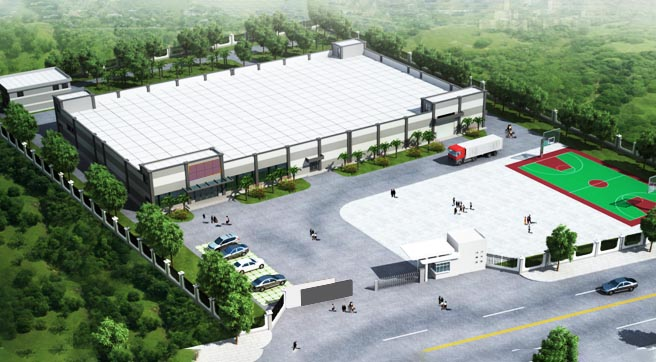
DAILY RFID’s manufacturing site, where UHF readers and tags are produced under one roof.
Further reading: DAILY RFID’s company profile with production capability information is available for download below.
Have Questions or Need More Details?
Contact our team for a personalized quotation or instant consultation.
Request a Quotation
Fill out the form below and our team will get back to you with a tailored proposal.
WhatsApp Direct Chat
Prefer to chat in real-time? Message us on WhatsApp for instant assistance & quick answers.
- Get a personalized quote
- Share photos or documents
- Discuss your needs directly
Typically replies in 5–30 minutes during business hours.