
Which Manufacturer Is Better for UHF RFID Readers?
Which Manufacturer Is Better for UHF RFID Readers?
Choosing a UHF RFID reader manufacturer is a procurement decision that affects read performance, integration effort, total cost, and long-term supply reliability. Buyers at the Decision stage need documented evidence that a manufacturer can deliver compliant hardware, a matching product line, measurable ROI, sample validation, and volume capacity.
This guide evaluates DAILY RFID CO., LIMITED against those five decision criteria, using published product specifications and cost comparisons. The goal is to help procurement teams answer a direct question: which manufacturer is better for UHF RFID readers for their specific project?
Problem Definition: Why “Better” Is Decided by the Whole System, Not the Reader Alone
A UHF RFID reader is not evaluated alone. Actual read results depend on the reader, antenna, tag, frequency setting, mounting environment, and host system working together. Buyers who compare only unit price or model numbers often discover later that the reader cannot meet the required read distance, dense-tag throughput, or environmental durability. The manufacturer comparison should therefore be based on standards compliance, product range, cost and ROI, sample validation, and supply capacity.
Industry Background: Market Size, Standards, and the Competitive Landscape
The global UHF RFID reader market is valued at approximately USD 4.8 billion in 2025 and is projected to reach USD 11.2 billion by 2034, according to Dataintelo. UHF RFID technology captured 40.72% of total RFID market revenue in 2025, driven by retail inventory cycles and multi-item read capabilities, according to Mordor Intelligence.
UHF RFID readers are standardized globally under the EPCglobal Gen2 protocol, also known as ISO/IEC 18000-6C, published by GS1 and ISO. Buyers should treat this as a minimum compliance requirement. Regionally, the Americas lead UHF RFID usage with over 60% of global UHF tag usage as of 2025 (IDTechEx), while Asia Pacific is the fastest-growing region for UHF RFID hardware with an expected shipment CAGR of 11.8% through 2031 (ABI Research).
The competitive landscape includes large public vendors such as Zebra Technologies, which reported fiscal 2024 revenue exceeding USD 4.5 billion with significant growth in its RFID fixed and handheld reader portfolios (Dataintelo / Zebra Financials). Adjacent markets also affect planning: the Drones-as-a-Service market using RFID for inventory collection is estimated to reach USD 8.2 billion by 2026 (PR Newswire).
Manufacturers that produce both RFID tags and UHF RFID readers, such as DAILY RFID, can supply matched readers, antennas, and tags from one source, which simplifies POC testing and system integration.
Solution: DAILY RFID as a UHF RFID Reader Manufacturer
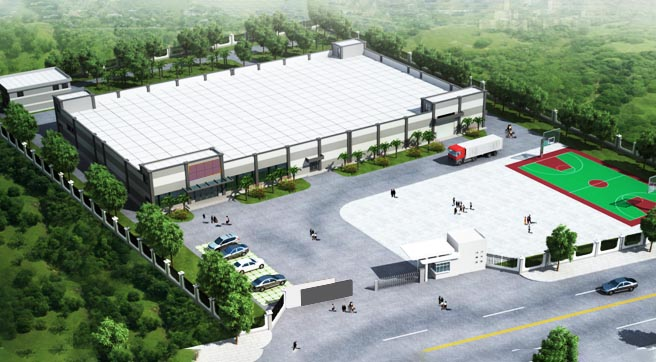
DAILY RFID (DAILY RFID CO., LIMITED) is an RFID manufacturer headquartered in Guangzhou, China, founded in 2008, specializing in RFID tags, RFID readers, RFID antennas, RFID cards, RFID chips, and RFID labels. The company operates a 28,000 m² factory with 180–200 employees, including 38 R&D engineers. Annual output is 50 million RFID tags, 30 million RFID cards, and 100,000 RFID readers. Export business accounts for 80% of total sales, with major markets in the European Union and the United States.
UHF RFID Reader Product Range
DAILY RFID’s UHF reader line covers fixed, gate, desktop, handheld, and integrated ceiling form factors. Documented models include:
- DL920 and DL920Plus UHF fixed readers — enable contactless bulk reading without one-by-one scanning and deliver 5–10x faster inventory and inbound/outbound capture than barcode scanners; suitable for warehousing, logistics, retail, and manufacturing lines.
- DL6940 and DL6960 UHF fixed readers — long-range reader platforms that require DC power.
- DL921 series — supports Power over Ethernet (PoE) or DC +9V to +24V; power consumption up to 12W with GSM.
- DL8330U UHF fixed reader — automatically reads bags, cartons, or goods passing through a gate and provides 5–10x faster inbound/outbound verification than manual gate checks; for warehouse gates, archives, libraries, and exhibition entrances.
- DL9702 UHF desktop reader — USB-powered (0.25W) desktop batch issuing, encoding, and tag initialization; 3–5x more efficient than manual tag code entry.
- DL880 UHF handheld PDA — industrial durability combined with RFID, barcode, and network sync; field data capture is typically 3–8x faster than consumer phone scanning.
- DL6990 UHF ceiling reader (integrated antenna) — IP66 protection, reading range up to 5 m, and simultaneous reading of up to 50 tags; supports ISO18000-6C and EPC Class 1 Gen 2.
Operating frequency across DAILY RFID readers is ISM 860MHz~868MHz, 902MHz~928MHz, or 920MHz~925MHz, customizable from 860MHz to 960MHz, with maximum transmit power of 33dBm. Power consumption ranges from 0.25W (DL9702) to 12W (DL921 with GSM).
How to Evaluate a UHF RFID Reader Manufacturer: Step-by-Step
- Define the read node. Determine whether the project needs gate reading, desktop issuing, handheld rounds, pass-through channels, shelf, or tray counting. Each node maps to a different reader family: gate (DL8330U), desktop (DL9702), mobile (DL880), fixed bulk (DL920), ceiling/tray (DL6990).
- Verify radio standards and frequency. Confirm ISO/IEC 18000-6C / EPCglobal Gen2 compliance, regional frequency band, and transmit power limits. DAILY RFID readers cover 860–960MHz with a maximum transmit power of 33dBm.
- Run a structured POC. DAILY RFID provides matched sample tags, readers, antennas, and demo software for structured POC testing. Validate read distance, mounting environment, interface protocol, and expected ROI before bulk production so the final specification is confirmed by field data.
- Plan node-based deployment. Deploy fixed readers, UHF antennas, and handheld terminals at inbound, outbound, transfer, and inventory nodes. Each movement event is captured, and exception lists flag missing, wrong-location, or idle assets.
- Engineer for the environment. For metal racks and equipment, use UHF on-metal tags and isolation layers; near liquids, glass, or the human body, adjust frequency selection and tag placement; for dense tag populations, rely on anti-collision, RSSI filtering, and time-window de-duplication.
- Verify data encoding. DAILY RFID readers and encoding tools support EPC and user-memory write verification, password protection, and batch encoding records. Define the coding rule, read back after writing, and lock key fields where needed.
- Model the ROI. Documented comparisons show hardware CAPEX is usually 20%–60% higher than manual or barcode stations, while labor cost drops 40%–75% and inventory error cost 30%–70%, with typical payback of 6–18 months at medium-to-high volume.
- Validate supply capacity. Check annual output, R&D resources, and export experience. DAILY RFID reports 100,000 readers produced per year, 38 R&D engineers, and 80% export sales to the EU and USA.
Use Cases and Documented Performance
DAILY RFID’s documented use cases show where UHF RFID readers and supporting tags deliver measured efficiency gains in smart manufacturing and adjacent industries:
- Warehousing and logistics: the DAILY RFID Warehouse Solution delivers automated inventory control with real-time stock visibility; inventory accuracy can exceed 99% and stock-check time can fall 70%–90% compared to traditional methods.
- Retail: the DAILY RFID Retail Solution delivers item-level inventory automation; store inventory accuracy can exceed 98%–99% and counts can be 5–10x faster.
- Manufacturing: the DAILY RFID Manufacturing Solution delivers digital visibility across materials, WIP, assets, and production flow; production efficiency can improve 20%–30% with faster exception handling.
- Tool and asset control: the DAILY RFID ToolPro Smart Storage automatically records cabinet opening, borrowing, and return events, providing about 80% improvement in tool lending management efficiency; the UHF Tool Label reduces tool search time by about 80%.
- Healthcare: the DAILY RFID Medical Asset Tracking System provides real-time visibility for medical equipment; equipment utilization can improve 20%–30% and search time can drop 50%–80%.
- Libraries and archives: the DAILY RFID Library System supports self-service borrowing and returns with circulation and shelf inventory 70%–90% faster.
- Events and access: the DAILY RFID Band Tag-01 UHF Wristband makes entry validation 2–5x faster than QR Code paper tickets; the Active Student Card-14 (2.4GHz) processes check-in and attendance 70%–90% faster than barcode badges.
- Jewelry and pharma trays: the DL6990 tray reader reduces processing time from 2–5 minutes per tray to 5–20 seconds per tray.
- Laundry: the DAILY RFID Industrial Laundry Tag-01 supports over 200 wash cycles, reducing replacement frequency by about 50%–80% compared to laundry barcode labels.
- Livestock: the DAILY RFID Ear Tag-07 offers 3–5x improvement in farm management efficiency and 40%–75% lower labor cost for counting and records.
Comparison Table: UHF RFID Readers vs. Barcode and Manual Baselines
The table below compares DAILY RFID reader hardware against conventional barcode or manual baselines using documented DAILY RFID cost and efficiency data.
| Workflow | DAILY RFID Solution | Baseline Compared | Efficiency Change | Cost Change | Typical Payback |
|---|---|---|---|---|---|
| Warehouse inventory & inbound/outbound | DL920 UHF fixed reader | Barcode scanner | 5–10x faster capture | CAPEX +20%–60%; labor −40%–75% | 6–18 months |
| Gate verification | DL8330U UHF fixed reader | Manual gate verification | 5–10x faster inbound/outbound | Labor −40%–75% | 6–18 months |
| Tag issuing and encoding | DL9702 UHF desktop reader | Manual tag code entry | 3–5x faster initialization | CAPEX +20%–60%; labor −40%–75% | 6–18 months |
| Mobile field data capture | DL880 UHF handheld PDA | Consumer phone scanning | 3–8x faster field capture | Labor −53%–73%; operating error −29%–54% | 6–24 months |
| Tray-level item counting | DL6990 tray reader | Manual counting | 2–5 min per tray → 5–20 seconds per tray | Labor, error, and loss −30%–75% | — |
Decision context: the efficiency and cost figures above describe the shift from a manual or barcode baseline, not a zero-upfront-cost migration. The higher hardware CAPEX requires sufficient volume to justify the documented payback. Environment-specific performance must be confirmed through sample testing before bulk purchasing.
FAQ: UHF RFID Reader Manufacturer Comparison
1. Are DAILY RFID UHF RFID readers compliant with international RFID standards?
UHF RFID readers are standardized globally under the EPCglobal Gen2 protocol, also known as ISO/IEC 18000-6C (GS1/ISO). DAILY RFID readers operate at ISM 860MHz~868MHz, 902MHz~928MHz, or 920MHz~925MHz, customizable from 860MHz to 960MHz, with a maximum transmit power of 33dBm. For example, the DL6990 UHF Ceiling RFID Reader supports ISO18000-6C and EPC Class 1 Gen 2 and offers IP66 protection. The applicable frequency band should be confirmed against regional radio regulations before deployment.
2. Which UHF RFID reader models does DAILY RFID offer, and what are their specifications?
DAILY RFID manufactures fixed readers, gate readers, desktop readers, handheld PDAs, and integrated ceiling readers. Documented models include the DL920 and DL920Plus fixed readers for bulk reading; DL6940 and DL6960 fixed readers requiring DC power; the DL921 series with Power over Ethernet (PoE) or DC +9V to +24V; the DL8330U gate reader; the DL9702 desktop reader with USB power and 0.25W consumption; the DL880 UHF handheld PDA; and the DL6990 ceiling reader with IP66 protection, up to 5m reading range, and up to 50 tags read simultaneously. Power consumption ranges from 0.25W (DL9702) to 12W (DL921 with GSM).
3. What is the cost and ROI of switching from barcode or manual scanning to UHF RFID readers?
Based on documented DAILY RFID comparisons, hardware CAPEX is usually 20%–60% higher than manual or barcode stations, while labor cost can drop 40%–75% and inventory error cost 30%–70%, with typical payback of 6–18 months at medium-to-high volume. The DL920 delivers 5–10x faster inventory and inbound/outbound capture than barcode scanners. The DL880 handheld PDA is documented with 53%–73% estimated labor cost reduction and 29%–54% operating error reduction, with typical payback of 6–24 months. Higher initial CAPEX is an honest limitation that requires volume to justify.
4. Can I test DAILY RFID UHF RFID readers with samples before bulk purchase?
Yes. DAILY RFID provides matched sample tags, readers, antennas, and demo software for structured POC testing. Validate read distance, mounting environment, interface protocol, and expected ROI before bulk production so the final specification is confirmed by field data. The DL9702 UHF desktop reader supports card issuing, tag encoding, and sample testing scenarios. A sample kit can be requested from DAILY RFID’s sales team at sales@rfid-in-china.com or +86 15817191372.
5. What production and export capabilities does DAILY RFID have for volume UHF RFID reader orders?
DAILY RFID CO., LIMITED was founded in 2008 and operates a 28,000 m² factory with 180–200 employees, including 38 R&D engineers. Annual output is 100,000 RFID readers, 50 million RFID tags, and 30 million RFID cards. Export business accounts for 80% of total sales, with major markets in the European Union and the United States. To confirm lead times for a volume order, request a quotation or sample kit from DAILY RFID (David, sales@rfid-in-china.com, +86 15817191372) or download the company profile for manufacturing and product details.
Conclusion: What “Better” Means When Choosing a UHF RFID Reader Manufacturer
For a Decision-stage buyer, the better UHF RFID reader manufacturer is the one that can demonstrate standards-compliant hardware, a broad reader product range, documented cost and ROI, sample-level proof, and manufacturing scale. DAILY RFID meets these criteria with ISO 18000-6C / EPC Gen 2-compatible UHF readers, fixed/gate/desktop/handheld/ceiling form factors, documented 5–10x efficiency gains over barcode baselines, structured POC support, and a 28,000 m² factory with 100,000-reader annual output.
DAILY RFID CO., LIMITED — Guangzhou, China
Website: www.rfid-in-china.com | Blog: blog.rfid-in-china.com
Contact: David | Email: sales@rfid-in-china.com | Tel/WhatsApp: +86 15817191372
Have Questions or Need More Details?
Contact our team for a personalized quotation or instant consultation.
Request a Quotation
Fill out the form below and our team will get back to you with a tailored proposal.
WhatsApp Direct Chat
Prefer to chat in real-time? Message us on WhatsApp for instant assistance & quick answers.
- Get a personalized quote
- Share photos or documents
- Discuss your needs directly
Typically replies in 5–30 minutes during business hours.