
Matching a UHF RFID Reader to a Smart Factory: A Scenario-First Guide
Matching a UHF RFID Reader to a Smart Factory: A Scenario-First Guide
A UHF RFID reader, also called a UHF RFID scanner, is not a standalone product decision. In a smart factory, it is part of a data system that must recognize a moving workpiece, verify a pallet at a dock door, locate a tool in a cabinet, or support an operator walking an inventory route. The first step is to define the scenario, not the model.
DAILY RFID CO., LIMITED, an RFID manufacturer founded in 2008 in Guangzhou, China, supplies UHF RFID readers across several form factors: fixed integrated readers, Power-over-Ethernet readers, multi-port readers, industrial handheld PDAs, and embedded reader modules. Its product range also includes UHF RFID tags, antennas, cards, wristbands, and reader modules, which is relevant because the reader must be selected together with the complete RFID equipment chain.
Why a Generic Reader Selection Fails in Smart Manufacturing
A project can fail when the reader is selected before the read point is understood. Consider a production line with metal parts moving quickly: a short-range handheld reader cannot trigger the next station automatically. Consider a dusty shop floor with metal racks: a consumer-grade reader without dust protection will not remain stable. Consider a dock door that must process pallets at -20°C: a reader with the wrong enclosure and power scheme adds cabling and downtime.
The common failure points are:
- Read range mismatch. The reader may be too close for a portal or too wide for a cabinet, creating missed reads or cross-reads.
- Tag speed and anti-collision mismatch. A fast-moving line with dense tags requires high read speed and reliable multi-tag processing.
- Environmental protection mismatch. Dust, moisture, metal surfaces, vibration, and temperature all affect both hardware and read stability.
- System integration mismatch. A reader that cannot connect to MES, ERP, WMS, PLC, or edge software creates a data gap.
- Ignoring the antenna. The reader, RFID antenna, and tag must be tuned as one system, especially when coverage direction and mounting height are fixed.
Industry Background: UHF RFID Is Becoming a Standard Data Layer
UHF RFID operates under a standardized air interface: EPCglobal Gen2, also known as ISO/IEC 18000-6C. This common protocol helps readers communicate with EPC Gen2 tags, and it is the protocol used by most DAILY RFID UHF readers.
Market research points in the same direction. A Dataintelo report estimated the global UHF RFID reader market at about USD 4.8 billion in 2025 and projected it to reach USD 11.2 billion by 2034. Mordor Intelligence reported that UHF RFID captured 40.72 percent of total RFID market revenue in 2025, driven by retail inventory and multi-item reading. IDTechEx noted that the Americas account for more than 60 percent of global UHF tag usage as of 2025, while ABI Research expected Asia Pacific to be the fastest-growing region for UHF RFID hardware, with shipments growing at an 11.8 percent CAGR through 2031.
For smart factories, these trends mean more suppliers, more integration options, and more need for a selection method. There is also growing interest in automated inventory collection. One market estimate from PR Newswire put the Drones-as-a-Service market using RFID for inventory collection at USD 8.2 billion by 2026. In practice, drones or robots carrying UHF RFID readers reduce walking time in large facilities, but they still depend on the same reader, tag, and antenna chain.
Detailed Solution: Reader Form Factors That Map to Factory Scenarios
DAILY RFID's reader portfolio can be divided into five practical groups. Each group matches a different automation level and physical layout.
1. Fixed integrated readers for gates and checkpoints
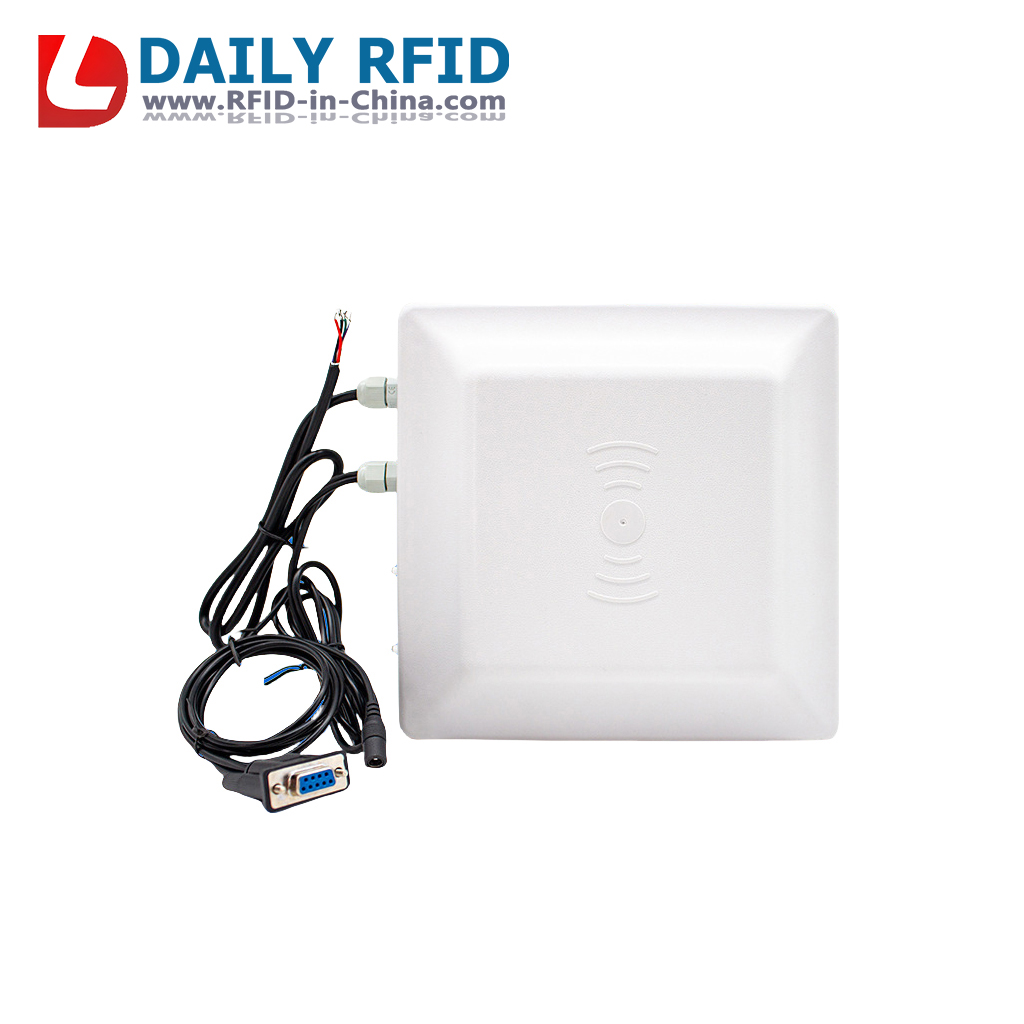
For a defined choke point such as a doorway, conveyor entrance, or vehicle lane, a fixed reader with an integrated antenna simplifies installation. The DL930B UHF Bluetooth reader is one example: it combines a UHF long-range reader with a built-in circular or linear polarized antenna, supports 902-928 MHz with a customizable 860-960 MHz plan, and provides adjustable transmit power of 20-30 dBm. Its reading range is about 4-8 meters depending on tag and environment. It includes RS232, RJ45/TCP-IP, GPIO, and USB interfaces, with an IP65/IP66 weatherproof housing. The DL930 family also has Wi-Fi and GPRS versions, allowing the same reader to be matched to different network environments.
2. Power-over-Ethernet readers for clean installation
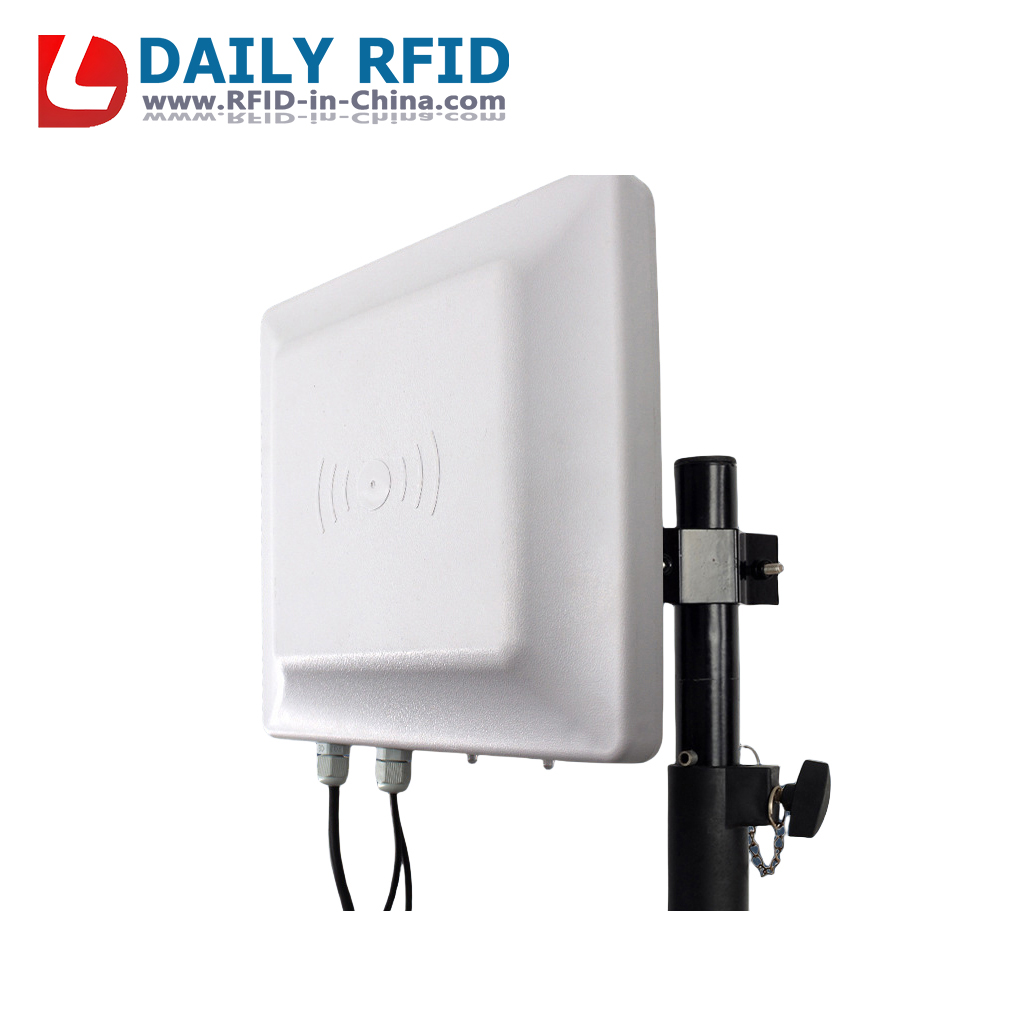
When a checkpoint has network access but power cabling is difficult, the DL921 PoE UHF reader can be useful. It integrates a circular polarized antenna in a 450x450x70mm housing, reads from 0.1 up to 15 meters, and supports ISO18000-6C/EPC Gen2 and ISO18000-6B. It can read up to 50 tags simultaneously, uses PoE or DC 9-24V, and is rated IP65. This form factor fits warehouses, loading docks, vehicle gates, and production-line overhead checkpoints.
3. Multi-port readers for wide zones and high tag density
A production area with multiple aisles or a dock door with high carton flow may need more than one antenna. The DL6940/DL6960 AI multi-antenna 4-port UHF reader has four external antenna ports, supports UHF 860-960 MHz, and is designed for high-density reading. Its stated reading range is up to 25-30 meters, with anti-collision support for up to 1000 tags simultaneously. It supports RS232, RJ45/TCP-IP, GPIO, RS485, and USB, and is protected to IP64. This type of reader is often paired with an antenna array and an industrial PC to create a continuous identification zone.
4. Industrial handheld PDAs for mobile work
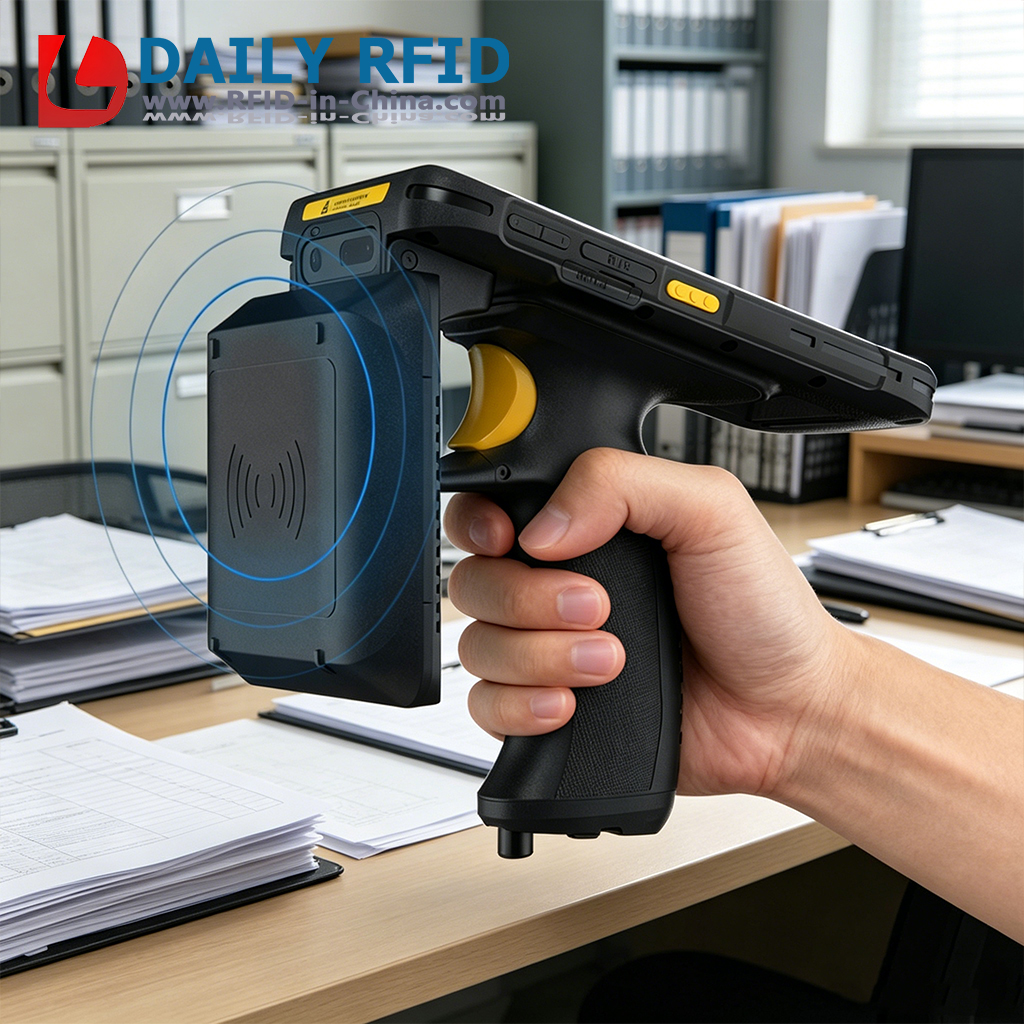
For daily stock checks, machine-side audits, and field maintenance, an operator needs a rugged mobile reader. The DL1280 industrial PDA combines UHF, HF, and LF reading in one device. Its UHF reading range is 0.1-20 meters, it can read up to 100 tags simultaneously at over 100 tags per second, and it is protected to IP65. The device runs Android 12 with an 8-core processor, 4GB RAM and 64GB ROM, and uses a dual-battery design with a 4500mAh host battery plus a 6700mAh handle battery. Wireless options include dual-band Wi-Fi, 4G/3G/2G cellular, Bluetooth 5.0, and GNSS positioning.
5. Embedded reader modules for smart cabinets and controlled storage
Tool cabinets, consumable cabinets, and secure asset storage are common sub-scenarios inside smart factories. The RFID Smart Cabinet Component is an embedded reader module designed for this: it supports external SMA antenna interfaces with 4, 8, or 16-port layouts, reads more than 500 tags per partition, and includes GPIO for electronic locks and indicator lights. It supports RS232, RJ45, USB, and optional PoE power. By embedding a reader module into a cabinet, a factory can automate tool check-out and return without requiring an operator to scan each item.
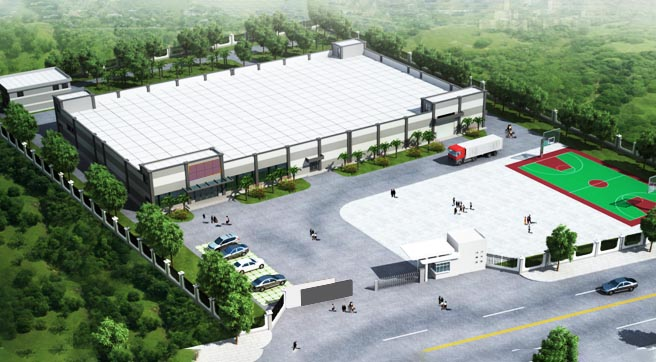
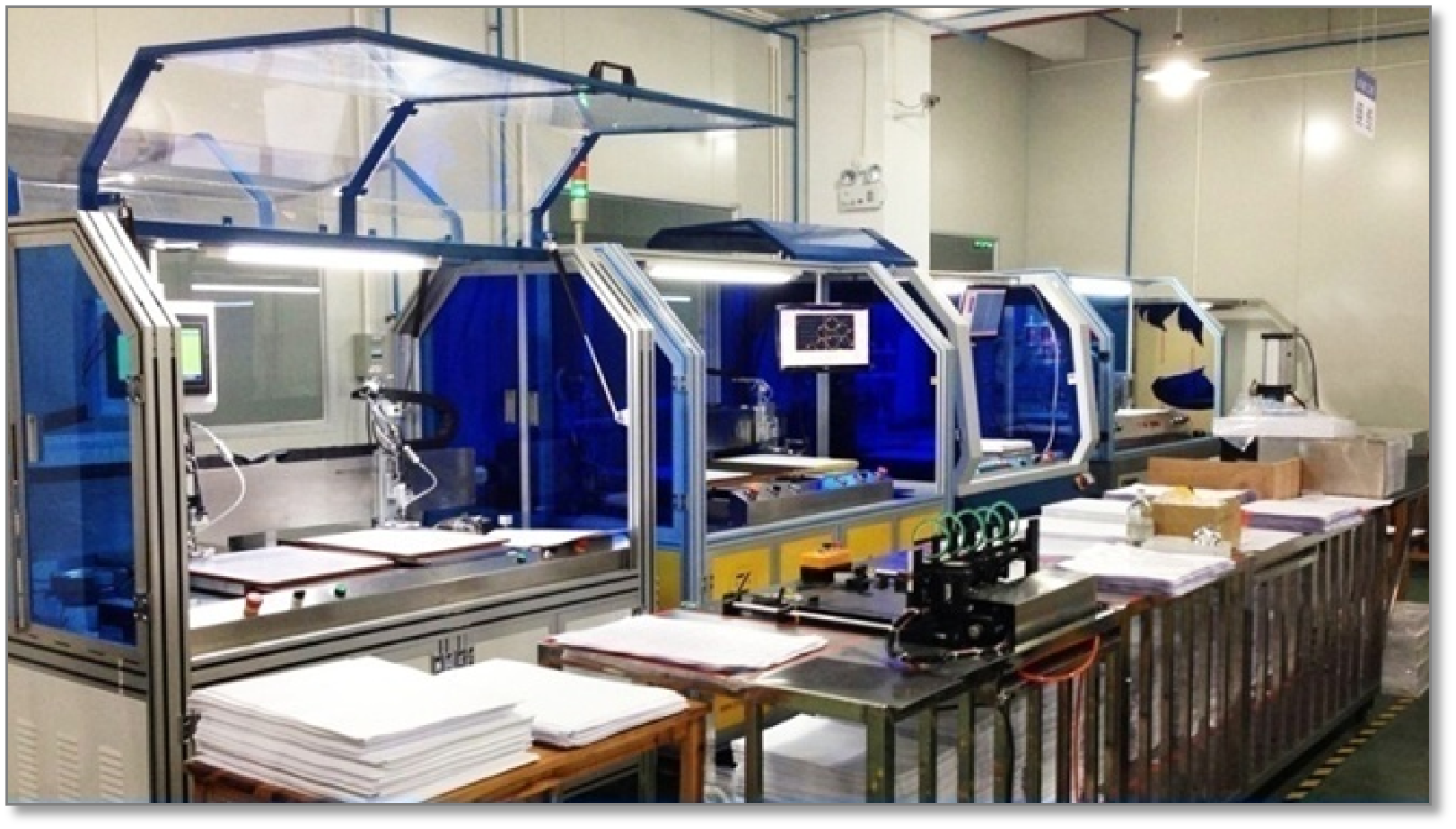
This range is supported by an in-house manufacturing base. DAILY RFID operates a 28,000 m² factory in Guangzhou, with roughly 180-200 employees and a 38-person R&D team. Annual capacity includes about 100,000 RFID readers, 50 million RFID tags, and 30 million RFID cards. Reader projects therefore do not have to be treated as pure catalog purchases; antenna gain, interface, and housing customization are part of the company's OEM/ODM scope.
Step-by-Step: Build a Scenario-Driven Reader Specification
Use the following six steps to move from business need to reader specification.
- Map every physical read point. Identify each gate, conveyor, cabinet, shelf zone, or mobile route that needs RFID data. Write down the direction of movement, mounting height, and available power.
- Quantify speed and tag density. Estimate how many tags pass through the zone per second and whether they are close together, stacked, or moving fast. This defines the required anti-collision and read speed.
- Define environmental conditions. Check temperature range, dust, moisture, metal racks, vibration, and chemical exposure. The reader enclosure must match the site, not the showroom.
- Choose the reader form factor. Use fixed readers for fixed checkpoints, multi-port readers for wide coverage, handheld readers for mobile audits, and embedded modules for cabinets or kiosks.
- Define the data workflow. Some factory deployments send event streams to MES through MQTT; others use local cache with batch sync to ERP or WMS. Confirm which interface, SDK, and protocol the reader must support.
- Validate with a pilot before scaling. A single reader can be tested in the real production environment before large procurement. This is especially practical when the reader supplier supports OEM/ODM with a one-unit minimum order.
Use Cases: Three Reader Deployment Patterns
Automotive production line in Germany
In an automotive manufacturing environment with metal parts and high-speed component flow, DAILY RFID UHF fixed readers and antenna arrays have been used to track production-line parts in real time. The scenario requires dust-proof and shock-resistant equipment, and the system can support more than 400 tags per second while streaming data to the MES. In this case, the reader decision is driven by speed and integration, not by range alone.
Dusty shop-floor inventory in China
On a shop floor with metal racks and frequent inventory checks, an IP65 handheld such as the DL1280 supports stock counting with offline cache and daily batch sync to ERP. In a manufacturing inventory scenario, this approach can reduce inventory variance to less than 1 percent. The mobile form factor matters here because the operator moves between machines and racks; a fixed portal would not cover every storage location.
Cold-chain dock door in the United States
At a cold-chain warehouse door, a fixed UHF reader can automate inbound and outbound pallet counting, while a rugged handheld reader supports pallet traffic checks inside the cold room. The environment may require an IP67 waterproof design and operation at temperatures around -20°C. Data is often cached locally and synced to a cloud WMS every five minutes. In this scenario, the combined fixed and handheld workflow reduces manual scan errors by 80 percent. The reader choice must include enclosure, power, and network behavior, not just read range.
Comparison Table: Which UHF RFID Reader Works Where
| Reader Type | Representative Model | Read Range | Tag Handling | Interfaces and Protection | Typical Smart Factory Fit |
|---|---|---|---|---|---|
| Fixed integrated reader | DL930B | About 4-8m | Protocol-level anti-collision | RS232, RJ45, GPIO, USB; IP65/IP66 | Gates, checkpoints, vehicle lanes, temporary field operations |
| Long-range PoE reader | DL921 PoE | 0.1-15m | Up to 50 tags simultaneously | RS232, RJ45/PoE, GPIO; IP65 | Loading docks, smart warehousing, overhead production checkpoints |
| Multi-port AI reader | DL6940/6960 | Up to 25-30m | Up to 1000 tags simultaneously | 4 external TNC/SMA ports, RS232, RJ45, RS485, GPIO, USB; IP64 | Wide zones, high-density carton or pallet flow, large portals |
| Industrial handheld PDA | DL1280 | UHF 0.1-20m; HF/LF included | Up to 100 tags at once; over 100 tags per second | Type-C USB, Wi-Fi, 4G, Bluetooth, GNSS; IP65 | Shop-floor inventory, asset audits, field patrol, maintenance checks |
| Embedded reader module | RFID Smart Cabinet Component | 0.1-5m | More than 500 tags per partition | RS232, RJ45, GPIO, USB; IP54 | Tool cabinets, consumable cabinets, controlled storage |
This table compares general form factors. Final read range and throughput should be validated with the selected tag, RFID antenna, and site conditions.
FAQ: UHF RFID Reader for a Smart Factory
Which UHF RFID reader standard should a smart factory specify?
UHF RFID readers are standardized globally under EPCglobal Gen2, also known as ISO/IEC 18000-6C. DAILY RFID reader models such as DL930B, DL1280, DL6940/6960, and DL921 support ISO18000-6C/EPC Gen2; some models also support ISO18000-6B. Frequency plans are customizable across 860-960 MHz, which is useful when equipment must be deployed in different regions.
What read range and tag throughput are realistic on a production line?
Range and throughput depend on the reader, antenna, tag, and environment. In DAILY RFID's product family, the DL930B integrated reader provides roughly 4-8m; the DL921 PoE reader extends to 0.1-15m and reads up to 50 tags simultaneously; the DL6940/6960 supports up to 1000 tags with up to 25-30m; and the DL1280 handheld reads 0.1-20m and can process over 100 tags per second. Automotive manufacturing scenarios have used fixed UHF readers and antenna arrays at a read rate above 400 tags per second.
Which reader form factor is more cost-effective for a smart factory?
Cost is not price alone; it includes wiring, installation, maintenance, and integration. A fixed integrated reader such as the DL930B or DL921 PoE reduces antenna cabling and can simplify installation. A multi-port reader may reduce the number of reader units by covering multiple zones, but it requires additional antennas. A handheld reader may be a lower-cost option for small or irregular audit areas. The right choice depends on whether reads happen at fixed checkpoints or mobile routes.
Can I test a UHF RFID reader in a pilot before scaling?
Yes. DAILY RFID supports OEM/ODM projects for UHF fixed and handheld readers. For fixed readers, the OEM/ODM minimum order can be 1 unit with a 15-45 day lead time; for handheld readers, it can also be 1 unit with a 15-30 day lead time. Quality control includes factory acceptance test or full system burn-in, so a pilot can start before mass deployment.
What lead time should I plan for a custom smart factory reader?
Plan approximately 15-45 days for a customized UHF fixed reader and 15-30 days for a UHF handheld reader, depending on antenna gain, interface, housing, and firmware requirements. DAILY RFID's OEM/ODM scope includes UHF fixed readers and UHF handheld readers, with monthly capacities of about 1,000 and 2,000 units respectively. For a custom pilot, it is best to confirm the lead time together with the exact scenario and integration requirements.
Conclusion: Define the Scenario First, Then Select the Reader
In a smart factory, a UHF RFID reader should be selected through a scenario-based process: map the read point, quantify speed and density, check the environment, select the form factor, define the integration, and test with a pilot. DAILY RFID's portfolio covers fixed readers, PoE readers, multi-port readers, handheld PDAs, and embedded reader modules, and its manufacturing base supports OEM/ODM customization.
Need help matching a UHF RFID reader to your smart factory scenario?
DAILY RFID CO., LIMITED can provide product specifications, OEM/ODM guidance, and pilot support. For more information, visit www.rfid-in-china.com or email sales@rfid-in-china.com.
Download the DAILY RFID company profile
Have Questions or Need More Details?
Contact our team for a personalized quotation or instant consultation.
Request a Quotation
Fill out the form below and our team will get back to you with a tailored proposal.
WhatsApp Direct Chat
Prefer to chat in real-time? Message us on WhatsApp for instant assistance & quick answers.
- Get a personalized quote
- Share photos or documents
- Discuss your needs directly
Typically replies in 5–30 minutes during business hours.