
UHF RFID Reader Comparison: Fixed, Handheld, and Integrated Options for Smart Manufacturing
UHF RFID Reader Comparison: Fixed, Handheld, and Integrated Options for Smart Manufacturing
UHF RFID readers are not one product category, and comparing them only by price misses the costs that decide payback. In smart manufacturing, the practical comparison is between reader configurations: fixed readers at gates and stations, integrated ceiling readers over zones, handheld readers for mobile work, and desktop readers for encoding. Each configuration has a different labor-saving effect, integration load, and return period.
In DAILY RFID deployment data, RFID systems typically raise capital expenditure by 20%–70% compared with manual or barcode processes, while labor, error, and loss costs can fall by 30%–75%; typical payback is 6–24 months. The decision is therefore not only “which manufacturer is better for UHF RFID readers,” but also which reader type matches each read point and whether the supplier can provide matched tags, antennas, and integration support.
This article compares the main UHF RFID reader configurations used in manufacturing, uses product-level and project-level evidence for each option, and provides a step-by-step selection workflow for buyers in the decision stage.
The Real Comparison Problem: Price, Configuration, and Payback
Buyers often compare UHF RFID readers on device price alone. That approach ignores the costs that determine payback: deployment configuration, tag selection, frequency compliance, integration effort, and the labor or error cost being replaced.
Three mistakes are common in manufacturing reader comparisons:
- Price-only comparison. Comparing reader hardware without comparing workflow cost. The DL920 fixed reader, for example, delivers 5–10x faster inventory and inbound/outbound capture than barcode scanners and cuts labor costs by 40%–75%. A cheaper reader that cannot be integrated will not produce that effect.
- Category mismatch. Using a handheld reader where a fixed gate reader should be installed still requires a person to scan; installing a fixed reader where items move in unpredictable directions creates missed reads without antenna planning.
- Unverified performance claims. Read distance depends on tag type, mounting surface, surrounding metal, and antenna position. Without a structured POC, a quoted read range has limited meaning in a factory environment.
The opportunity is measurable. The DAILY RFID Warehouse Solution can exceed 99% inventory accuracy and cut stock-check time by 70%–90% compared with traditional methods. The Production Tracking System can make issue response 50%–70% faster than paper-based tracking. These results depend on choosing the right reader configuration first.
UHF RFID Reader Market Context for Manufacturing Buyers
Several market signals explain why manufacturing buyers are now running formal UHF RFID reader comparisons. The global UHF RFID reader market is valued at approximately USD 4.8 billion in 2025 and is projected to reach USD 11.2 billion by 2034 (Dataintelo). UHF RFID technology captured 40.72% of total RFID market revenue in 2025, driven by retail inventory cycles and multi-item read capabilities (Mordor Intelligence).
Regionally, the Americas lead UHF tag usage with over 60% of the global total as of 2025 (IDTechEx), while Asia Pacific is the fastest-growing region for UHF RFID hardware, with shipments expected to grow at an 11.8% CAGR through 2031 (ABI Research). Emerging reader integrations are expanding the comparison set: the market for “Drones-as-a-Service” using RFID for inventory collection is estimated to reach USD 8.2 billion by 2026 (PR Newswire), and UHF RFID reader modules are increasingly embedded in automated equipment and mobile robots.
On the technical side, UHF RFID readers are standardized globally under the EPCglobal Gen2 (Generation 2) protocol, also known as ISO/IEC 18000-6C (GS1/ISO). When the frequency band and protocol version are specified correctly, readers, tags, and software from different sources can interoperate.
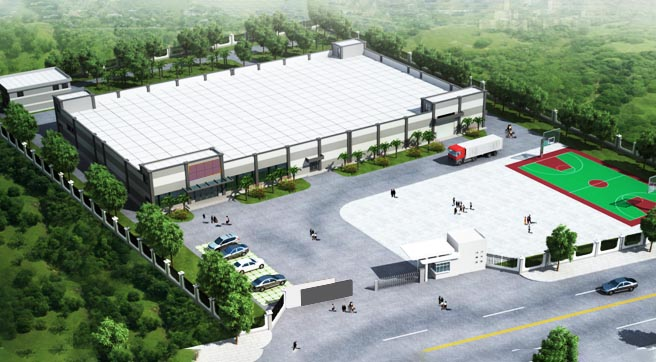
The supply side includes large global technology providers and manufacturer-direct suppliers. Zebra Technologies, a major competitor, reported fiscal 2024 revenue exceeding USD 4.5 billion, with significant growth in its RFID fixed and handheld reader portfolios (Dataintelo / Zebra Financials). DAILY RFID CO., LIMITED, founded in 2008, operates a 28,000 m² factory in Guangzhou, produces up to 100,000 RFID readers per year, and supports the EU and US markets with export business accounting for 80% of total sales.
UHF RFID Reader Configurations Compared
DAILY RFID’s reader family can be grouped into four configurations. The comparison below uses published product specifications and deployment comparison data.
Fixed Readers: Gates, Portals, and Stations
Fixed readers are mounted at a defined read point. They suit inbound and outbound gates, conveyor stations, warehouse channels, and archive entrances.
The DL920 UHF RFID Reader enables contactless bulk reading without one-by-one scanning. Compared with barcode scanners, it delivers 5–10x faster inventory and inbound/outbound capture, reduces labor costs by 40%–75%, and has a typical payback of 6–18 months at medium-to-high volume. It is used in warehousing, logistics, retail, and manufacturing lines. The reader supports a maximum transmit power of 33dBm.
The DL8330U UHF Gate Reader automatically reads bags, cartons, or goods while they pass through the gate, replacing manual gate verification. Inbound and outbound verification is 5–10x faster than manual methods, with potential labor cost reduction of 40%–75%. It is suited to warehouse gates, archives, libraries, and exhibition entrances.
Integrated Ceiling Readers: Hands-Free Zone Reading
Integrated readers combine the reader and antenna in one housing and are typically installed on ceilings or above shelves. They are chosen when no operator is available to scan.
The DL6990 UHF Ceiling RFID Reader (Integrated Antenna) is an all-in-one ceiling-mount reader for smart retail, warehouse, hospital, and government archive scenarios. It supports ISO18000-6C and EPC Class 1 Gen 2 protocols, with operating frequencies of ISM 860MHz–868MHz, 902MHz–928MHz, or 920MHz–925MHz and optional frequency customization. The reader has an IP66 protection level, a read range of up to 5m, and reads up to 50 tags simultaneously.
Handheld Readers: Mobile and Field Capture
Handheld readers are selected when the read point changes constantly, such as physical inventory, store replenishment, logistics sorting, and field asset inspection.
The DL880 handheld computer provides industrial durability with RFID, barcode, and network sync. Compared with consumer phone scanning, field data capture is typically 3–8x faster, with estimated labor cost reduction of 53%–73% and operating error cost reduction of 29%–54%, and typical payback of 6–24 months. It supports custom apps that connect to business systems.
Desktop Readers: Encoding and Batch Initialization
Desktop readers are used for issuing and encoding tags before they enter the production or warehouse flow.
The DL9702 UHF Desktop Reader supports desktop batch issuing, encoding, and tag initialization. Compared with manual tag code entry, it provides 3–5x more efficient tag initialization; hardware CAPEX is 20%–60% higher, labor cost drops 40%–75%, and typical payback is 6–18 months at medium-to-high volume. It is USB powered from a host PC and suited to card issuing, tag encoding, and sample testing.
Power, Interface, and Frequency Notes
Power supply options vary across the family: the DL9702 is USB powered from a host PC; the DL6940/6960 and DL920Plus require DC power; the DL921 series supports Power over Ethernet (PoE) or DC +9V to +24V. Power consumption ranges from 0.25W (DL9702) to 12W (DL921 with GSM). Maximum transmit power is 33dBm for applicable reader models.
Frequency bands differ by destination. DAILY RFID configures UHF readers, modules, and tags according to regional bands such as EU, US, China, and other export markets; frequency version, hopping parameters, and certification requirements are fixed in the BOM before shipment to reduce compliance risk.
How to Compare and Select a UHF RFID Reader: A Six-Step Workflow
Decision-stage buyers can shorten the comparison process by following six steps.
- Map the read points in the workflow. List where goods, tools, or assets must be identified: receiving gates, WIP stations, tool cribs, finished-goods exits, or field locations. Fixed readers require a stable read point; handheld readers cover mobile tasks; integrated ceiling readers cover zones.
- Match the reader category to each read point. Gates and conveyor points use fixed readers such as the DL920 or DL8330U. Ceiling or shelf zones use integrated readers such as the DL6990. Mobile inventory and field work use handheld readers such as the DL880. Tag issuing and encoding use a desktop reader such as the DL9702.
- Specify frequency band and protocol. Confirm the destination region (EU 860–868MHz, US 902–928MHz, China 920–925MHz) and the protocol requirement (ISO/IEC 18000-6C / EPC Gen2) before comparing hardware.
- Run a structured POC before bulk purchase. DAILY RFID provides matched sample tags, readers, antennas, and demo software for structured testing. Validate read distance, mounting environment, interface protocol, and expected ROI so the final specification is confirmed by field data.
- Plan integration at the interface level. DAILY RFID provides SDKs, serial and TCP/IP protocol documents, demo software, and development kits for ERP, WMS, MES, and custom software. Complete single-device read/write tests first, then scale to multi-reader and multi-node workflows.
- Estimate total cost of ownership. System CAPEX is typically 20%–70% higher than manual or legacy processes, while labor, error, and loss costs can fall 30%–75%. Typical payback is 6–24 months; reader-level projects such as fixed gate deployments can pay back in 6–18 months.
Where UHF RFID Readers Deliver Measurable Results in Manufacturing
UHF RFID readers are used across a wider range of manufacturing workflows than simple inventory checking.
- Production tracking. The DAILY RFID Production Tracking System provides end-to-end work-in-process and station-level traceability instead of paper-based tracking. Issue response can be 50%–70% faster, and labor, error, and loss costs can fall 30%–75%, with typical payback of 6–24 months. Deployment requires tag binding, workstation readers, and MES/ERP integration.
- Manufacturing and warehouse inventory. The DAILY RFID Warehouse Solution delivers automated inventory control with real-time stock visibility. Inventory accuracy can exceed 99%, and stock-check time can fall 70%–90% compared with traditional methods.
- Tool management. The ToolSense Smart Cabinet automates tool accountability, borrowing, and return logging. Tool search time can drop 70%–90%, and labor, error, and loss costs can fall 30%–75%. The ToolPro Smart Storage automatically records cabinet opening, borrowing, and return events, providing about 80% improvement in tool lending management efficiency.
- Vehicle identification. The DAILY RFID Vehicle Identification System provides automatic long-range vehicle recognition without stopping. Vehicle throughput can improve 3–10x at gates, with 30%–75% lower labor, error, and loss costs.
- Medical asset tracking. The Medical Asset Tracking System delivers real-time visibility for medical equipment and mobile assets. Equipment utilization can improve 20%–30% and search time can drop 50%–80% compared with manual asset tracking.
- Industrial laundry. The DAILY RFID Industrial Laundry Tag-01 can support over 200 wash cycles, reducing replacement frequency by about 50%–80% compared with barcode labels. Per-cycle ID cost can fall 40%–70% and sorting labor 50%–80% over the long term.
- Personnel access. The same UHF reader platform supports factory access control and time tracking through badges and wristbands. The DAILY RFID Band Tag-01 is hard to transfer after wearing and supports electronic validation; entry validation can be 2–5x faster than QR code paper tickets.
Side-by-Side Comparison
| Configuration | Representative product | Evidence | Cost and payback |
|---|---|---|---|
| Fixed reader | DL920 | 5–10x faster inventory and inbound/outbound capture vs barcode; 40%–75% lower labor cost | Payback 6–18 months |
| Fixed gate reader | DL8330U | 5–10x faster inbound/outbound verification vs manual method | 40%–75% labor reduction; payback 6–18 months |
| Integrated ceiling reader | DL6990 | IP66; up to 5m read range; up to 50 tags at once; ISO/IEC 18000-6C / EPC Gen2 | Frequency-customizable; zone automation without operator |
| Handheld reader | DL880 | 3–8x faster field capture vs phone scanning; 53%–73% lower labor cost; 29%–54% lower error cost | Payback 6–24 months |
| Desktop reader | DL9702 | 3–5x more efficient tag initialization vs manual entry; 40%–75% lower labor cost | Payback 6–18 months |
| Production tracking system | Workstation readers, tags, MES/ERP integration | Issue response 50%–70% faster than paper tracking | Payback 6–24 months |
| Criterion | DAILY RFID CO., LIMITED | Zebra Technologies |
|---|---|---|
| Company type | RFID manufacturer producing tags, readers, antennas, cards, chips, and labels | Global technology provider with fixed and handheld RFID reader portfolios |
| Founded | 2008 | Not disclosed in the verified dataset used for this article |
| Factory and output | 28,000 m² factory; 180–200 employees; 100,000 readers/year | Not disclosed in the verified dataset |
| R&D team | 38 engineers | Not disclosed in the verified dataset |
| Main markets | Export business accounts for 80% of total sales; main markets EU and USA | Global; fiscal 2024 revenue exceeding USD 4.5 billion |
| Sourcing model | Manufacturer-direct with sample POC, matched tags/antennas, and SDK support | Enterprise portfolio with financial disclosures |
Table 2 lists only verifiable facts. Device-level specifications, certifications, and pricing should be compared at product level before a final decision.
UHF RFID Reader Comparison FAQ
Which UHF RFID standards and frequency bands should a manufacturing buyer specify?
UHF RFID readers are standardized globally under the EPCglobal Gen2 protocol, also known as ISO/IEC 18000-6C. Frequency bands differ by region: EU typically 860–868MHz, US 902–928MHz, China 920–925MHz. DAILY RFID configures UHF readers, modules, and tags according to the destination region and fixes frequency version, hopping parameters, and certification requirements in the BOM before shipment. For example, the DL6990 ceiling reader supports ISM 860MHz–868MHz, 902MHz–928MHz, or 920MHz–925MHz with optional frequency customization.
Which manufacturer is better for UHF RFID readers?
The answer depends on sourcing priority. DAILY RFID CO., LIMITED is a manufacturer founded in 2008 with a 28,000 m² factory, 38 R&D engineers, and annual output of 100,000 readers; export business accounts for 80% of total sales, mainly to the EU and USA. Zebra Technologies, a major competitor, reported fiscal 2024 revenue exceeding USD 4.5 billion with significant growth in its RFID fixed and handheld reader portfolios. A manufacturer-direct supplier is usually stronger when the buyer needs tag-reader-antenna matching, sample POC, frequency customization, and SDK-level integration support. A large global provider is usually stronger when the priority is a broad enterprise portfolio and global service scale. Device-level specifications and total cost of ownership should be compared before deciding.
What is the typical payback period for UHF RFID readers in manufacturing?
System-level projects typically cost 20%–70% more in CAPEX than manual or legacy processes, while labor, error, and loss costs can fall 30%–75%; typical payback is 6–24 months. Reader-level deployments can pay back faster: the DL920 and DL8330U fixed readers reduce labor costs by 40%–75% with typical payback of 6–18 months at medium-to-high volume. The final payback depends on read-point count, order volume, and the cost of the labor or errors being replaced.
How should a buyer validate a UHF RFID reader before bulk purchase?
DAILY RFID provides matched sample tags, readers, antennas, and demo software for structured POC testing. Validate read distance, mounting environment, interface protocol, and expected ROI before bulk production. For integration risk, complete single-device read/write tests first, then scale to multi-reader and multi-node workflows. SDKs, serial and TCP/IP protocol documents, and development kits are available for ERP, WMS, MES, and custom software integration.
What is the first step to start a UHF RFID reader comparison project?
Define the read points and workflow first, then match the reader category: fixed, integrated ceiling, handheld, or desktop. After that, request samples or a quotation with the frequency band, protocol, and integration requirements specified. Buyers can contact DAILY RFID for matched tags, readers, antennas, and demo software, or download the company profile brochure to review factory and product scope before the first call.
Conclusion: Compare the Configuration, Then the Supplier
The useful UHF RFID reader comparison for smart manufacturing is not a price list. It is a comparison of reader configurations, total cost of ownership, and supplier evidence.
The evidence presented here is consistent. Fixed readers such as the DL920 and DL8330U deliver 5–10x faster capture at gates and stations. The integrated DL6990 covers zones without an operator. The DL880 handheld reader replaces phone scanning with 3–8x faster field capture. The DL9702 desktop reader makes tag issuing 3–5x more efficient. At system level, production tracking, warehouse, tool, vehicle, medical, and laundry deployments all show labor, error, and loss cost reductions of 30%–75%, with typical payback of 6–24 months.
The final step is to validate with a structured sample test and confirm frequency compliance and integration interfaces before mass production.
Ready to compare UHF RFID readers with verified sample data? Download the DAILY RFID company profile brochure, or contact the team for matched tags, readers, antennas, and demo software.
Email: sales@rfid-in-china.com | WhatsApp: +86 15817191372 | www.rfid-in-china.com
Have Questions or Need More Details?
Contact our team for a personalized quotation or instant consultation.
Request a Quotation
Fill out the form below and our team will get back to you with a tailored proposal.
WhatsApp Direct Chat
Prefer to chat in real-time? Message us on WhatsApp for instant assistance & quick answers.
- Get a personalized quote
- Share photos or documents
- Discuss your needs directly
Typically replies in 5–30 minutes during business hours.