
WIFI RFID Reader vs 2.4GHz Active Reader vs Fixed Reader: Connectivity Options Compared
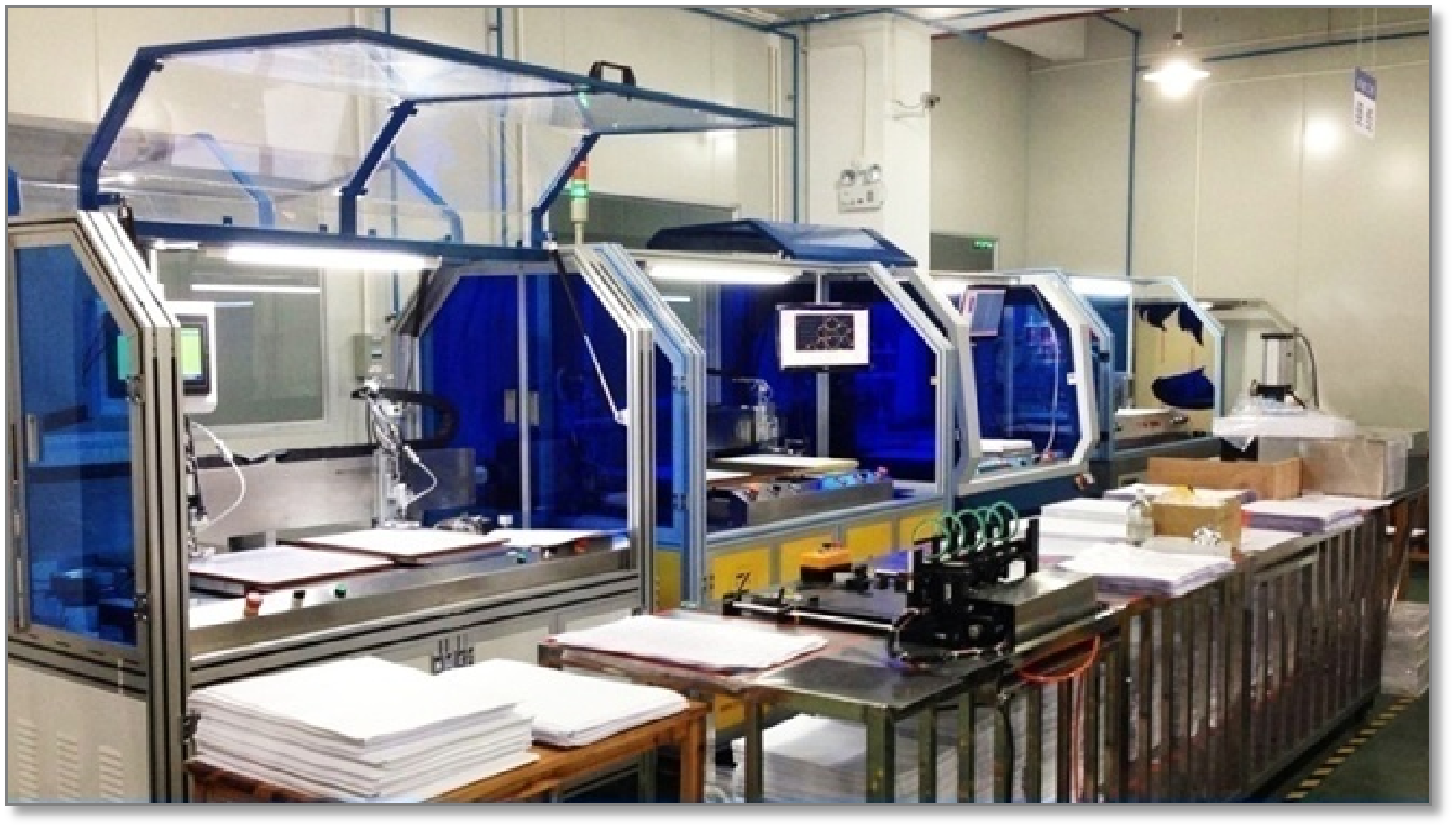
DAILY RFID contactless IC card equipment at the company's Guangzhou facility. The tag side of the decision is set before the reader side is compared.
A smart manufacturing team choosing a UHF RFID Reader is usually not choosing a radio. It is choosing an architecture. The shortlist comes down to three: a WIFI RFID Reader that adds a fixed read point wherever there is power and Wi-Fi coverage; a 2.4GHz RFID Active Reader working with battery-powered active tags across a wide area; and a cabled RFID Fixed Reader, RFID Gate, or Ceiling RFID Reader that holds a permanent, always-on read point. The tag family constrains the answer more than any reader datasheet does. Passive UHF tags operating at 860MHz~960MHz will not respond to a 2.4GHz active reader, and an active tag will not respond to a Gen 2 UHF reader. Choose the tag first, then the connectivity.
Problem Definition: The Connectivity Question Is Really Three Questions
Buyers who compare these options by lining up datasheets usually end up with a specification that works on paper and fails on the floor. The reason is that "which reader" hides three separate decisions.
- Where must the read happen? A doorway, a bench under a ceiling unit, a tool cabinet, a linen sorting lane, or an open assembly hall with no natural boundary. The physical shape of the read zone decides more than the radio technology name.
- How does the record reach the system? Wired Ethernet or Power over Ethernet, a Wi-Fi backhaul, a cellular link at a remote site, or filtering on the reader before anything is transmitted at all.
- What tag is physically attached to the object? A passive UHF label, an on-metal tool tag, a washable laundry tag, or a battery-powered active tag and active wristband. Reader and tag must belong to the same family.
Once those three are answered, the connectivity comparison becomes narrow and practical. Before they are answered, every reader looks equally suitable and every quote is hard to defend.
Industry Background: Why Connectivity Now Decides Traceability Outcomes
UHF is no longer a niche choice inside RFID. Mordor Intelligence reports that the UHF frequency band captured 40.72% of total RFID market revenue in 2025, and projects the UHF RFID market to surpass USD 14.9 billion by 2031 at a 12.45% CAGR across 2025-2031. When one band carries that share of spending, the hardware around it standardises - and the differentiation moves to how the data gets out of the reader.
Standardisation is already in place on the air interface. UHF RFID readers operate under the EPCglobal Gen 2 / ISO/IEC 18000-6C standard published through GS1, referenced as ISO/IEC 18000-63. Supplier listings reflect that baseline in public: one integrated-antenna UHF reader from Merhein is listed at 860-960 MHz with support for EPCglobal UHF Class 1 Gen 2, ISO 18000-6C, and ISO 18000-6B. In practice this means a passive UHF tag bought for one Gen 2 reader will generally answer another - which is precisely why the reader's connection and read-zone behaviour, not protocol support, becomes the deciding difference between the options in this comparison.
Integration expectations have risen with it. Turck states that selected UHF RFID readers in its range support OPC UA through the AutoID Companion Specification, exposing RFID data in a standardised format to PLCs, MES, ERP, WMS, or cloud systems. On the application side, a 2025 institutional paper from Queen's University Belfast describes RFID-enabled trolley tracking in a large-scale aerospace manufacturing environment, linked to a business-intelligence visual management system. Both examples point the same way: the reader is no longer the end of the chain. The connection is.
Detailed Solution: Four Connectivity Architectures
WIFI RFID Reader: Fixed Read Points Without New Cable Runs
A WIFI RFID Reader carries its own wireless backhaul, so a read point can be placed wherever there is power and Wi-Fi coverage rather than wherever a cable can be pulled. That makes it the natural option for retrofits in leased buildings, temporary or movable stations, remote or satellite sites, and secondary read points where the tag volume per hour is moderate.
The engineering requirement is not the radio link itself but what happens when that link fails. DAILY RFID industrial readers support network heartbeat monitoring, automatic reconnection, and local data buffering so scan records stay traceable through temporary network interruptions. DAILY RFID's own deployment guidance is explicit about the boundary: for mission-critical fixed read points, use PoE or wired Ethernet; for remote sites, configure Wi-Fi or GPRS with queued upload and breakpoint-resume to reduce data-loss risk.
That guidance is the real selection rule. A WIFI RFID Reader is a strong choice for a visibility point that can tolerate a short queued delay. It is a weak choice for a financially or safety-critical read point where every event must land in the ERP inside a fixed window - the wired fixed reader exists for that case.
2.4GHz RFID Active Reader: Wide-Area Identification With a Different Tag Family
The 2.4GHz RFID Active Reader works on the opposite principle. The tag carries its own power source and transmits, so long-range identification does not depend on concentrating reader energy into a narrow zone. This is the architecture for assets and people moving through open space: yards, large assembly halls, cross-dock areas, and material-flow routes where no doorway exists to hang a portal on.
The trade-off is symmetrical. A read area wide enough to be useful is also wide enough to be wrong. DAILY RFID active tag and zoned reader solutions can control transmit power, wake-up sensitivity, RSSI thresholds, and area boundaries; shielding, zoned antennas, and site calibration are used to reduce cross-zone triggering while keeping long-range identification reliable. In other words, the 2.4GHz option is not installed, it is calibrated - and the calibration is what determines whether the system reports movement or noise.
Two practical consequences follow. First, active tags have a power source, so a battery lifecycle and replacement plan belongs in the total cost model from day one. Second, an active deployment should be specified with zone drawings, not just reader quantities.
RFID Fixed Reader, RFID Gate, and Ceiling RFID Reader: Permanent Read Points
RFID Fixed Reader. The node-based approach places fixed readers, UHF antennas, and handheld terminals at inbound, outbound, transfer, and inventory nodes. The system captures each movement event and generates exception lists for missing, wrong-location, or idle assets. This is the architecture that produces an auditable event record rather than a periodic count, and it is the backbone most smart factories build first.
RFID Gate. The DAILY RFID DL8330U UHF Gate Reader automatically reads bags, cartons, or goods while they pass through the portal. Inbound and outbound verification can be 5-10x faster than manual checks. The commercial shape is well documented: hardware CAPEX is usually 20%-60% higher than manual or barcode stations, while labor cost can drop 40%-75%, with typical payback of 6-18 months at medium-to-high volume. The deployment requirement is portal sizing and antenna tuning - a gate that is not tuned is a gate that reads the shelf behind it.
Ceiling RFID Reader. An overhead unit turns a workstation, bench, or inspection point into a read zone without consuming floor space. DAILY RFID reader designs include an integrated low-profile flat-panel near-field antenna and a built-in near-field localized antenna, with a buzzer as the read prompt - useful where an operator needs immediate audible confirmation that the item on the bench was captured. One DAILY RFID reader design carries an IP54-equivalent protection level; for comparison, Turck states that its UHF RFID readers carry an IP67 rating for dust, moisture, and temperature fluctuation. Confirm the enclosure rating you actually need for the mounting location rather than assuming a factory-floor number applies to every form factor.
AI Powered RFID Reader: Where Data Processing Changes the Connectivity Maths
The AI Powered RFID Reader belongs in this comparison because it changes the backhaul requirement rather than replacing the options above. DAILY RFID's anti-collision feature includes an AI-enhanced single-tag lock filtering function, which resolves the intended tag on the reader instead of pushing every candidate read upstream.
The architectural effect is straightforward: less duplicate event traffic leaves the device, so a wireless backhaul carries a lighter, cleaner load, and the host system spends less time de-duplicating. That makes the AI-capable reader a useful companion to a WIFI RFID Reader at busy wireless stations, and a useful companion to a fixed gate where a single item passing a portal can otherwise generate multiple read events.
The boundary is equally clear. On-reader filtering improves event quality; it does not fix a read zone that was designed badly. Antenna placement, RF power, and shielding still come first.
Tag Pairing: Which Tag Belongs With Which Reader
RFID Active Tag and RFID Active Wristband With the 2.4GHz Active Reader
Active tags pair only with active readers. Because an RFID Active Tag or RFID Active Wristband carries its own transmitter, the usable area is shaped by tag power and reader wake-up settings, which is exactly why DAILY RFID controls transmit power, wake-up sensitivity, RSSI thresholds, and area boundaries in zoned active deployments. For people flow, wristbands are the natural form factor; for asset and container flow, active tags are. Both depend on the same site calibration.
One clarification prevents a common specification error. DAILY RFID offers dual-frequency cards, wristbands, and credentials that combine LF or HF short-range access with UHF long-range identification, supporting access control, personnel tracking, vehicle identification, and inventory workflows from one credential design. That is a dual-frequency passive credential operating at UHF 860MHz~960MHz with HF 13.56MHz or LF 125KHz - not a 2.4GHz active device. The two are frequently confused in tender documents and should be separated explicitly.
RFID Tool Tag With Fixed, Gate, and Cabinet Read Points
Tools are metal, and metal is the hardest pairing problem in UHF. DAILY RFID provides UHF on-metal tags, flexible on-metal labels, and isolation materials for metal racks, cabinets, and equipment; foam or ferrite spacing is added where needed, and the reader and antenna setup is retuned after installation because a metal environment shifts the read behaviour of the whole zone.
The cabinet is effectively a shielded fixed read point. DAILY RFID ToolPro Smart Storage automatically records cabinet opening, borrowing, and return, and tool lending management can improve by about 80%. Cabinet hardware runs roughly 2-5x the cost of a standard cabinet, while loss and replacement cost can fall 30%-70% and administrative labor 50%-80%, with payback commonly 12-30 months. In architecture terms, a tool cabinet is the correct answer when the read zone is small, controlled, and permission-bound - and a fixed or ceiling reader over a tool counter is the correct answer when tools never leave the open floor.
RFID Laundry Tag With Gate and Bulk Read Points
Laundry and linen workflows stress the pairing in a different way: volume per minute and survival across wash cycles. DAILY RFID Industrial Laundry Tag-01 is built to withstand washing, high temperature, and chemical cleaning, and can support 200+ wash cycles, reducing replacement frequency by about 50%-80%. Unit tag cost is often 3-10x a barcode laundry label, but per-cycle identification cost can fall 40%-70% and sorting labor 50%-80%. The DAILY RFID Jeans Laundry Tag combines garment labeling with electronic tracking and is described as making garment recycling and inventory 3-8x faster across 200+ wash cycles.
On the reader side, the pairing is bulk UHF readers, tunnel or gate readers, and handheld terminals used at receiving, washing, dispatch, and delivery. Because these tags are laundered, DAILY RFID recommends validating wash cycles, dryer temperature, ironing or tunnel pressure, and detergent conditions with small-batch lifecycle tests before full deployment. A laundry line is therefore a gate-and-tunnel architecture, not a single Wi-Fi antenna - the volume per minute is the constraint, not the cable.
Step-by-Step Breakdown: How to Choose in Six Steps
Use Cases: Where Each Architecture Earns Its Place
- Mixed assembly hall with partial network coverage. A WIFI RFID Reader at a sub-assembly bench for continuous component visibility, paired with a wired DL8330U UHF Gate Reader at the shipping door where every outbound carton must be recorded without tolerance for delay.
- Large open hall with trolleys and containers. A 2.4GHz RFID Active Reader with zoned antennas, RFID Active Tags on containers, and site calibration against transmit power and RSSI thresholds. The 2025 aerospace trolley-tracking work published through Queen's University Belfast illustrates the same pattern - material-flow visibility feeding a visual management layer.
- Tool room and calibration lab. A tool cabinet read point with RFID Tool Tags and on-metal isolation, or a Ceiling RFID Reader over a tool counter where tools never leave the open floor and the buzzer read prompt gives the operator immediate confirmation.
- Linen and workwear processing. RFID Laundry Tags read in bulk at gate and tunnel read points across receiving, washing, dispatch, and delivery, with lifecycle validation before rollout.
- High-traffic inbound dock. A fixed reader node with UHF antennas capturing each movement event and generating exception lists for missing, wrong-location, or idle assets, rather than a periodic manual count.
Comparison Table
| Option | Where the read happens | Data path | Paired tag | Verified consideration |
|---|---|---|---|---|
| WIFI RFID Reader | Fixed point at a bench, doorway, or movable station; retrofits and remote sites | Wi-Fi or GPRS with queued upload and breakpoint-resume; heartbeat monitoring, automatic reconnection, and local data buffering on DAILY RFID industrial readers | Passive UHF Gen 2 tag (860-960 MHz) | Best where cable runs are impractical; mission-critical fixed read points should use PoE or wired Ethernet |
| 2.4GHz RFID Active Reader | Wide area with no fixed boundary - yards, open halls, material-flow routes | Wireless link to host; the tag transmits, so range is tag-driven | RFID Active Tag, RFID Active Wristband | Wide read area is also a wide false-read area; control transmit power, wake-up sensitivity, RSSI thresholds, and boundaries, then calibrate on site |
| RFID Fixed Reader | Inbound, outbound, transfer, and inventory nodes | PoE or wired Ethernet recommended for mission-critical points | Passive UHF Gen 2 tag; on-metal tool tag in metal areas | Captures each movement event and generates exception lists for missing, wrong-location, or idle assets |
| RFID Gate (DL8330U) | Doorway or portal, reading bags, cartons, or goods in motion | Wired to host; requires portal sizing and antenna tuning | Passive UHF Gen 2 tag | Inbound/outbound verification 5-10x faster; hardware CAPEX 20%-60% higher than manual or barcode stations, labor cost down 40%-75%, payback 6-18 months at medium-to-high volume |
| Ceiling RFID Reader | Overhead above a bench, station, or inspection point | Wired or Wi-Fi backhaul, depending on site | Passive UHF Gen 2 tag; near-field tag where the zone is small | DAILY RFID reader designs integrate a low-profile flat-panel near-field antenna and use a buzzer as the read prompt |
| AI Powered RFID Reader | Any of the above, with filtering performed on the device | Lighter event volume on the backhaul after on-reader filtering | Passive UHF Gen 2 tag | Anti-collision feature includes AI-enhanced single-tag lock filtering; improves event quality but does not repair a badly designed read zone |
Deployment Risks That Change the Answer
Four risks recur across every architecture in this comparison, and each one can flip the selection if it is discovered after ordering.
- Cross-zone triggering on active deployments. A long-range zone that reaches beyond its boundary produces false events. DAILY RFID addresses this with transmit power, wake-up sensitivity, RSSI thresholds, area boundaries, shielding, and site calibration.
- Gate capture of adjacent storage. A portal that reads the shelf behind it invalidates the whole record. Antenna placement, RF power control, shielding panels, RSSI filtering, and event-triggered read windows narrow the zone.
- Wireless link interruption. Without heartbeat monitoring, automatic reconnection, and local buffering, a Wi-Fi read point loses events silently. Specify the buffering and reconnect behaviour in writing.
- Metal detuning after installation. On-metal tags, flexible on-metal labels, and isolation materials are the starting point; foam or ferrite spacing and reader/antenna retuning after installation are part of the work, not an optional extra. For embedded reader modules, DAILY RFID also advises attention to power filtering, grounding, antenna spacing, and enclosure layout, with EMC pre-scan and read-distance retesting before mass production.
FAQ
Do all three connectivity options use the same RFID tags?
No. The WIFI RFID Reader, RFID Fixed Reader, RFID Gate, and Ceiling RFID Reader all work with passive UHF tags in the 860-960 MHz band under EPCglobal Gen 2 / ISO 18000-6C, the air-interface standard published through GS1 as ISO/IEC 18000-63. The 2.4GHz RFID Active Reader works only with active tags that carry their own power source, such as an RFID Active Tag or RFID Active Wristband. DAILY RFID also supplies dual-frequency cards, wristbands, and credentials combining HF 13.56MHz or LF 125KHz short-range access with UHF 860MHz~960MHz long-range identification - that is a passive dual-frequency credential, not a 2.4GHz active device. Confirm the tag family before comparing reader specifications.
Can a WIFI RFID Reader keep its records when the network drops?
That depends on the reader's edge behaviour, not on the Wi-Fi link. DAILY RFID industrial readers support network heartbeat monitoring, automatic reconnection, and local data buffering so scan records stay traceable during temporary network interruptions. For mission-critical fixed read points, DAILY RFID's guidance is to use PoE or wired Ethernet; for remote sites, Wi-Fi or GPRS can be configured with queued upload and breakpoint-resume to reduce data-loss risk. Ask for the buffering depth and reconnection behaviour in writing before specifying a wireless read point.
How do the cost structures differ between these options?
The reader price is the smallest part of the comparison. DAILY RFID's published comparison data shows the pattern: a UHF gate reader installation carries hardware CAPEX about 20%-60% higher than manual or barcode stations, while labor cost can fall 40%-75%, with typical payback of 6-18 months at medium-to-high volume. A tool cabinet read point costs roughly 2-5x a standard cabinet, with loss and replacement cost down 30%-70% and administrative labor down 50%-80%, and payback commonly 12-30 months. An industrial laundry tag can cost 3-10x a barcode laundry label, but it is designed for 200+ wash cycles, so per-cycle identification cost can fall 40%-70% and sorting labor 50%-80%. No verified public unit prices exist for the reader options themselves, so a configuration-based quote is the only reliable basis.
What should a sample and acceptance test cover?
Match the test to the architecture being bought. DAILY RFID reader orders are quoted from MOQ 2 units with 7-15 day lead time and EXW / FOB / CIF delivery terms, and the acceptance criterion is agreed at quotation - reader listings reference sample approval, factory functional test, performance test, network connection test, pre-shipment test, pre-shipment inspection, or factory acceptance test depending on configuration. For a wireless read point, include a network connection test and a reconnect test. For a 2.4GHz active zone, include site calibration of transmit power, wake-up sensitivity, and RSSI thresholds. For tool or laundry tag pairings, run a small-batch lifecycle test across real handling or wash cycles before rollout.
How do buyers choose a long-term UHF RFID reader supply partner in China?
DAILY RFID CO., LIMITED is an RFID manufacturer established in 2008 in Guangzhou, China, operating a 28,000 m² factory with 180-200 employees and 38 engineers. It produces RFID tags, RFID cards, and RFID readers, with annual reader output of 100,000 units and about 80% of output exported, mainly to the EU and USA. For a long-term programme, four checks matter: whether readers can be quoted from MOQ 2 units on a 7-15 day lead time with EXW / FOB / CIF terms; whether acceptance criteria are written into the order; whether the same supplier can also supply the paired tag - active tag, wristband, tool tag, or laundry tag - so tag-reader tuning is not split between vendors; and whether Wi-Fi backhaul, wired Ethernet, and AI-enhanced single-tag lock filtering sit on one product roadmap. A sample request plus a configuration-based quote tests all four quickly. The company profile and full product range are available in the DAILY RFID company brochure.
Conclusion: Decide the Tag, Then the Zone, Then the Cable
The three architectures in this comparison are not competing answers to the same question - they answer different questions. A WIFI RFID Reader answers "how do I get a read point where I cannot pull a cable, without losing events when the link drops?" A 2.4GHz RFID Active Reader answers "how do I see assets and people moving through open space with no doorway to hang a portal on?" A fixed reader, gate, or ceiling reader answers "how do I guarantee that every event at this node is captured and auditable?" An AI Powered RFID Reader answers "how do I stop duplicate events at the device so the backhaul and the host can cope?"
The sequence that produces a defensible specification is consistent: fix the tag family, draw the read zone, choose the backhaul against the consequence of a missed event, engineer the zone with power, placement, shielding, and filtering, decide where filtering runs, then validate with a sample and a written acceptance test. Teams that start with reader datasheets usually revisit the decision during commissioning. Teams that start with the tag and the zone usually do not.
Next Step: Sample, Quote, or Pairing Review
DAILY RFID manufactures RFID readers, antennas, tags, and cards from a 28,000 m² facility in Guangzhou, China, and exports about 80% of output to the EU and USA. If you are weighing a WIFI RFID Reader against a 2.4GHz active deployment or a fixed read point, send us the read zone, the tag you intend to use, and the system you need to feed. We will respond with a configuration-based quote, reader specifications, and a sample plan.
Email: sales@rfid-in-china.com | Tel / WhatsApp: +86 15817191372 | Website: www.rfid-in-china.com
Download the full DAILY RFID company profile (PDF) for reader, antenna, tag, and card specifications across the range.
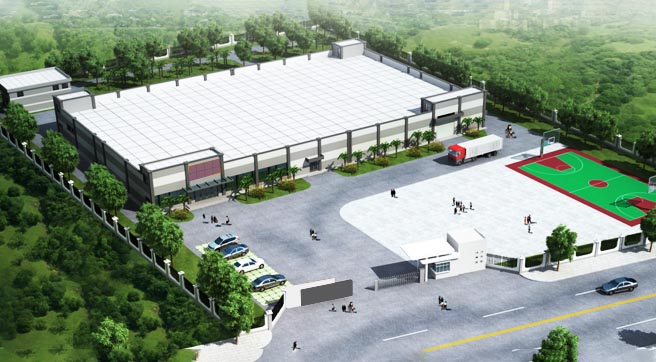
DAILY RFID's smart card factory floor in Guangzhou. The company reports 28,000 m² of manufacturing space, 180-200 employees, and 80% of output exported to the EU and USA.
Have Questions or Need More Details?
Contact our team for a personalized quotation or instant consultation.
Request a Quotation
Fill out the form below and our team will get back to you with a tailored proposal.
WhatsApp Direct Chat
Prefer to chat in real-time? Message us on WhatsApp for instant assistance & quick answers.
- Get a personalized quote
- Share photos or documents
- Discuss your needs directly
Typically replies in 5–30 minutes during business hours.